Polymer is a Material Design theme for Hugo built on Google's Polymer 1.0 web components, giving static sites a component-based UI with optional Disqus, Google Analytics, and social integrations.
What is Polymer?
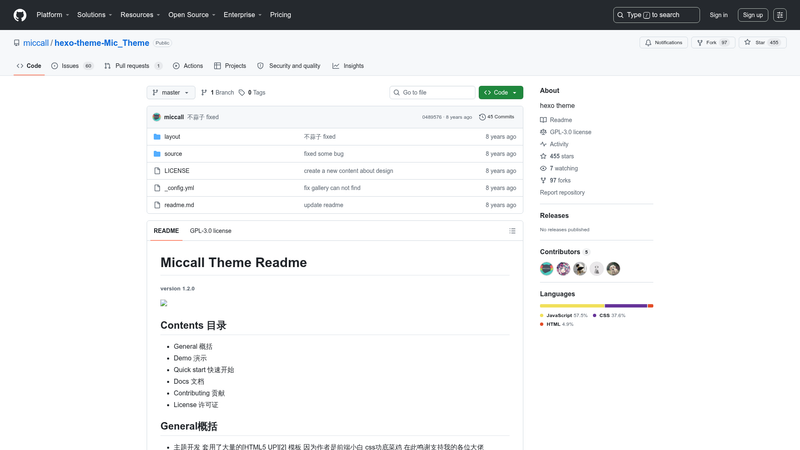
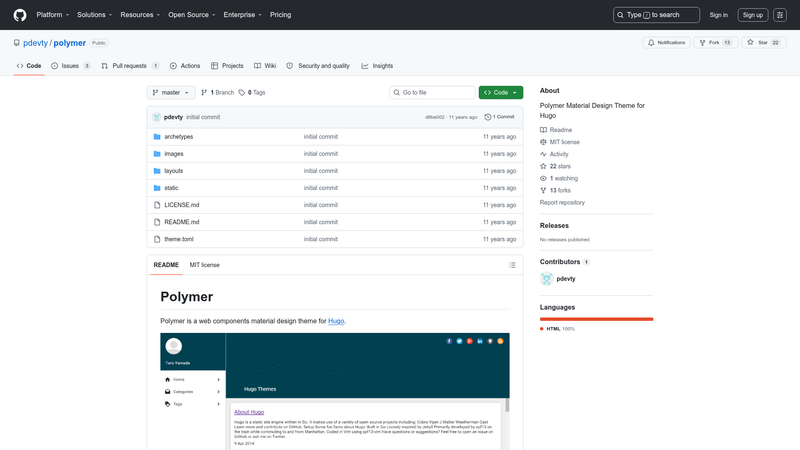
Polymer is an open-source Hugo theme that generates Material Design styled sites using Polymer web components version 1.0. It takes a Hugo site's content (Markdown files in content folders) and renders a blog-style layout with tags, categories, pagination, and optional Disqus comments and Google Analytics. The theme is developed by pdevty and distributed through GitHub, where the repository also hosts a preview screenshot of the design.
Key Features
- Material Design via Polymer 1.0 — Uses Google's Polymer web components library to apply Material Design styling to the theme's components, buttons, cards, and navigation.
- Google Analytics integration — Optional; set
googleAnalyticsUserIDinconfig.tomlto enable tracking. - Pagination — Built-in pagination control splits post lists across multiple pages using the
paginatesetting (default 10). - Disqus comments — Optional; set
disqusShortnameinconfig.tomlto add comment threads to posts. - Social links — Optional links to Twitter, Facebook, GitHub, Google+, and LinkedIn, configured through the
paramssection. - Tags and categories — Posts can be organized and filtered by tags and categories, with dedicated listing pages.
- Custom image options — Optional cover, profile, and photo images set via
cover,profile, andphotoparameters. - Source code highlighting — Syntax highlighting for code blocks included in posts.
Who is it for?
- Hugo bloggers who want a Material Design aesthetic without hand-writing CSS for each component.
- Developers who need a theme that wires up Disqus, Google Analytics, and social profiles through a simple TOML config.
- Portfolio owners who want to display cover, profile, and photo images for personal branding.
- Content-heavy sites that rely on tags, categories, and pagination to structure large archives.
What can you do with it?
- Personal blogs: Publish posts with tags and categories, get paginated archive pages, and add author profile images.
- Portfolio sites: Use the cover and profile image settings to create a personal landing page and project showcase.
- Small documentation sites: Organize articles with categories and enable source code highlighting for technical content.
- Comment-enabled sites: Turn on Disqus to let readers discuss posts without building a custom comment system.
How does it work?
Installation is straightforward: clone the repository into your Hugo site's themes directory, then run hugo server -t polymer -w -D to preview. Configuration lives entirely in config.toml, where you set the theme name, base URL, title, optional disqusShortname, and paginate count. The params block holds optional author, image, social, and analytics keys, and you can customize post URL structure with a permalinks rule.
FAQ
Is Polymer free?
Yes, Polymer is open source and freely available from its GitHub repository.
How do I enable Disqus?
Set disqusShortname = "Your Disqus Name" in your config.toml file as shown in the theme's configuration example.
Does Polymer support Google Analytics?
Yes, add googleAnalyticsUserID = "Your Analytics User Id" under [params] in config.toml to activate Google Analytics tracking.
Can I customize the social links?
Yes, the theme accepts optional Twitter, Facebook, GitHub, Google+, and LinkedIn usernames in the [params] section of config.toml.
What version of Polymer does it use?
The theme is built on Polymer 1.0, as stated in the repository description.