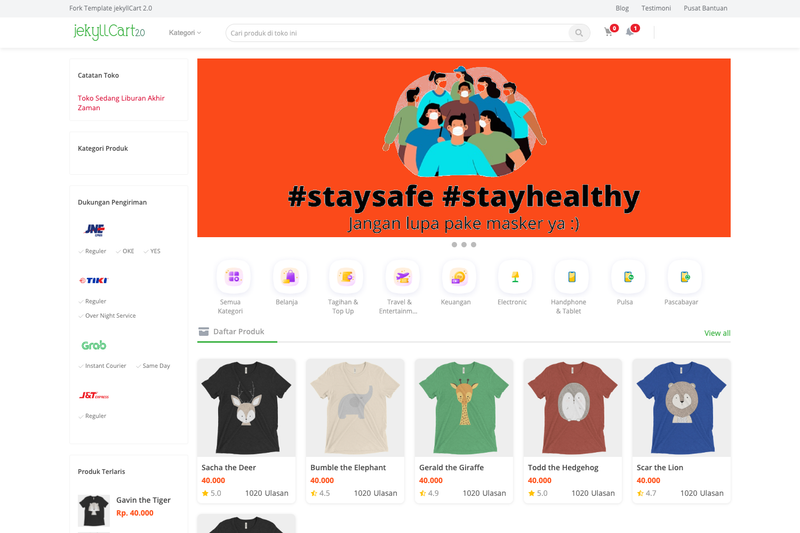
relivator is an open-source, MIT-licensed e-commerce starter template for Next.js 15 that combines better-auth, Polar payments, shadcn/ui, Tailwind CSS, and Drizzle ORM into a full-stack storefront foundation.
What is relivator?
relivator is a full-stack ecommerce template built on Next.js 15, React 19, and TypeScript 5.8. It takes a developer's environment variables and database connection, and produces a production-ready storefront with authentication, payment checkout, a customer billing dashboard, and database schema. The project is maintained by Nazar Kornienko (blefnk) as part of the Reliverse ecosystem and is available freely on GitHub.
Key Features
- Tech stack — Uses Next.js 15 with the App Router, React 19.1, TypeScript 5.8, Tailwind CSS 4.1, and shadcn/ui components.
- Authentication — Integrated with better-auth for signup, login, and session management, including automatic customer creation.
- Payments — Polar integration for checkout flows, subscription management, customer portal, and webhook handling, with sandbox or production environments.
- Database — Drizzle ORM with PostgreSQL on Neon (with Supabase planned); includes
bun db:push,bun db:auth, andbun db:studiocommands. - UI components — shadcn/ui components can be added or updated using the
bun uicommand. - Animations — Includes anime.js for animations.
- File storage — UploadThing integration for file uploads.
- Analytics — Vercel Analytics integration.
- DX tooling — ESLint, Biome, and Knip for linting, formatting, and dead-code detection.
- In-progress integrations — TanStack Form with ArkType validation, next-intl for i18n, Resend for email, and oRPC for API routes are marked as WIP.
Who is it for?
- Full-stack developers — who want a modern ecommerce foundation without building auth, payments, and a database layer from scratch.
- Startups and indie hackers — who need to ship a storefront with subscriptions and a billing dashboard quickly.
- AI-assisted development users — relivator 1.4.0+ is described as "AI-ready", optimized for AI-powered IDEs like Cursor to help beginners onboard.
- Next.js learners — who want to study a complete, type-safe implementation of auth, ORM, and payment flows.
What can you do with relivator?
- Launch a storefront — set up a product store with a landing page, pricing, and checkout through Polar.
- Manage subscriptions — after a user signs up, they can visit
/dashboard/billingto subscribe to plans and manage payments via the customer portal. - Extend with shadcn/ui — add or replace UI components with the
bun uiCLI instead of manually editing code. - Customize database — use
bun db:studioto inspect and edit the Drizzle schema visually.
How does relivator work?
The quick start is a five-command setup: clone the repository, install dependencies with bun, copy .env.example to .env, fill in environment variables (including Polar tokens), then run bun db:push and bun dev. The template reads the schema in src/app.ts (optional edit) and the auth config in src/lib/auth.ts, where you map your Polar product IDs to checkout slugs.
Alternatives
- versator — a sister template from the same author that replaces better-auth with Clerk and Polar with Stripe, and uses tRPC; its demo and docs are referenced from the relivator README.
FAQ
Is relivator free?
Yes, relivator is open-source under the MIT License, and the GitHub repository is freely available. The template itself requires paying for external services you choose, such as Neon for PostgreSQL, Polar for payments, and Vercel for hosting.
What tech stack does relivator use?
The core stack is Next.js 15, React 19, TypeScript 5.8, Tailwind CSS 4.1, shadcn/ui, better-auth, Drizzle ORM, and PostgreSQL on Neon. Polar handles payments, UploadThing handles file storage, anime.js handles animations, and Vercel Analytics tracks usage.
How do I install relivator?
Install Git, Node.js, and Bun, then run these commands: clone the repository, run bun install, copy .env.example to .env, fill in the environment variables, run bun db:push, and then bun dev to start the development server.
Does relivator support subscriptions?
Yes, through Polar. You create products in the Polar dashboard, set the product IDs in src/lib/auth.ts, and users can subscribe from the billing page at /dashboard/billing. Webhook events handle subscription lifecycle updates.