JekyllSimpleCart is a free Jekyll template for building an online shop, using simpleCart.js for cart functionality and WhatsApp for checkout, designed to be deployed on GitHub Pages at no cost.
What is JekyllSimpleCart?
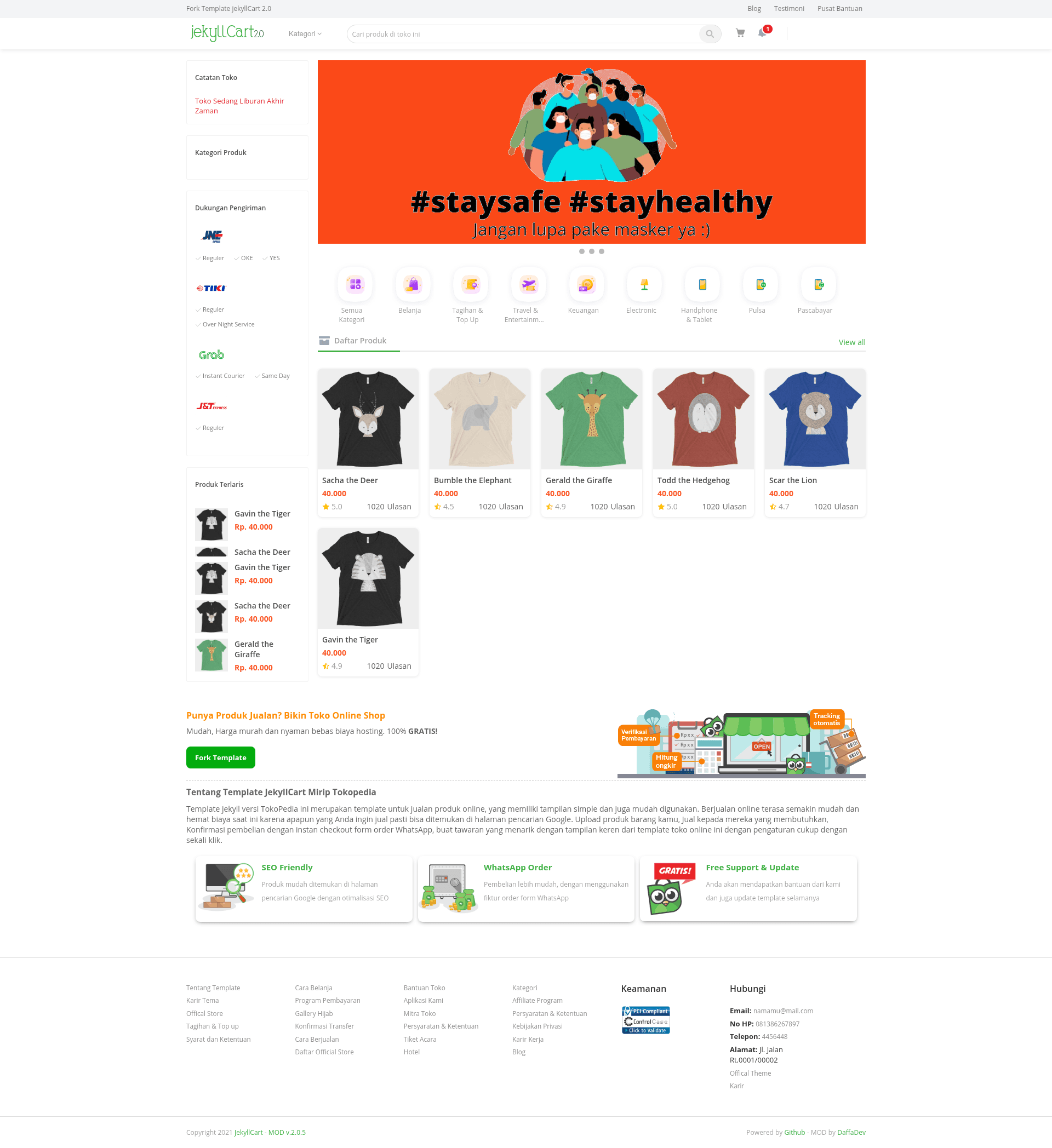
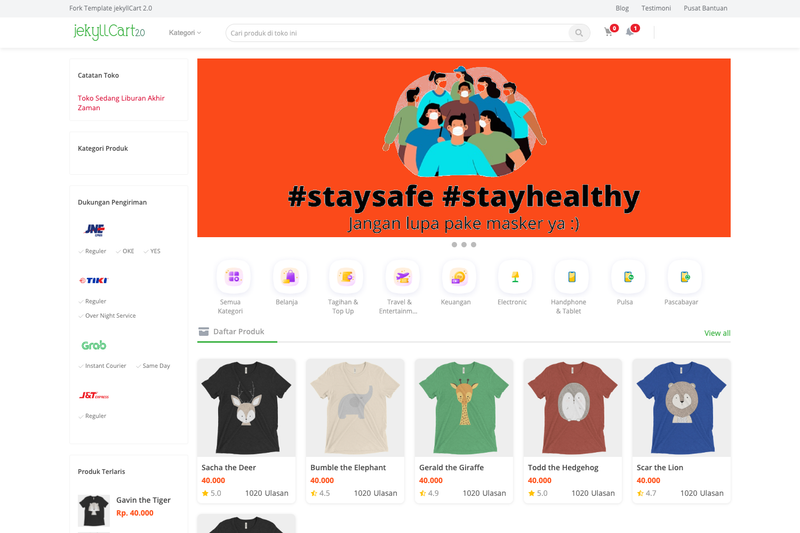
JekyllSimpleCart is a Jekyll-based online store template that mimics the look of Tokopedia, a leading Indonesian e-commerce platform. It runs on the Jekyll static site generator, uses the simpleCart.js JavaScript library to handle cart operations in the browser, and replaces a traditional payment gateway with a WhatsApp checkout flow. The template's source is publicly hosted on GitHub, and a live demo is available at jekyllsimplecart.pages.dev. The page text is written in Indonesian, so it specifically targets Indonesian-speaking sellers and buyers.
Key Features
- GitHub Pages ready — The template is presented as using 100% free GitHub Pages hosting, so you can publish the store without server or hosting costs.
- simpleCart.js integration — The shop runs on simpleCart, a client-side JavaScript cart system that manages add-to-cart, quantities, and totals without a backend.
- WhatsApp checkout — Orders are delivered through WhatsApp, a messaging app widely used for transactions in Indonesia, instead of a paid payment gateway.
- Tokopedia-style interface — The layout is described as "Mirip Tokopedia," giving customers a familiar Indonesian online-shopping look.
- Jekyll static generation — Because it is a Jekyll template, the store is generated as static HTML, which is fast and easy to host.
- Free live demo — You can test the shopping flow at the linked demo site before deciding to use the template.
Who is it for?
- Indonesian small sellers — A shop owner can set up a no-cost storefront and receive orders via WhatsApp without needing a payment processor.
- Jekyll developers — Someone comfortable with Jekyll can quickly customize pages and products using standard Jekyll content files.
- Hobbyists and learners — Students can study or use a complete e-commerce template that only requires free GitHub Pages hosting to run.
What can you do with JekyllSimpleCart?
- Launch a free online store — Deploy JekyllSimpleCart to GitHub Pages and start presenting products in a Tokopedia-like layout at zero hosting cost.
- Take WhatsApp orders — Let customers fill the simpleCart basket and on checkout send the order summary through WhatsApp, which you confirm manually.
- Customize a familiar storefront — Adapt the Jekyll layouts and styling to your own brand while retaining the recognizable Indonesian e-commerce structure.
How does JekyllSimpleCart work?
The template combines Jekyll's static site generation with the client-side simpleCart.js library. When a customer views a product and adds it to the cart, simpleCart stores the selection in the browser. On checkout, it composes a message with the cart contents and opens a WhatsApp chat to the store owner's number, where the order is completed manually.
Pros and cons
- Low cost — Hosting is free on GitHub Pages and there are no transaction fees because no payment gateway is involved.
- Full payment control — The seller handles order confirmation and payment through WhatsApp, which suits small Indonesian shops.
- Manual order tracking — Since checkout is a WhatsApp message, there is no built-in order management system; the seller must track orders in the chat.
Pricing
JekyllSimpleCart is free. The repository is publicly accessible on GitHub, and the intended hosting, GitHub Pages, offers free static hosting for unlimited public sites.
FAQ
Does JekyllSimpleCart accept payments online?
No. The template sends the order via WhatsApp instead of processing a card or digital payment. Payment details are arranged in the WhatsApp conversation, so the shop needs no payment gateway and no merchant account.
Can I host JekyllSimpleCart on GitHub Pages for free?
Yes. The template is advertised as working with 100% free GitHub Pages hosting. You can publish the generated static site to your own Pages URL without paying for a server.
Is JekyllSimpleCart really similar to Tokopedia?
The repository metadata states "Mirip Tokopedia" (similar to Tokopedia), meaning the visual design and layout are inspired by Tokopedia's familiar e-commerce interface. It is not affiliated with Tokopedia and does not use Tokopedia's backend.