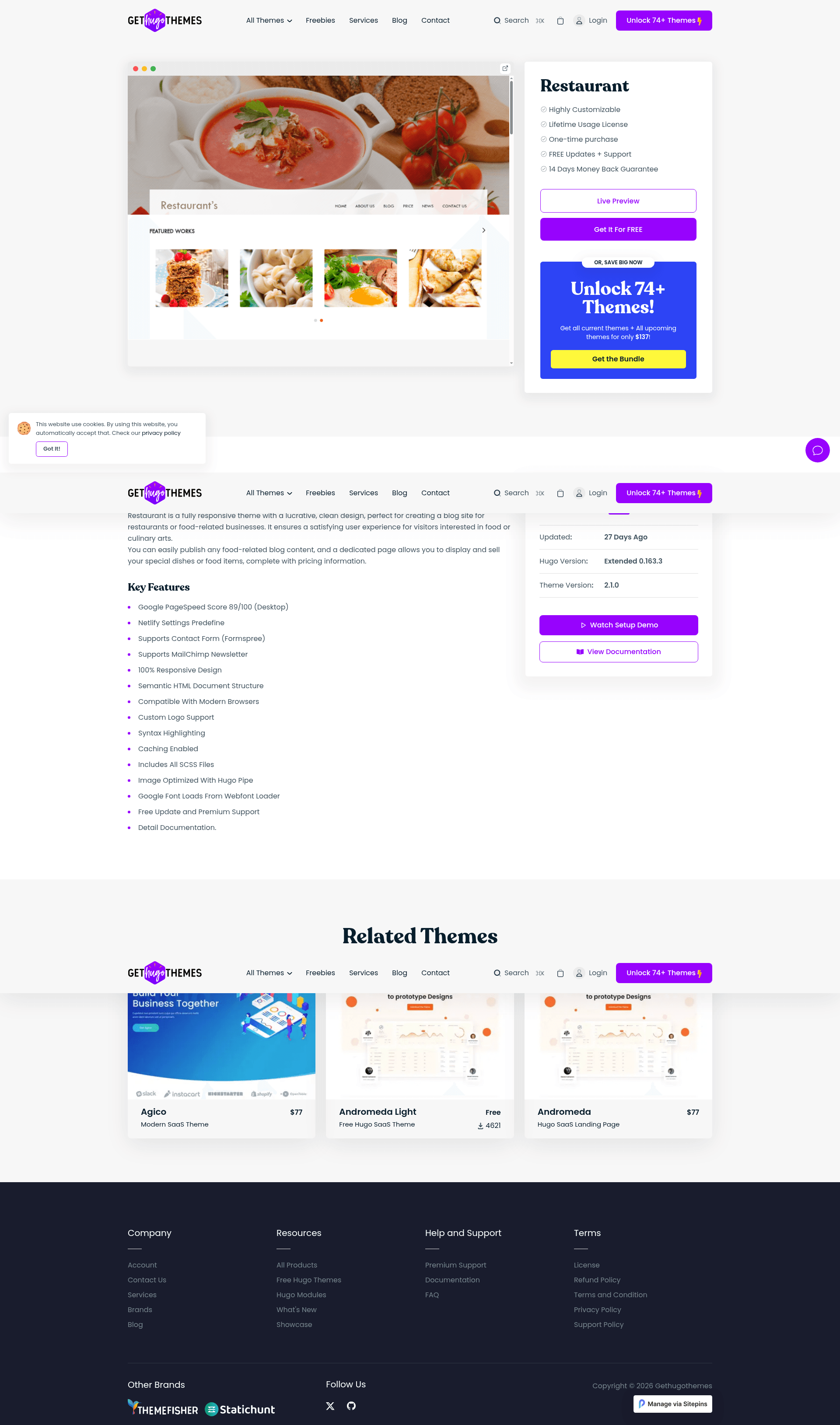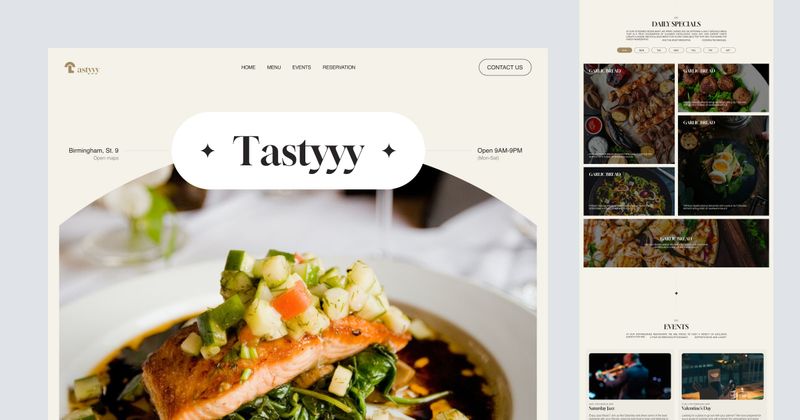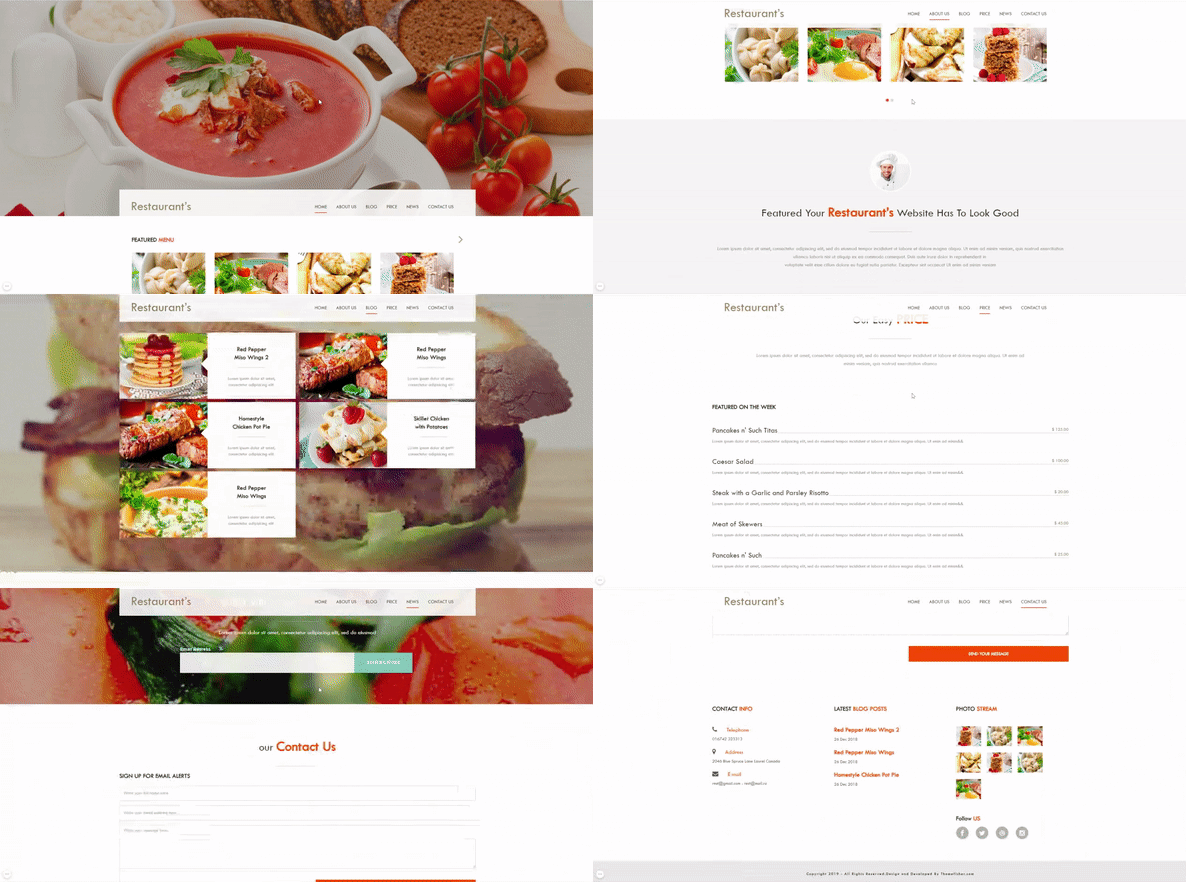
Restaurant Hugo is a Hugo-based blog theme for restaurants and food-related businesses, built by Gethugothemes, that produces a static website with a blog layout, contact form, and Mailchimp newsletter integration. The theme requires a minimum Hugo version of 0.147.2, is designed by Themefisher, and is released under the MIT license; the demo site reports a Google Page Speed score of 85%.
What is Restaurant Hugo?
Restaurant Hugo is a static-site theme for the Hugo framework that creates responsive restaurant and food-business websites with a blog layout. It takes Markdown content and Hugo site configuration as input and generates the final HTML output at build time, so no server-side runtime is needed. The theme is developed by Gethugothemes, designed by Themefisher, and licensed under MIT, with the demo images carrying separate licenses for demonstration only.
The theme is built on Bootstrap and companion libraries: jQuery, Animate.css, Slick Slider, Wow, Font Awesome Icons, and Venobox. CSS and JavaScript are bundled through Hugo Pipes, and the repository includes predefined Netlify settings, Google Analytics hooks, Mailchimp integration, a contact form, and Open Graph and Twitter Card meta tags for social sharing.
Key Features
- Bootstrap-based framework — the responsive layout is styled with Bootstrap components and enhanced with jQuery, Animate.css, Slick Slider, Wow, Font Awesome Icons, and Venobox lightbox.
- Hugo Pipes asset bundling — CSS and JS files are compiled, minified, and bundled at build time through Hugo Pipes, reducing page weight.
- Predefined Netlify deployment — the repository ships with Netlify configuration, so the site can be deployed with minimal setup; the documented demo Page Speed score is 85%.
- Mailchimp integration — a newsletter signup form is wired to Mailchimp so visitors' email addresses can be collected.
- Contact form support — a built-in contact form page handles static-site submissions.
- Open Graph and Twitter Card meta tags — automatically generated social-sharing metadata for each page on Facebook and Twitter.
- Sitepins headless CMS pre-configured — the theme links to Sitepins, a Git-based CMS, so site text, images, and configuration can be edited visually without writing code.
Who is it for?
- Restaurant and cafe owners — launch a marketing site with a food blog, specials, and a contact form without hiring a developer.
- Food bloggers — publish food-related posts on a layout built around food imagery.
- Freelance developers and agencies — use the theme as a starter for restaurant clients; Gethugothemes also offers paid customization and full-site development services.
What can you do with Restaurant Hugo?
- Restaurant owners: publish food-related stories and specials on the blog and direct visitors to the contact form to send inquiries.
- Food photographers: present dishes in a Bootstrap-based layout with a lightbox gallery through the Venobox integration.
- Developers: extend the theme by editing Hugo partials, then deploy to Netlify with the included configuration or host it on any static host.
How does Restaurant Hugo work?
Clone the repository, run npm run project-setup to install and configure the project, and then run npm run dev to start a local development server. For content editing, the Edit with Sitepins flow clones the repository into Sitepins and lets editors modify pages through a visual CMS interface without touching code.
FAQ
Is Restaurant Hugo free?
Yes, the theme's code is released under the MIT license, so you can use and modify it freely. The demonstration images are not covered by that license and are included only to show the design.
What version of Hugo does Restaurant Hugo require?
The minimum Hugo version is 0.147.2. The theme uses Hugo Pipes for asset bundling, so a newer Hugo extended version is recommended for full compatibility.
Does Restaurant Hugo come with a CMS?
Yes, it is pre-configured for Sitepins, a Git-based headless CMS. You can click Edit with Sitepins on the repository page to clone the project and edit text, images, and configuration visually.
Can I host Restaurant Hugo on Netlify?
Yes. The repository includes predefined Netlify settings, so you can connect the repo to Netlify and deploy with no additional configuration. The demo page reports an 85% Google Page Speed score.