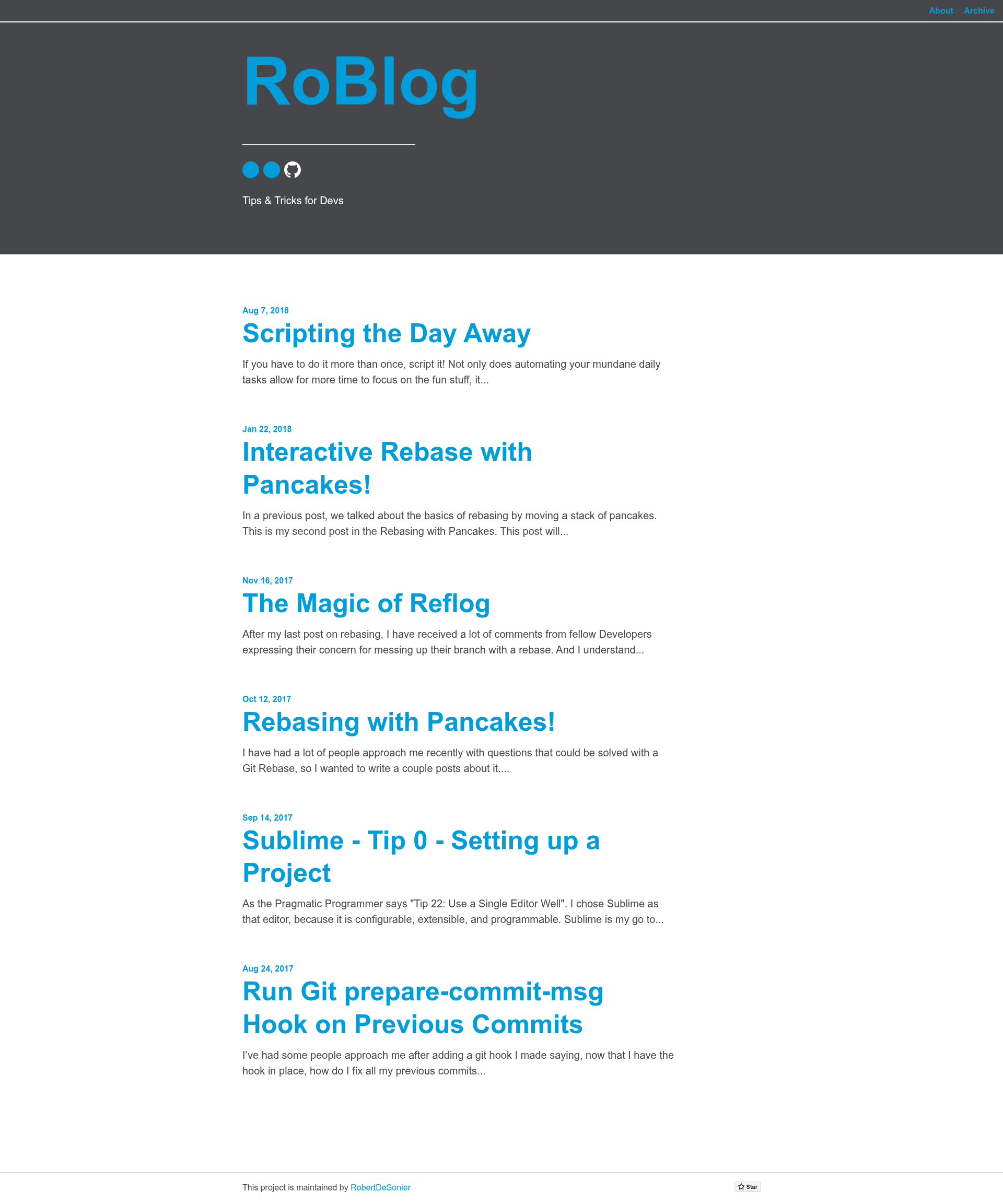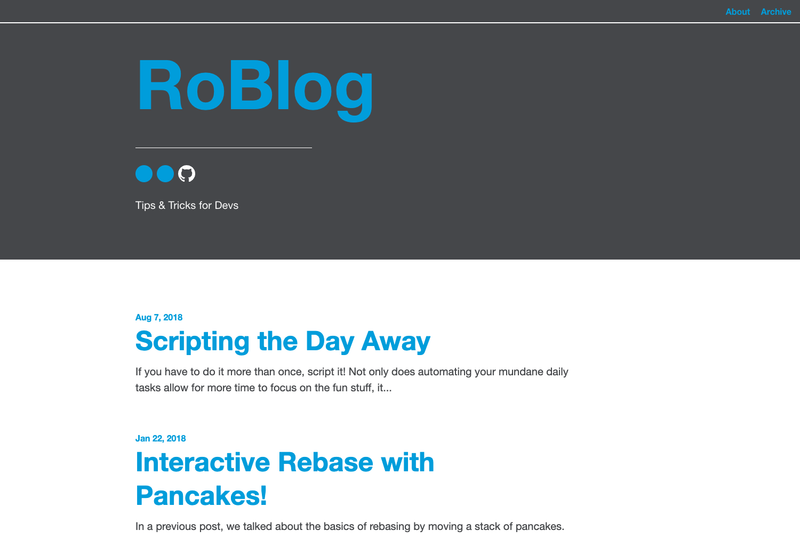
RoBlog is a Jekyll-based blog template created by software engineer Robert Desonier to publish a running record of his professional lessons, and it is live on GitHub Pages at https://robertdesonier.github.io/RoBlog/.
What is RoBlog?
RoBlog is a static blog built with Jekyll, a static site generator that converts Markdown files and template layouts into plain HTML. The project is a single GitHub repository named RoBlog, and according to its own description it exists to share and record what the author has learned over the years as a software engineer. As a Jekyll site, it takes Markdown posts as its input and outputs a static HTML blog with no server-side application or database. The live site is hosted on GitHub Pages, which matches the repository's "pages" topic and gives it free, reliable hosting.
Key Features
- Built on Jekyll — The blog uses Jekyll, meaning posts are authored in Markdown and rendered to static HTML during the build step.
- GitHub Pages hosting — The repository lists "jekyll" and "pages" as topics, and the deployed site is served from GitHub Pages at no hosting cost.
- Live example — A fully deployed version of the blog is available at https://robertdesonier.github.io/RoBlog/, so you can inspect the actual layout, styling, and content in production.
- Personal learning focus — The author states the blog is for recording years of software engineering experience, giving it a clear purpose as a personal knowledge base.
- Single repository — The entire blog lives in one small GitHub repository, making it simple to fork, customize, and redeploy.
Who is it for?
RoBlog is for software engineers who want a no-frills Jekyll blog to document their technical growth and projects. It also serves developers who need a free static site hosted on GitHub Pages without managing a CMS or databases, and anyone learning Jekyll who wants a real-world reference blog to read, copy, and adapt. Because it is framed as an individual's learning log, it is best suited for personal use rather than team or corporate publishing.
What can you do with it?
- Software engineers: Write Markdown posts about lessons learned in your career, commit them to the repository, and GitHub Pages rebuilds and serves the updated blog automatically.
- Jekyll learners: Explore a minimal, production Jekyll blog to see how posts are structured, then fork the repository to experiment with the theme and layout.
- Personal bloggers: Launch a free personal blog on GitHub Pages using a static-site workflow that avoids server and database expenses.