Newsletter
Join the Community
Subscribe to our newsletter for the latest news and updates

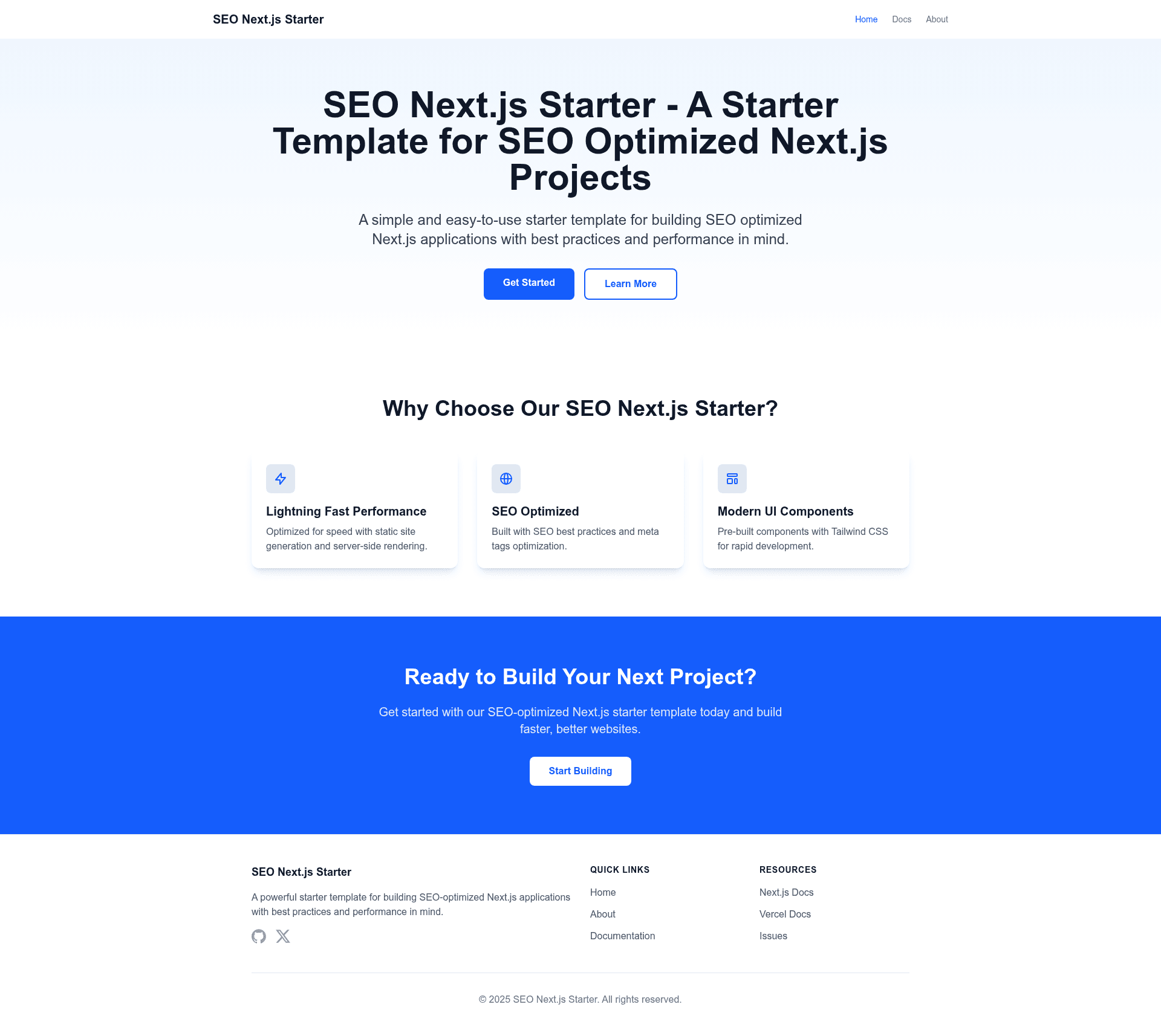
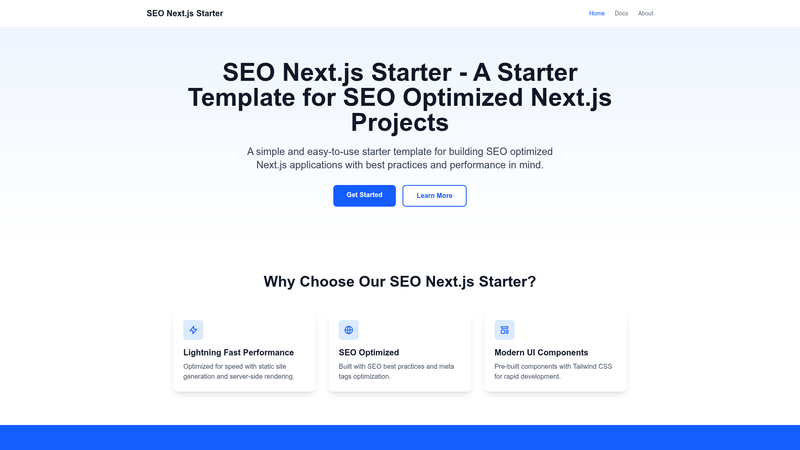
A simple and easy-to-use starter template for building SEO optimized Next.js applications with best practices and performance in mind.
Proxy an external API through your domain using vercel.ts with CDN caching and cache tags.
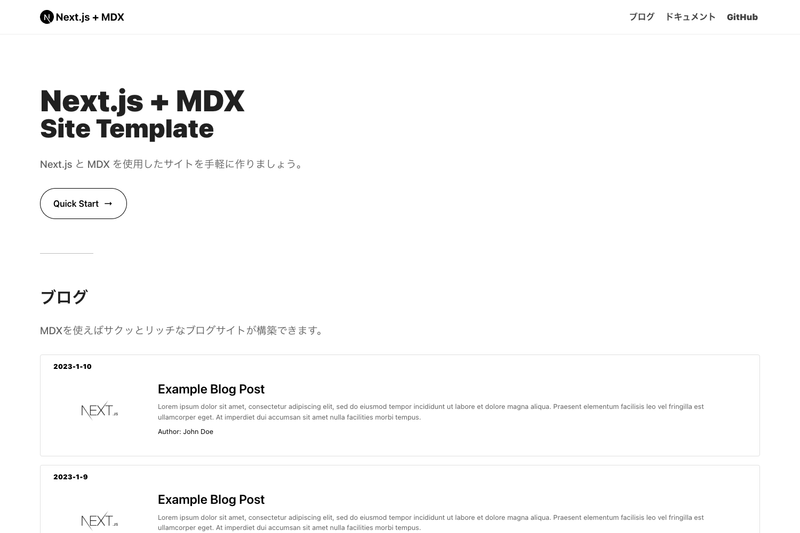
A Next.js and MDX starter template with blog and documentation sections, styled using MUI and Emotion.
battery packed template / boilerplate to initialize Next.js app with Chakra UI & Typescript setup ✨
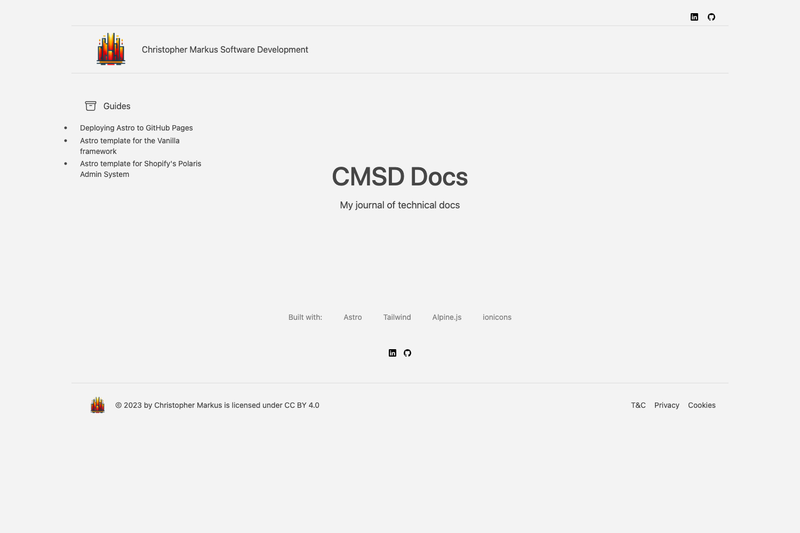
Example Astro template for the MAMBA UI (Tailwind) component library.
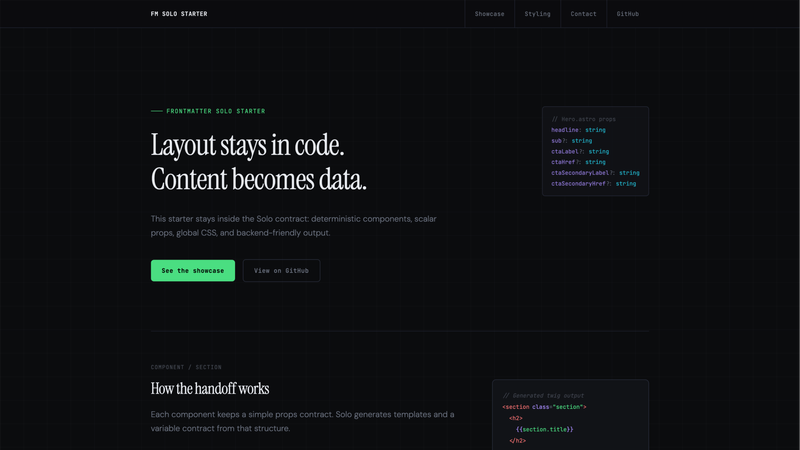
Astro starter designed to generate Twig or PHP templates with Frontmatter Solo.
SEO Next.js Starter is an open-source GitHub template by wangrunlin that scaffolds a Next.js application pre-configured for search-engine optimization, performance, and one-click Vercel deployment.
The SEO Next.js Starter is a starter template for building SEO-optimized web applications on Next.js, created by GitHub user wangrunlin and released under the MIT license. It produces a Next.js project with server-side rendering, static site generation, dynamic routing, built-in CSS and Sass support, and API routes, all configured out of the box. The template is designed to be deployed to Vercel with a single click, and a live preview is available at seo-nextjs-starter.vercel.app.
robots.ts, sitemap.ts, and layout metadata in layout.tsx to control search engine crawling and social previews.@vercel/og library to generate dynamic social media images from HTML and CSS.NEXT_PUBLIC_SITE_NAME and NEXT_PUBLIC_GOOGLE_ANALYTICS_ID.pnpm install, set environment variables, and start coding.The template is set up via a GitHub "Use this template" button, then configured locally. After cloning, run pnpm install to install dependencies, create a .env file from .env.example (or edit src/config.ts), and launch the development server with pnpm dev. For production, deploy to Vercel with one click so environment variables are applied from the Vercel dashboard.
Yes, the project is open source under the MIT license, so you can freely use, modify, and distribute it. No payment or pricing tiers are listed.
The .env.example file shows NEXT_PUBLIC_SITE_NAME, NEXT_PUBLIC_TITLE, NEXT_PUBLIC_DESCRIPTION, and NEXT_PUBLIC_URL. An optional NEXT_PUBLIC_GOOGLE_ANALYTICS_ID enables Google Analytics. You can also edit src/config.ts directly instead of using environment variables.
Use the "Deploy with Vercel" button included in the README, which sends you to the Vercel template page. Alternatively, you can connect the repository to Vercel and set the environment variables in the project settings under "Environment Variables".