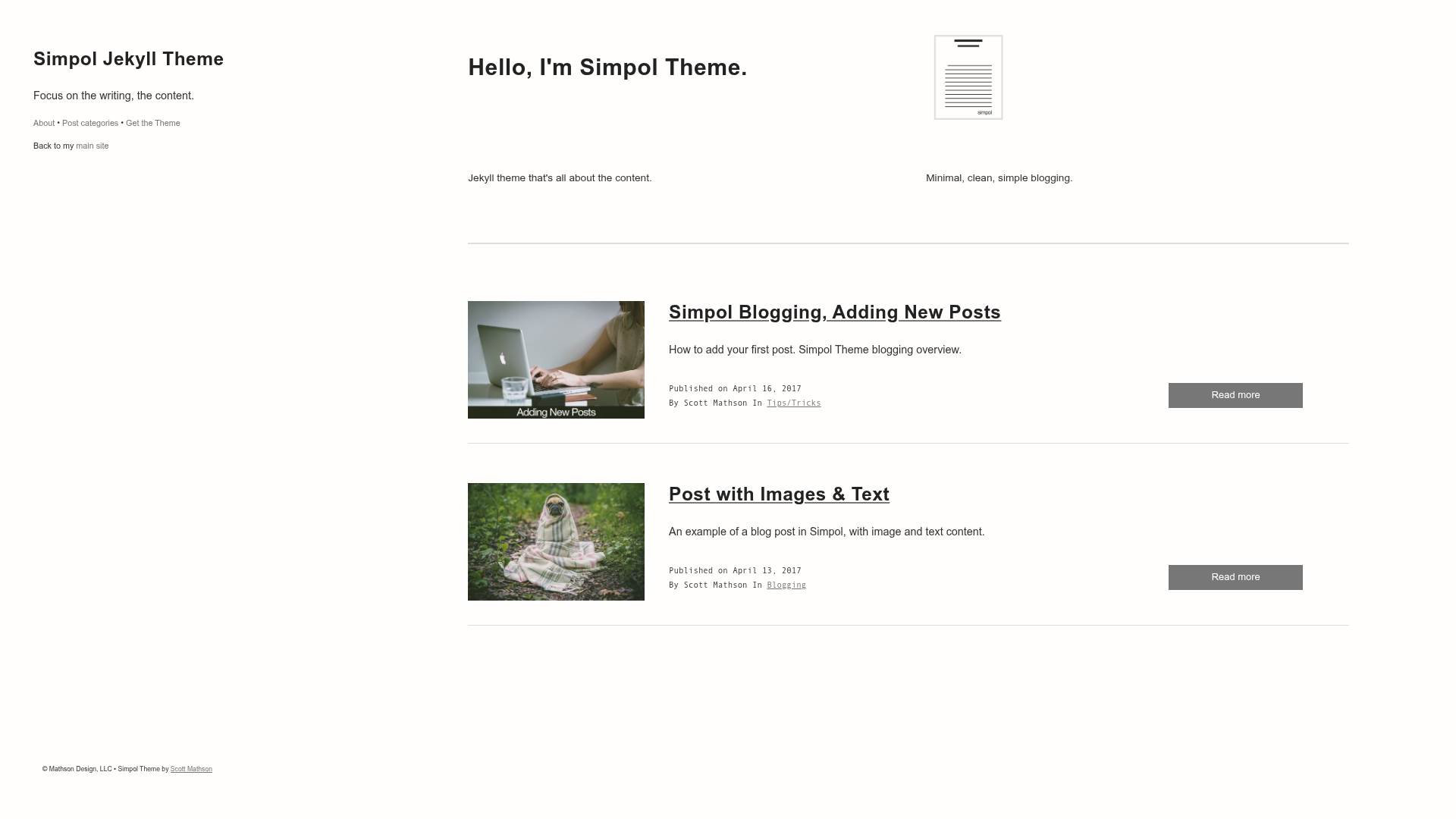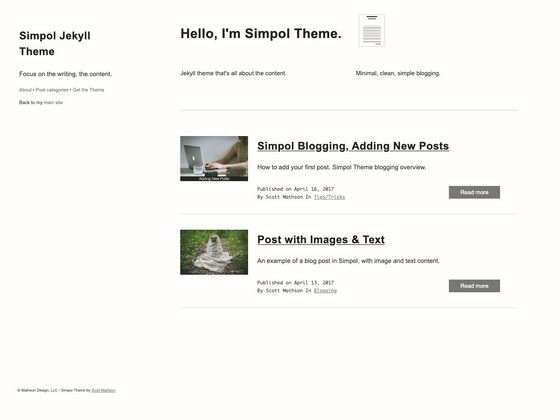
Simpol Theme is a minimal, open source Jekyll theme for GitHub Pages that puts the emphasis on writing and content with a clean, distraction-free layout. Designed and maintained by Scott Mathson of Mathson Design Co., it is distributed as a Jekyll theme gem (simpol-jekyll-theme) and as a forkable GitHub repository, and it also runs locally via Docker.
What is Simpol Theme?
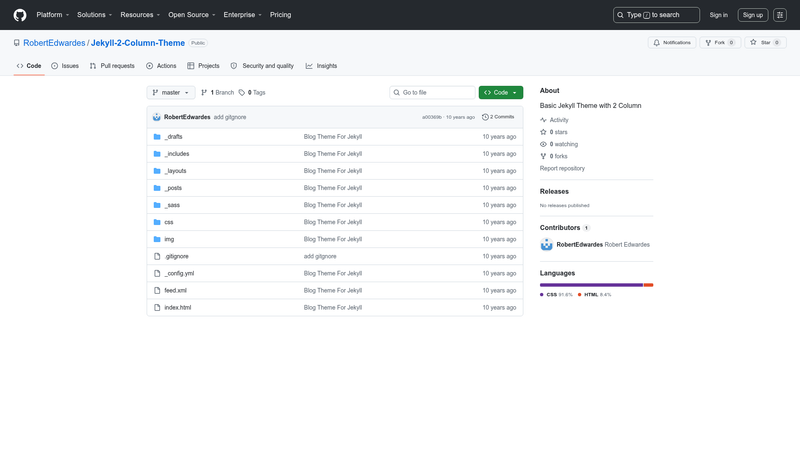
Simpol Theme is a Jekyll-based static site theme focused on minimalism and readability. It takes standard Jekyll posts and pages written in Markdown and renders them into a lightweight static site with a single CSS stylesheet, optimized for search engines and fast loading. The theme is open source, available on GitHub, and installable via gem install simpol-jekyll-theme, as a fork of the repository, or through docker-compose up for local development.
Key Features
- Minimal design: A clean, light-weight layout with a single CSS stylesheet for fast page loads.
- Customizable site chrome: Navigation, index, footer, site greeting, sub-greetings, links, and logo are all configured in the Jekyll
_config.ymlfile. - Pre-built page and post layouts: Default layouts for both pages and posts are included, with clean typography.
- SEO-optimized metadata: The theme includes optimized metadata for search engine visibility.
- Google Analytics integration: Site-wide tracking can be enabled by editing the config file.
- Content organization: Post categories and an archive page help readers browse older content.
- Social sharing: Twitter, Facebook, and email share buttons are included on every post.
- Utility pages: Sitemap, XML feed, and 404 page are bundled with the theme.
Who is it for?
Simpol Theme is for bloggers and writers who want a no-frills online presence without sacrificing performance. It suits developers who are comfortable with Jekyll and want to publish to GitHub Pages, and it also fits personal sites and portfolios that prioritize content over visual clutter. Because it is authored by a designer, the typography and spacing are tuned for long-form reading.
What can you do with it?
- Bloggers: Publish Markdown posts with built-in categories, archives, RSS feed, and social sharing. The emphasis on writing means readers focus on your words, not site chrome.
- Developers: Deploy a static site to GitHub Pages by forking the repository and running
bundle exec jekyll servelocally. The config file controls key settings without touching templates. - Docker users: Run the theme inside a container with
docker-compose up, making local preview reproducible across machines.
How does Simpol Theme work?
The theme is a standard Jekyll site. You add posts as Markdown files in the _posts directory, configure the _config.yml for your site's greeting, navigation, and analytics, then build the site with Jekyll. Installation paths include forking the GitHub repo, installing the gem, or using Docker Compose. The project links to setup guides for adding new posts, using Markdown, and deploying to GitHub Pages.
FAQ
Is Simpol Theme free?
Yes, Simpol Theme is open source and released under a permissive license. You can download it from GitHub, install it as a Ruby gem, or run it with Docker without paying a license fee.
How do I install Simpol Theme?
You can install it by running gem install simpol-jekyll-theme, by forking the GitHub repository and running bundle install followed by bundle exec jekyll serve, or by using Docker with docker-compose up from the project directory.
Does Simpol Theme support Google Analytics?
Yes, the theme includes easy site-wide Google Analytics integration that you can configure in the _config.yml file. After adding your tracking ID, analytics code appears on all pages.
Can I customize the navigation and footer?
Yes, navigation, footer, greeting, sub-greeting, links, and logo can all be managed from the Jekyll configuration file. The theme ships with a single CSS stylesheet, so deeper styling changes will require editing that stylesheet.
What social sharing options are included?
Simpol Theme includes social sharing buttons for Twitter, Facebook, and email on every post. It also generates a sitemap and an XML feed for syndication.