Newsletter
Join the Community
Subscribe to our newsletter for the latest news and updates

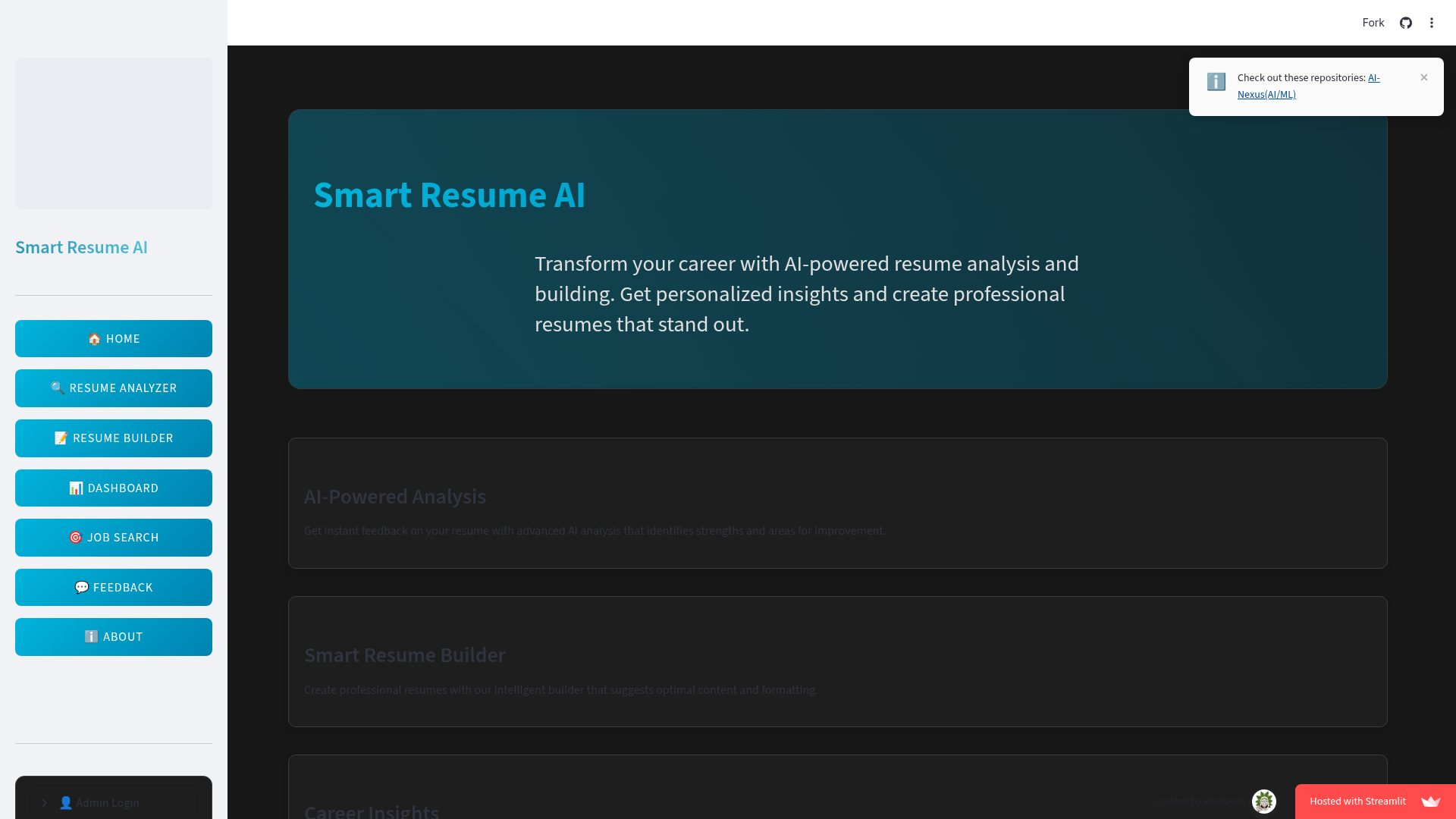
AI-powered resume analyzer with ATS scoring, keyword gap analysis, resume builder, and job search — built with Streamlit.
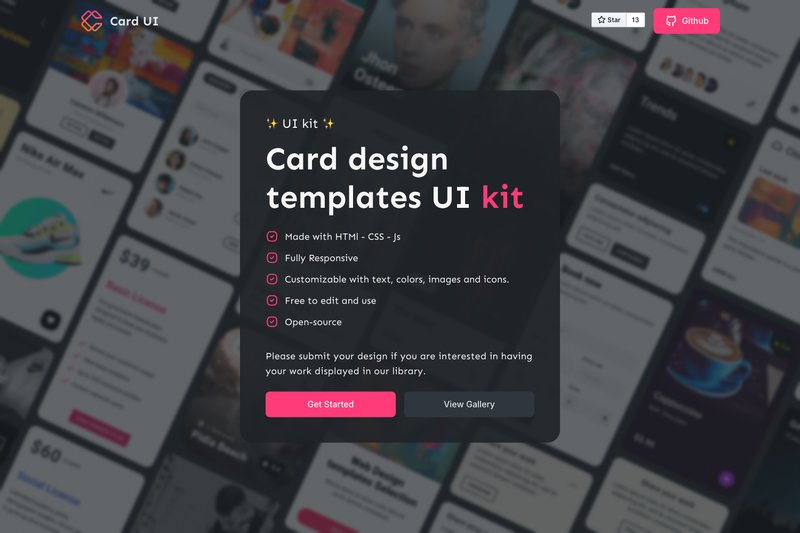
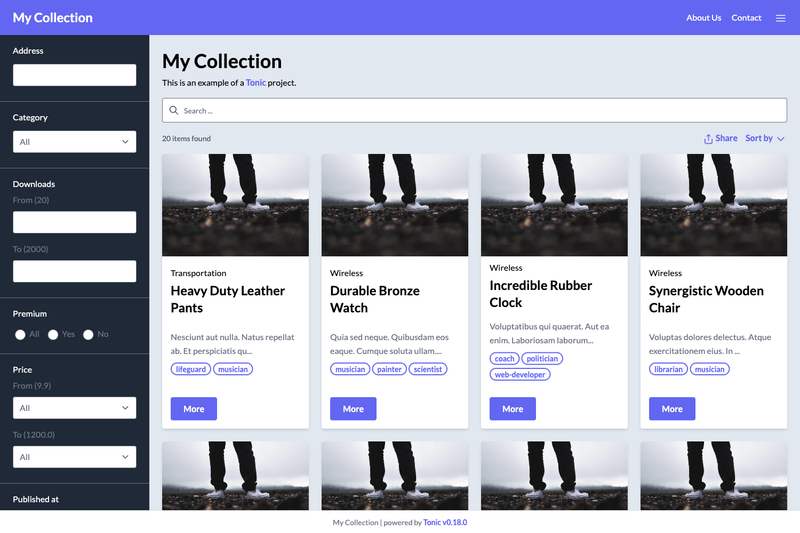
A free collection of HTML/CSS UI cards with live demos, Alpine.js interactivity, and broad browser support.
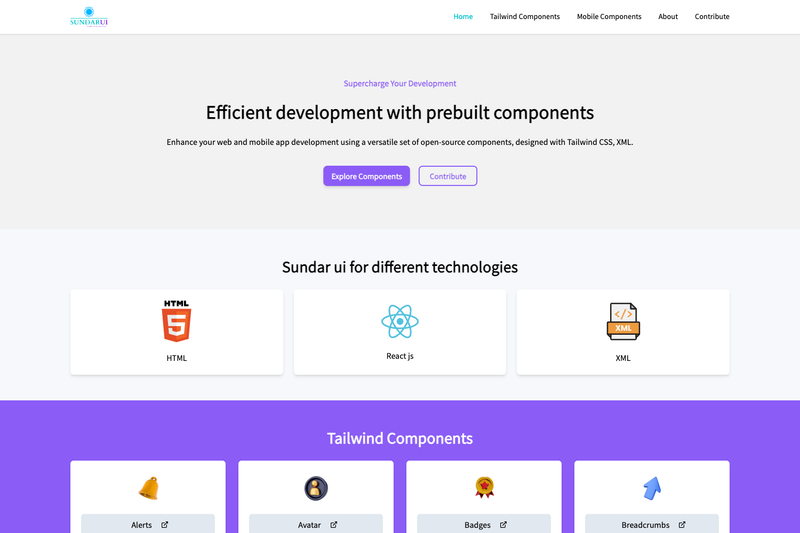
Open-source library of prebuilt Tailwind CSS UI components built with React and Vite.
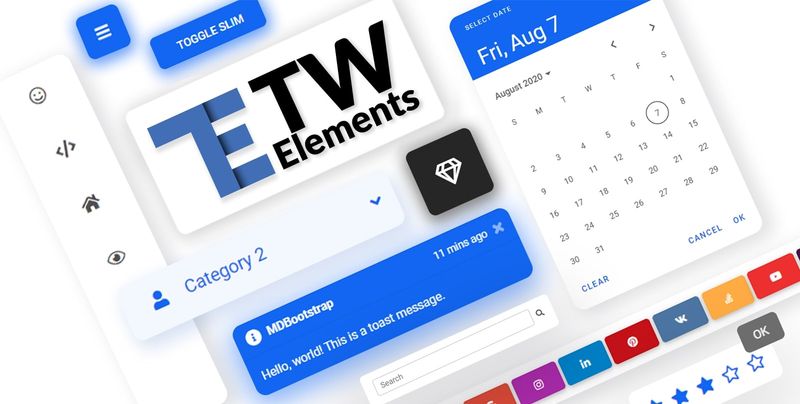
Free collection of 500+ interactive Tailwind CSS components and 117+ design blocks with dark mode support.
A fully featured editor with drag and drop interface to easily build READMEs
Smart AI Resume Analyzer is an open-source, Streamlit-based web application that scores resumes for ATS compatibility, identifies keyword and skills gaps, builds tailored resumes from four templates, and searches live jobs — developed by Het Patel as a BCA final-year project at Parul University (2024-25).
Smart AI Resume Analyzer is a Python web application built with Streamlit that turns a resume in PDF or Word format into an actionable career report: an ATS compatibility score, keyword gap analysis, skills gap breakdown, role-specific feedback, and course/video recommendations. It also includes an AI-powered resume builder with four templates (Modern, Minimal, Professional, Creative) and exports the finished resume as a PDF. The AI analysis layer uses the Google Gemini API, while spaCy, NLTK, and scikit-learn handle NLP and machine-learning tasks; the database is SQLite3. The project is open source under the MIT License, and a live demo is hosted at resumind.streamlit.app.
The workflow is a four-step loop: upload a resume in PDF or Word (or build one from scratch), run the analysis to get ATS score, keyword insights, and skills gap, then use the AI suggestions or builder templates to refine content, and finally download the updated resume as a PDF. To run locally, clone the repository, create a virtual environment, install requirements.txt, download the spaCy model en_core_web_sm, add a Google Gemini API key to a .env file in the utils/ directory, and launch with streamlit run app.py.
The app itself is open source, but the AI analysis features require a Google Gemini API key. You can generate a free key from Google AI Studio (aistudio.google.com/app/apikey) and place it in the utils/.env file as GOOGLE_API_KEY.
The analyzer accepts PDF and Word documents. It uses PyPDF2 and python-docx to extract text, and the resume builder exports the final result as a PDF.
This is a known bug with browser autofill in the resume builder. The README recommends manually removing and retyping the email (or any autofilled field) so the input validation recognizes it.
Yes, an admin section appears below the Dashboard after login. The demo credentials provided in the README are username [email protected] and password admin123.
The README warns that the LinkedIn job scraper is time-consuming and asks users to have patience while results load.