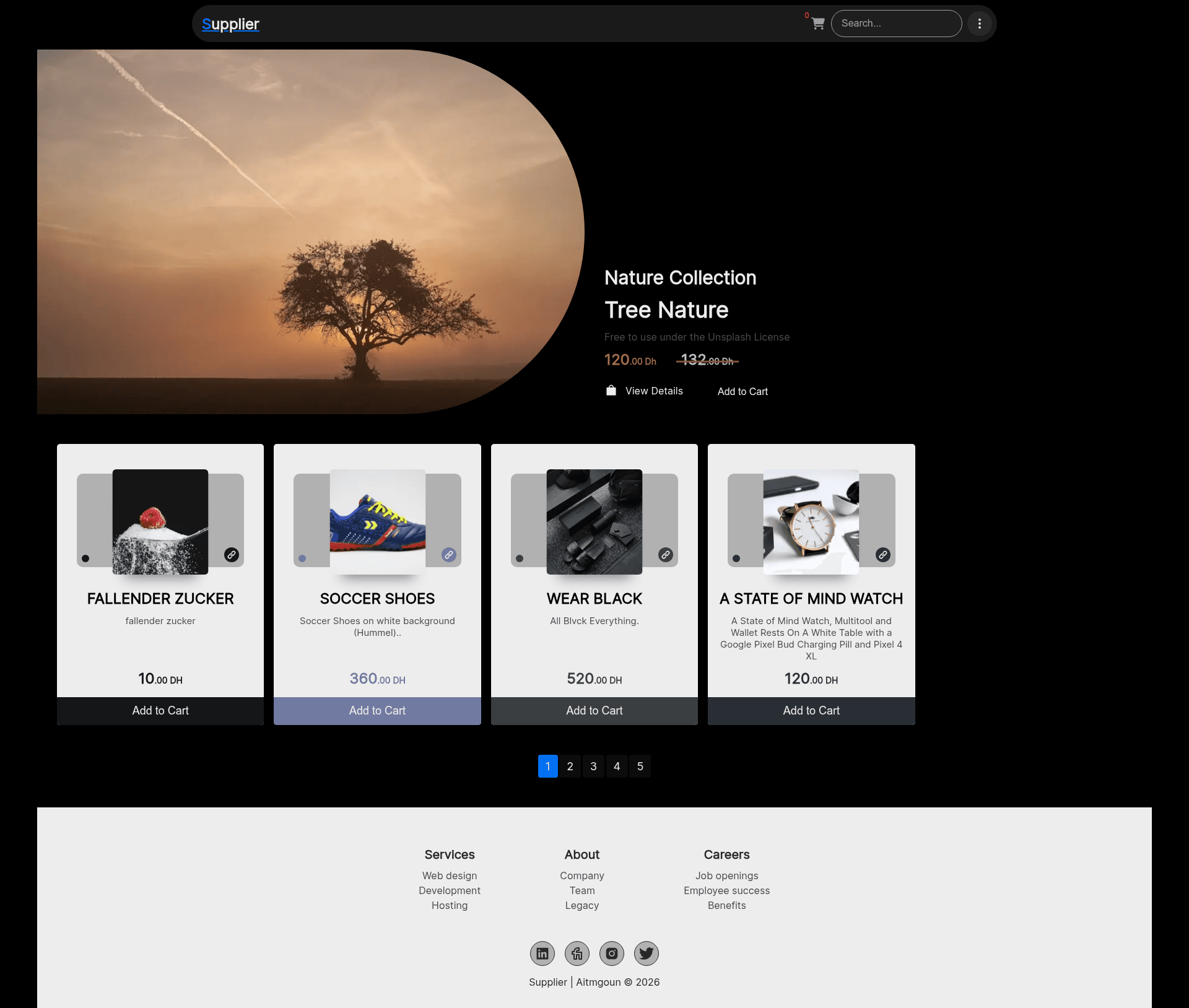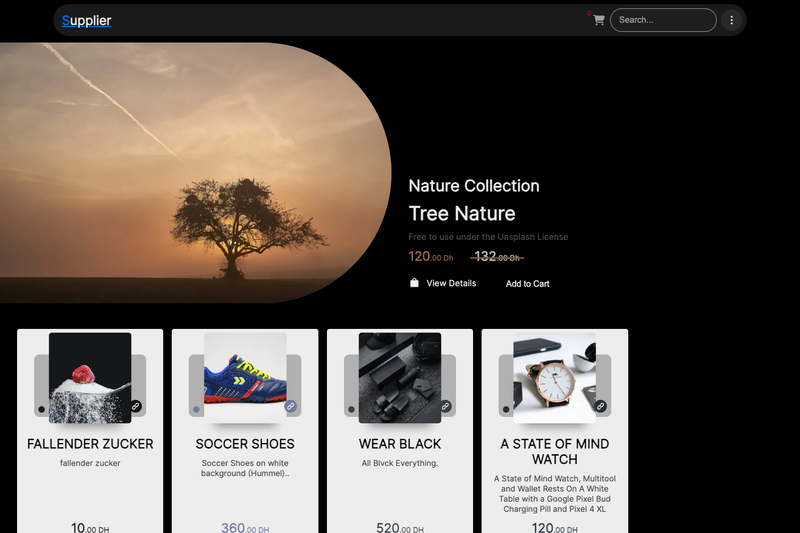
Supplier Aitmgoun is an open-source e-commerce website starter built on Next.js 13, styled with Sass, backed by MongoDB Atlas with Prisma, and currently adding Stripe payment integration. It is bootstrapped from create-next-app, so it ships with the standard Next.js App Router structure, TypeScript, and the next/font font-optimization system.
What is Supplier Aitmgoun?
Supplier Aitmgoun is an e-commerce project (repository description: “E-commerce website built using Next.js 13, Sass and MongoDb Atlas”) that uses Prisma for database access and is a work-in-progress on Stripe payments. As a create-next-app project, it includes app/page.tsx as the main page, a development server that runs npm run dev, yarn dev, or pnpm dev, and automatic page reload after edits.
Key Features
- Next.js 13 App Router — Built with the modern
app/directory structure; editingapp/page.tsxupdates the page immediately. - Sass styling — The project uses Sass (SCSS) for styles, as stated in the repository description.
- MongoDB Atlas + Prisma — The repository topics list MongoDB and Prisma, indicating a Mongo Atlas database with the Prisma ORM for data modeling and queries.
- Stripe payments in progress — The author notes they are learning Stripe for payments, so the checkout flow is actively being built.
- TypeScript — The codebase is written in TypeScript, one of the repository's listed topics.
- Automatic Inter font —
next/fontis configured to optimize and load Inter, a Google Font, without external requests. - Vercel deployment ready — The README points to Vercel Platform as the easiest deployment route, with the official Next.js deployment docs linked.
Who is it for?
- Developers new to e-commerce — Use this scaffold to learn how a Next.js 13 storefront is organized with an App Router and a MongoDB-backed data layer.
- Freelancers — Fork the repository to quickly start client projects that need a Mongo database and Prisma, then add Stripe for payments.
- Students exploring payment processing — The in-progress Stripe integration offers a concrete example of wiring checkout into a Next.js app.
What can you do with Supplier Aitmgoun?
- Build a storefront — Start from the create-next-app boilerplate, modify
app/page.tsx, and add product pages, cart, and checkout. - Model store data — Use Prisma to define product, user, and order schemas that persist in MongoDB Atlas.
- Test payment flows — Follow the project's Stripe learning path to implement payment methods and confirmations.
How does it work?
After running npm run dev (or another package manager command), the app is served at http://localhost:3000. The page auto-updates as you edit app/page.tsx. The project uses next/font to serve Inter font automatically. To deploy, connect the repository to Vercel; the README includes a button link and deployment documentation.
FAQ
Is Supplier Aitmgoun free?
The repository is publicly available as a create-next-app-based project. No license or pricing is stated in the README, so it can be treated as free to use and modify.
What database does Supplier Aitmgoun use?
The repository description specifies MongoDB Atlas, and Prisma appears in the topics list for ORM-based data access.
Does it already support Stripe?
Not yet fully — the description says the author is learning to use Stripe for payments, so payment integration is a work in progress.
How do I start the development server?
Run npm run dev, yarn dev, or pnpm dev in the project root, then open http://localhost:3000.
What is the main file to edit?
The README says to modify app/page.tsx; the browser refreshes automatically to show changes.