Tactile Advanced Template With Algolia is a Jekyll blog theme for GitHub Pages that extends the classic pages-themes/tactile layout with Algolia-powered site search.
What is Tactile Advanced Template With Algolia?
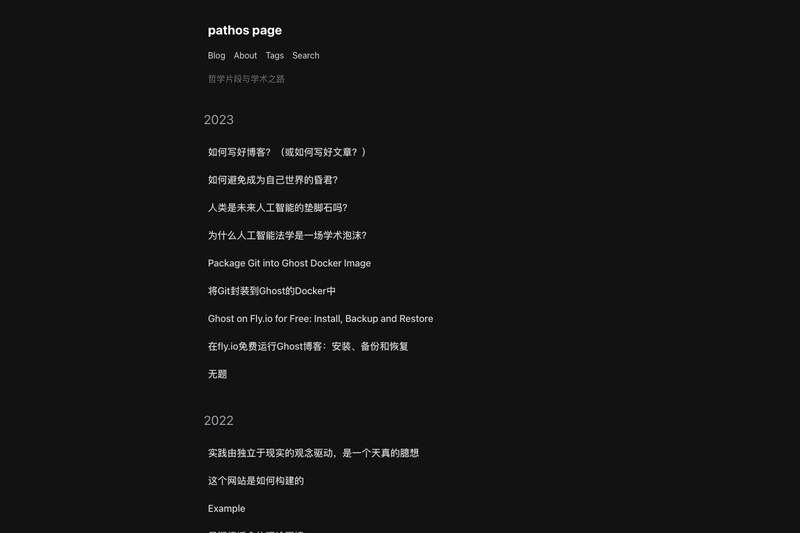
This is a Jekyll theme for GitHub Pages, forked from the official pages-themes/tactile project. It takes Markdown blog posts as input and generates a static blog with an Algolia search index on GitHub Pages. The theme is published publicly under the pathos.page account and includes a live demo at https://pathos.page/.
Key Features
- Algolia search integration — Adds site search to the blog without building a search backend; the README links to an article on setting up Algolia with a Jekyll blog.
- Fork of pages-themes/tactile — Inherits the tactile design from GitHub Pages' official theme collection, giving a clean and minimal blog layout.
- GitHub Pages ready — Works with Jekyll builds on GitHub Pages; just fork the repository and configure the
_config.ymlfile. - Local development with Bundler — Includes dependency management so you can run
bundle installand thenbundle exec jekyll serverto preview the blog locally. - Blog-focused structure — Built specifically for a blog on GitHub Pages, with a
_postsfolder for Markdown articles and a search feature expected for content discovery. - Customization via HTML/CSS editing — The README instructs users to remove HTML and CSS comment markers when editing to keep code syntax highlighting visible in their editor.
Who is it for?
- Jekyll bloggers — People who want a minimal tactile-styled blog on GitHub Pages with built-in search functionality.
- Developers familiar with Jekyll — Those who can edit the theme's HTML/CSS files and configure an Algolia account for search.
- GitHub Pages users — Anyone hosting a static blog on GitHub Pages who wants a Jekyll theme without a separate CMS.
What can you do with it?
- Publish Markdown posts — Write posts in Markdown, place them in the
_postsfolder, and Jekyll turns them into a static site on GitHub Pages. - Add full-text search — Set up an Algolia index and integrate it with the theme's search component using the linked tutorial.
- Customize the theme — Edit the HTML and CSS files; the README offers tips for maintaining syntax highlighting while modifying comments.
How does it work?
After forking the repository, delete the author's posts if you intend to publish your own content. For local preview, install dependencies with bundle install and run bundle exec jekyll server. To enable Algolia search, follow the article linked in the README to configure an Algolia index and plug it into the blog.
FAQ
Is this theme free to use?
Yes, the repository is a public Jekyll theme forked from GitHub Pages' tactile theme. You can use and modify it freely, following the license of the original pages-themes project.
Does it require an Algolia account?
Yes, to use the search feature you need an Algolia account with an API key. The free tier is sufficient for a blog with limited content, but the README does not specify rate limits.
Can I run it locally without Ruby?
No, you need Ruby and Bundler installed to run bundle install and bundle exec jekyll server. GitHub Pages itself uses Jekyll and will build the site automatically on push.
How do I remove the example posts?
If you fork the repository, remove all posts from the _posts folder. The README explicitly requests that all articles be deleted when forking to avoid duplicating the author's content.