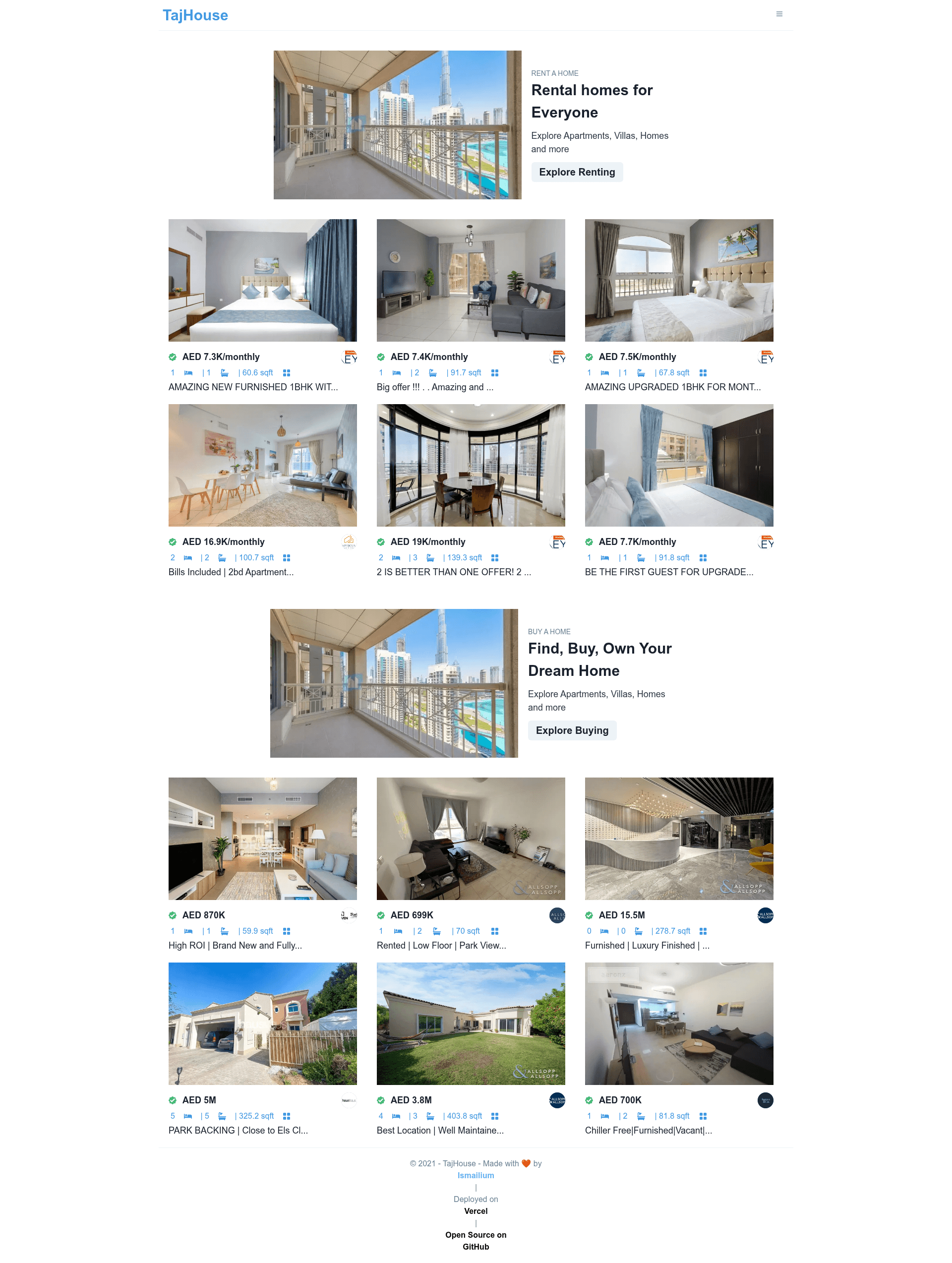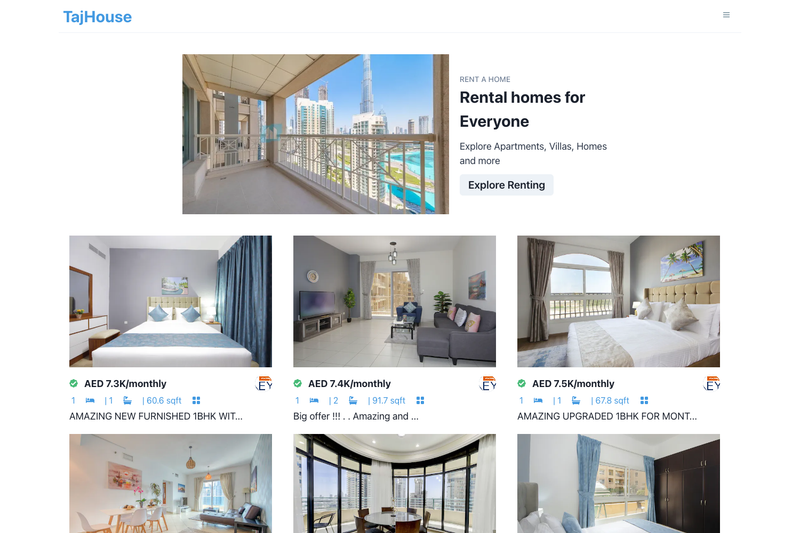
TajHouse is an open-source real estate web application template that lets users explore apartments and villas for rent and purchase, built with Next.js, Chakra-UI, and the RapidAPI platform. The project, created by Ismailium, is deployed on Vercel and available as a public GitHub repository with 15 stars, making it a practical starting point for developers building property-listing sites.
What is TajHouse?
TajHouse is a real estate web app template for browsing property listings, specifically apartments and villas available for renting or buying. It is built on the Next.js React framework, styled with Chakra-UI, and integrates a real estate API through RapidAPI to fetch property data. The source code is publicly hosted on GitHub, and the app is deployed on Vercel for instant access.
Key Features
- Next.js framework — Uses React-based Next.js for server-side rendering and static generation, enabling fast page loads and SEO-friendly output.
- Chakra-UI styling system — Styled with Chakra-UI, a component library that provides accessible, themeable React components out of the box.
- RapidAPI integration — Connects to a real estate API via the RapidAPI marketplace, allowing the app to pull live or sample property listings without a custom backend.
- Rent and buy listings — The interface supports exploring both rental properties and homes for sale, covering apartments and villas.
- Vercel deployment — Configured for deployment on Vercel, the platform where the live demo is hosted, simplifying hosting and updates.
- Repository topics — The GitHub repository lists chakra-ui, javascript, nextjs, rapidapi, and reactjs as its primary topics, highlighting the core technologies used.
Who is it for?
TajHouse is for developers who want a ready-made front-end for a real estate portal and prefer to skip the boilerplate setup. Real estate startups can use it as a demonstration of how to browse and display property data. Next.js developers can study how the template combines server rendering, Chakra-UI components, and an external REST API accessed through RapidAPI.
What can you do with TajHouse?
- Developers: Fork the repository and customize the property search interface for apartments and villas to match a new real estate brand.
- Real estate agencies: Use the template to present rental and for-sale listings to clients, relying on RapidAPI to supply property data.
- Learners: Explore the codebase to understand how Next.js pages tie together Chakra-UI styling and data fetched from a third-party API.
FAQ
What tech stack does TajHouse use?
TajHouse is built with Next.js for the framework, Chakra-UI for styling, and RapidAPI for fetching real estate data. The app is deployed on Vercel and is written in JavaScript/React.
Who made TajHouse?
The template was created by Ismailium, a developer who links their Twitter profile in the repository readme.
Is TajHouse a full-featured production app?
TajHouse is a web app template focused on exploring apartments and villas for rent or purchase. It demonstrates a property browsing experience but is not a complete real estate management system.
Where is TajHouse hosted?
The repository is hosted on GitHub and the deployed application runs on Vercel, as stated in the project's description.
Does TajHouse require an API key?
TajHouse uses RapidAPI to access real estate data. RapidAPI integrations typically require an API key for the chosen provider, though the repository itself does not outline the specific setup steps.