Template details
Nextarter Daisy
Next.js starter template with TailwindCSS, daisyUI, TypeScript, PWA, and SEO configurations, ready to deploy.
About this template
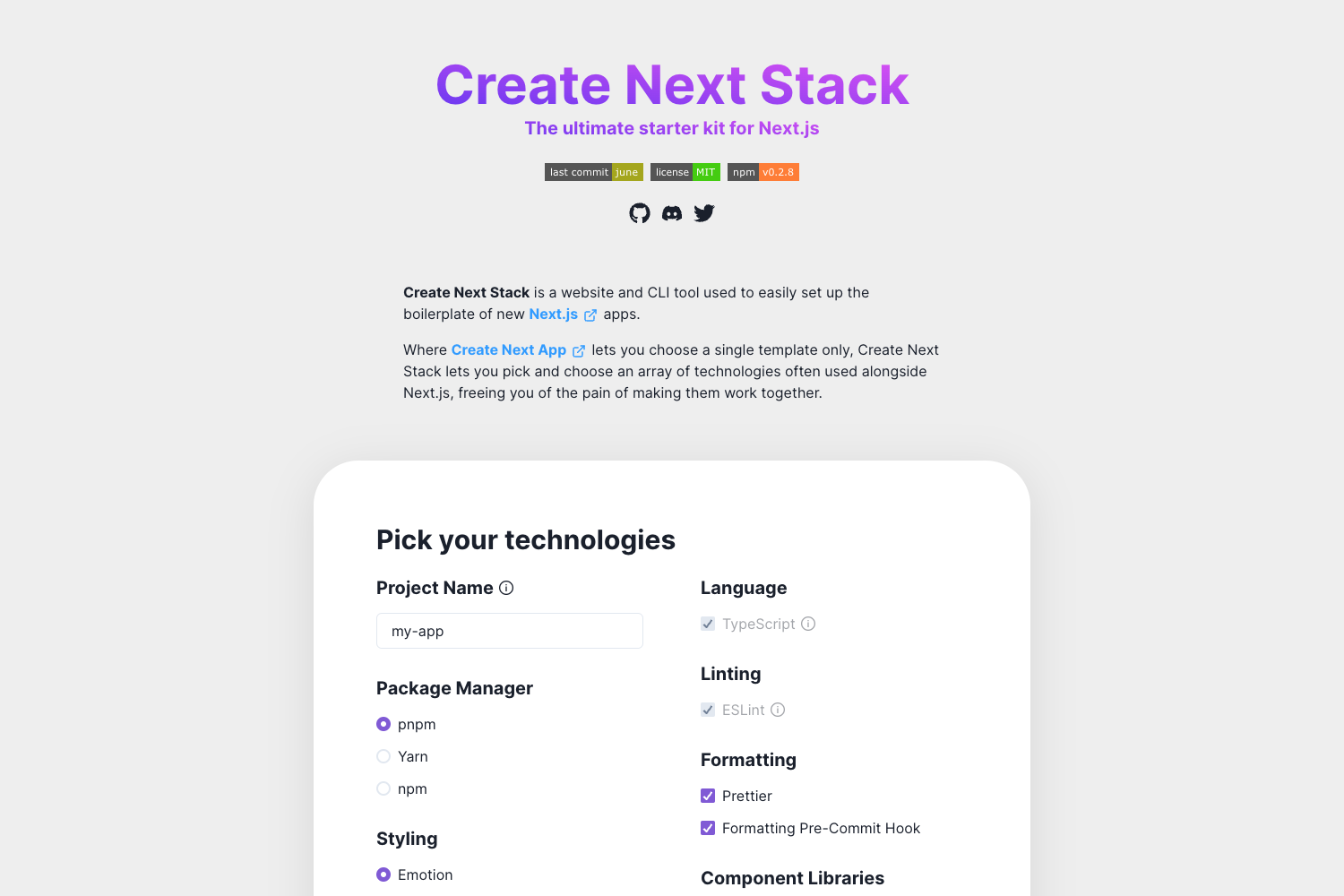
Nextarter Daisy is a Next.js starter template that bootstraps a TypeScript project with TailwindCSS and daisyUI preconfigured, plus a battery of development tools for linting, formatting, PWA, and SEO.
What is Nextarter Daisy?
Nextarter Daisy is an open-source boilerplate created by sozonome on GitHub. It starts from a create-next-app base and layers on TailwindCSS with the daisyUI component library, TypeScript, and a set of quality-of-life configurations. You input a project name and get a complete Next.js application with pages, styling, and tooling ready to develop. It runs on any platform that supports Next.js, including Vercel and Netlify, both of which have one-click deploy buttons in the repository.
Key Features
- TailwindCSS + daisyUI — Utility-first CSS with daisyUI's component classes, themes, and dark mode support preconfigured.
- TypeScript — Strict typing is set up from the start, so your codebase is type-safe by default.
- Code quality tooling — ESLint, Prettier, Husky, lint-staged, and standard-version are all configured to enforce consistent style and conventional commits.
- PWA-ready —
next-pwais included but disabled by default; you enable it by editingnext.config.js. - SEO optimization —
next-seoandnext-sitemapare installed, letting you add meta tags, Open Graph data, and generate sitemaps. - Quick scaffolding — Use
npx degit sozonome/nextarter-daisy <APP_NAME>to create a new project without cloning the entire history. - One-click deployment — Deploy to Vercel or Netlify directly from the repository via their ready-made buttons, or open the project in StackBlitz for browser-based development.
Who is it for?
Nextarter Daisy suits developers who want to skip the repeated setup of a new Next.js project. Solo developers can have a running start for a personal site or MVP. Agencies can offer clients a consistent stack with predictable tooling. Open-source maintainers can use it as a base for publishing their own starters or example apps.
What can you do with Nextarter Daisy?
- Start a new web app — Generate a project with a single command and immediately begin editing
src/pages/index.tsx. - Deploy a production site — Push to Vercel or Netlify using the provided deploy buttons; the template includes
next-sitemapto generate your sitemap for search engines. - Build a PWA — Flip the
next-pwaswitch innext.config.jsto turn the site into a progressively enhanced installable app. - Set up CI-friendly repos — The preconfigured hooks and versioning tools (husky, lint-staged, standard-version) keep pull requests clean and releases consistent.
How does Nextarter Daisy work?
You start by running npx degit sozonome/nextarter-daisy <APP_NAME> in your terminal. That clones only the template files, without Git history. Then npm install (or yarn) installs dependencies, and npm run dev starts the development server at http://localhost:3000. Editing src/pages/index.tsx reloads the page automatically.
FAQ
Is Nextarter Daisy free?
Yes. It's an open-source template hosted on GitHub under the sozonome account, and you can use it for any project, including commercial ones, subject to the repository's license.
Does Nextarter Daisy include PWA support out of the box?
It's configured but disabled. The next-pwa package is installed and set up, but you must enable workbox options in next.config.js to activate service workers and offline support.
Can I deploy to Vercel or Netlify?
Yes. The repository includes deploy buttons that import the project directly into Vercel or Netlify. Since it's a standard Next.js app, both platforms support it without extra configuration.
What styling system does it use?
It uses TailwindCSS as the underlying CSS framework with daisyUI on top, which provides accessible UI components like buttons, cards, and modals that work with Tailwind's utility classes.
What Next.js version does it require?
The template is built on the current version of Next.js at the time of creation, bootstrapped with create-next-app. It uses the pages router (see src/pages/index.tsx) rather than the app directory.