Newsletter
Join the Community
Subscribe to our newsletter for the latest news and updates

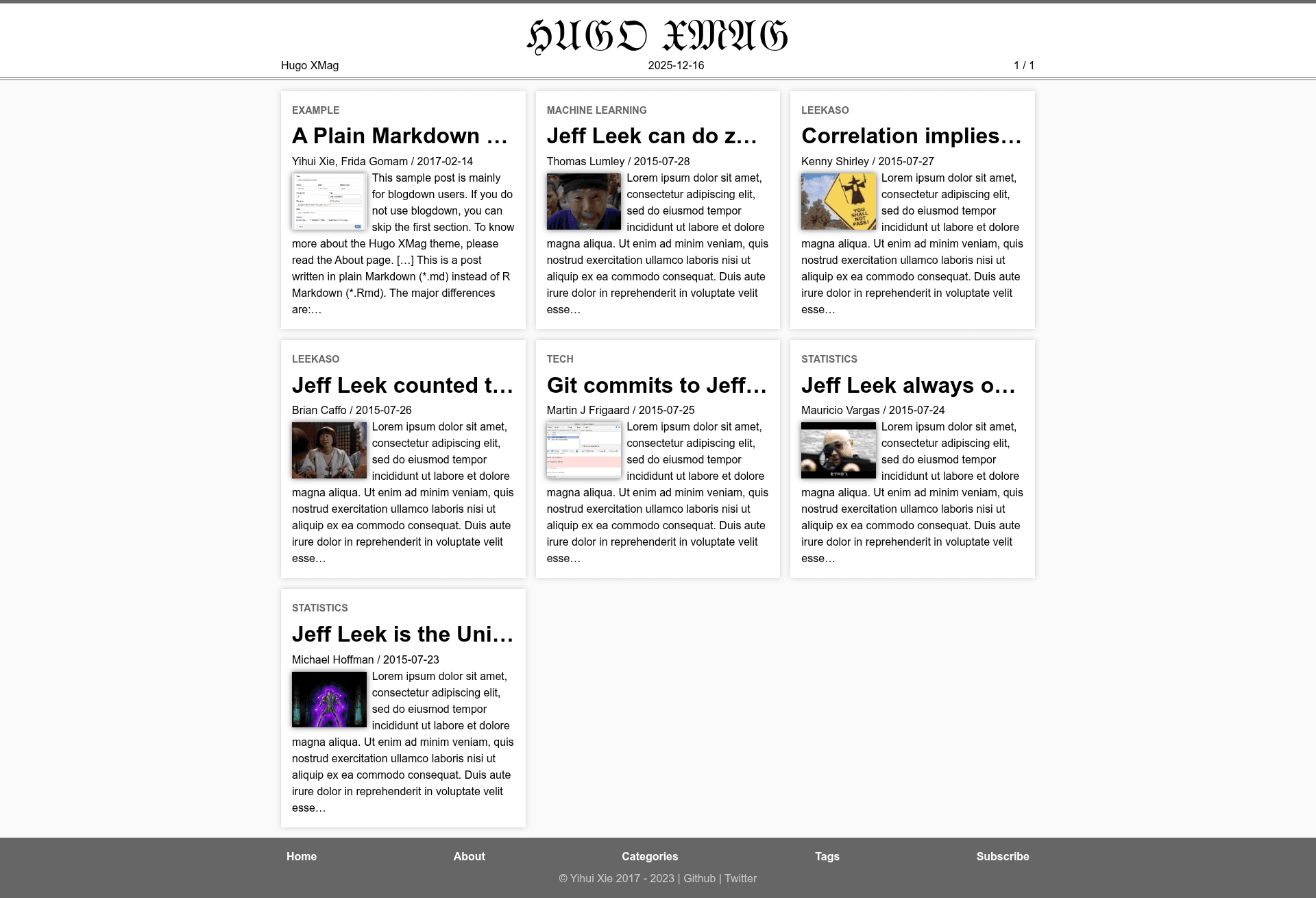
XMag is a minimal magazine-style Hugo theme with responsive article summary blocks, thumbnails, and MathJax support.
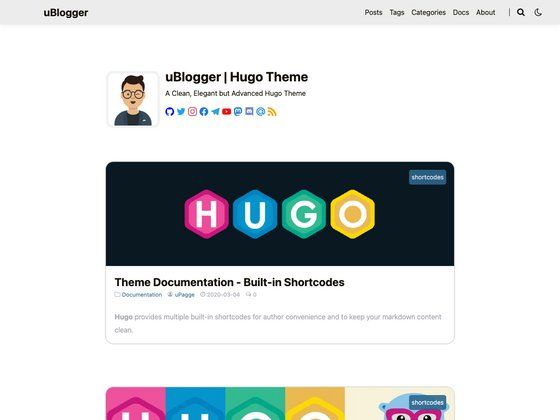
A clean, elegant, and advanced Hugo blog theme with dark mode, multi-language support, and rich shortcodes.
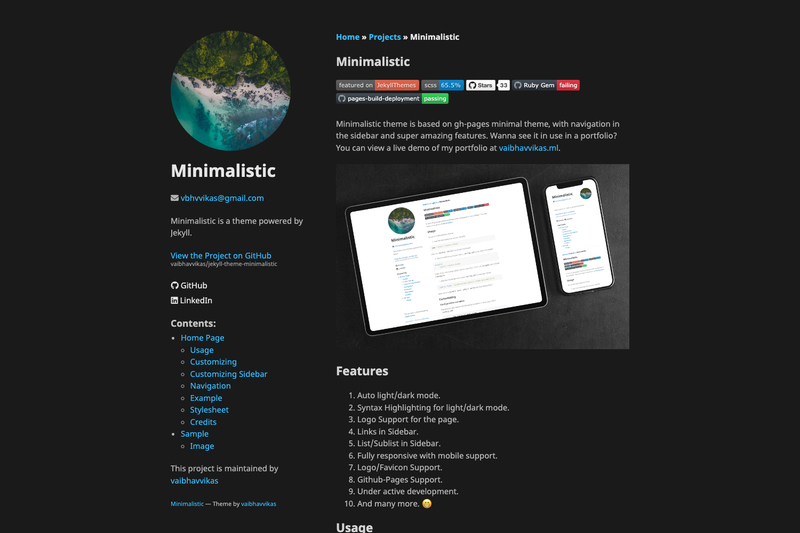
A minimal responsive Jekyll theme with sidebar navigation and many more amazing features.

Free, fully responsive HTML5 site template for text-heavy blogs and editorial content.
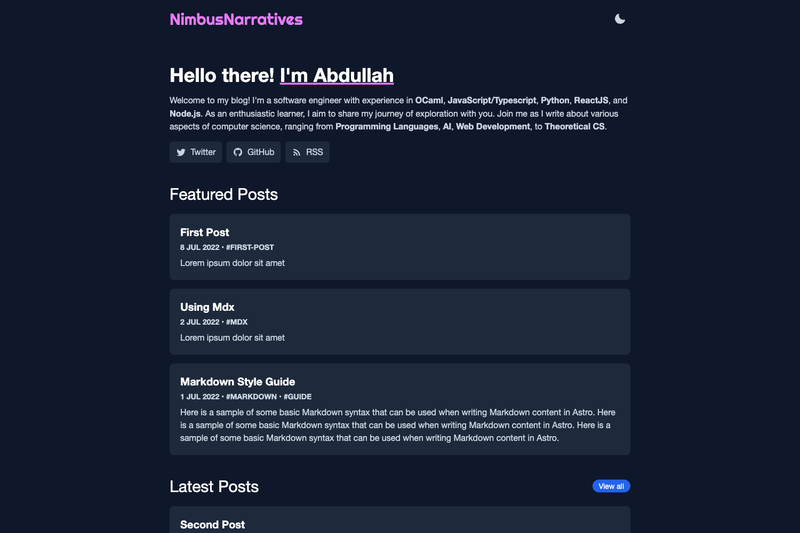
A minimal, accessible, and SEO-friendly personal blog theme built with Astro, Preact, and TailwindCSS.
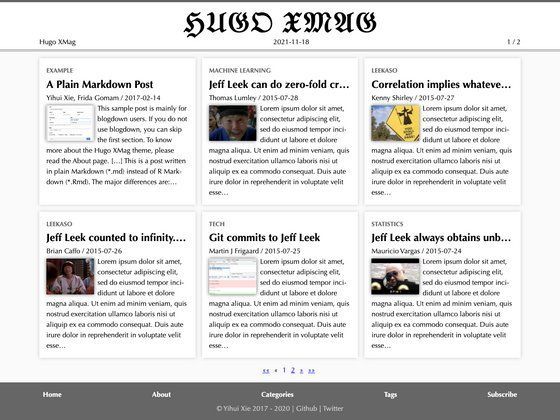
XMag is a minimal magazine-style Hugo theme that transforms a set of Markdown posts into a responsive homepage of article summary cards, modeled after Wikipedia's The Signpost.
XMag is an open-source theme for the Hugo static site generator, created by Yihui Xie as a stylistic successor to his XMin theme. It takes Markdown content from a Hugo site and renders it as a magazine-style website, with a homepage of responsive article summary blocks, thumbnails, and a Blackletter masthead. The theme is configured through config.toml, and its source code is available on GitHub under the MIT license.
blogdown::new_site(theme = 'yihui/hugo-xmag') and manage content from R.The theme relies on Hugo's standard content pipeline: write posts in Markdown with front matter for title, date, thumbnail, and tags. On the homepage, XMag loops through recent posts and renders summary blocks with optional thumbnails; on single pages, it displays the full article with metadata, author info, and a table of contents. Configuration happens in config.toml, and additional features can be enabled through custom layouts.
Pros:
Cons:
XMin — the simpler base theme from the same author, without the magazine homepage style.
Yes, XMag is released under the MIT license, so you can use and modify it freely, including for commercial projects.
Yes, XMag includes MathJax support, so you can write LaTeX math expressions in your Markdown posts and they will be rendered in the browser.
If you use R, run blogdown::new_site(theme = 'yihui/hugo-xmag') to create a new blogdown site with XMag. For non-R users, a manual installation guide is provided in the theme documentation.
The theme's documentation warns that the standard Quickstart Guide fails at Step 3. Instead of following that step, you should download the theme repository, unzip it, copy it into themes/, and then copy themes/hugo-mag/exampleSite into your site root before resuming at Step 5.
Yes, most features can be configured through config.toml, and a few can be enabled by creating custom layouts. The theme's About page provides detailed documentation.