Newsletter
Join the Community
Subscribe to our newsletter for the latest news and updates

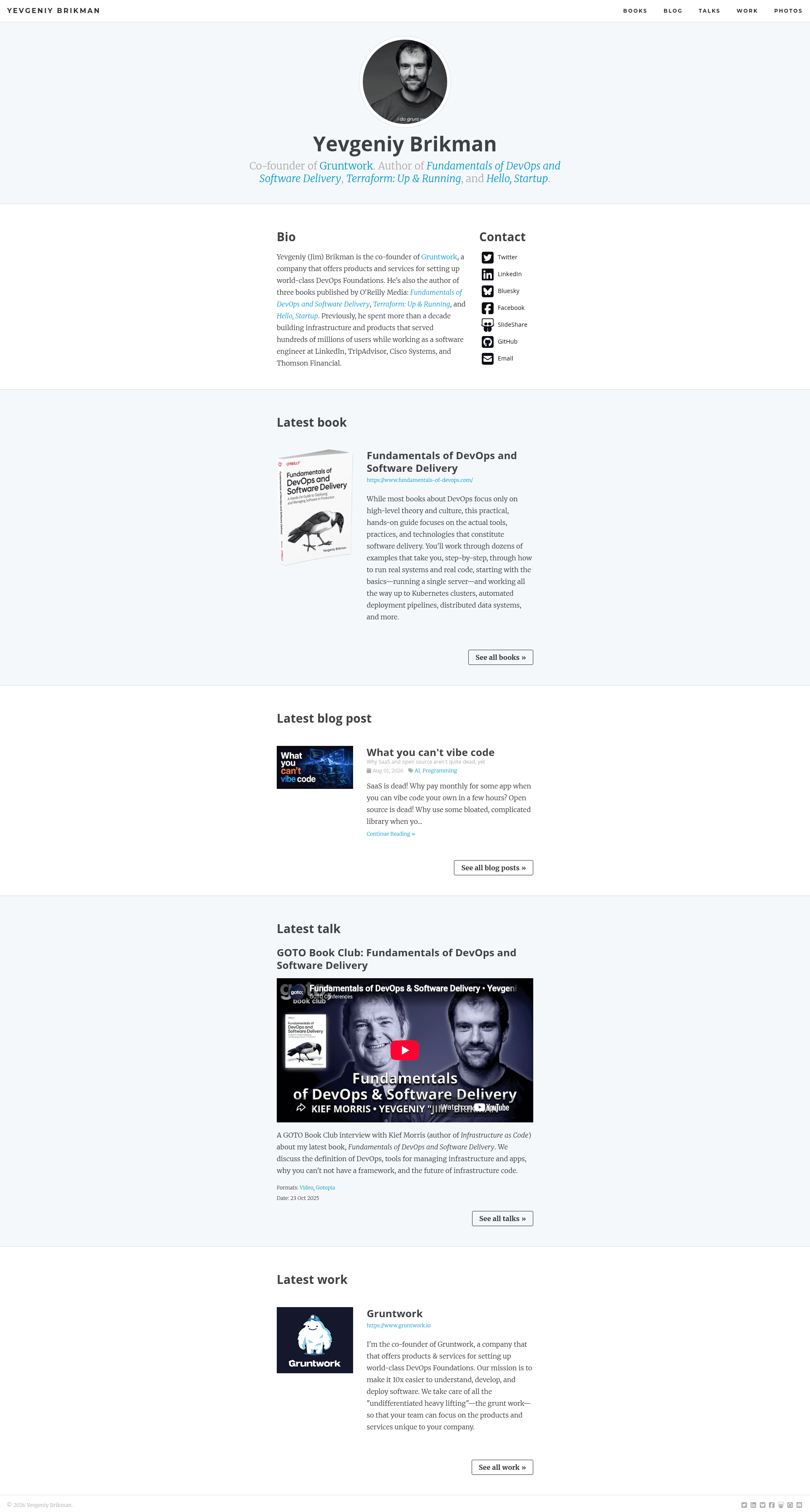
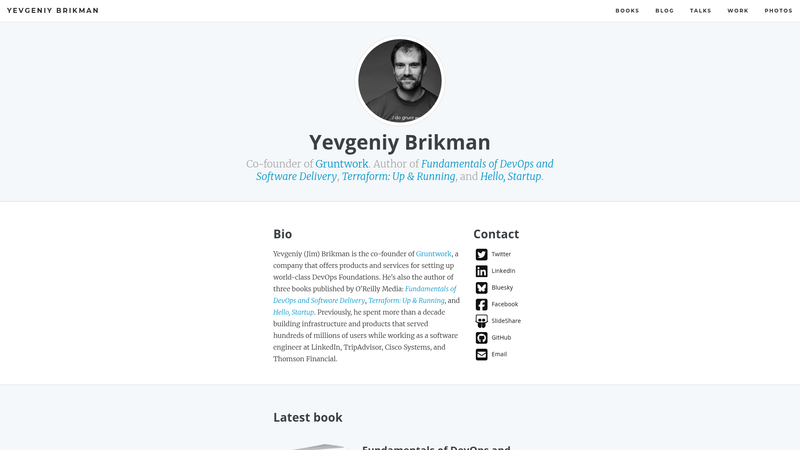
A clean, fast, mobile-friendly home page template built with Jekyll, hosted on GitHub Pages, for publishing writing, talks, projects, and photos.
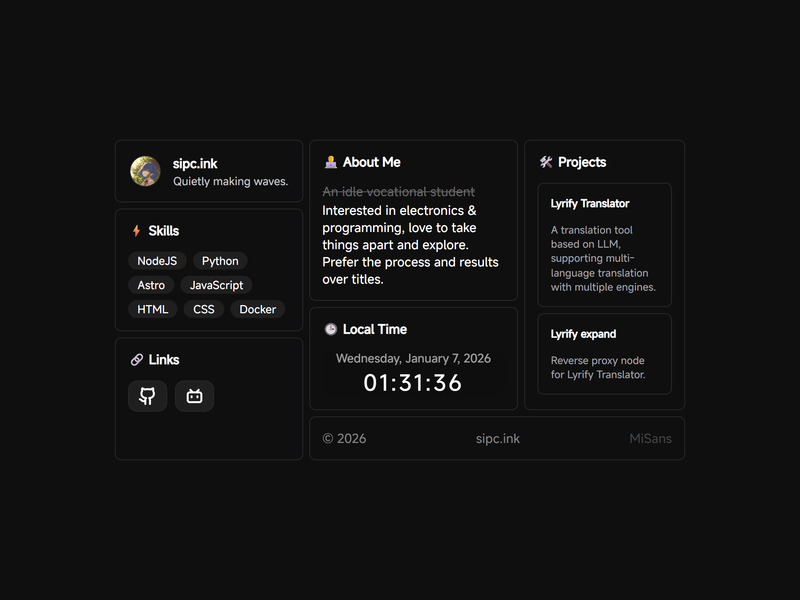
A minimalist bilingual personal homepage built with Astro and StudioCMS UI, with JSON-driven content and built-in i18n.
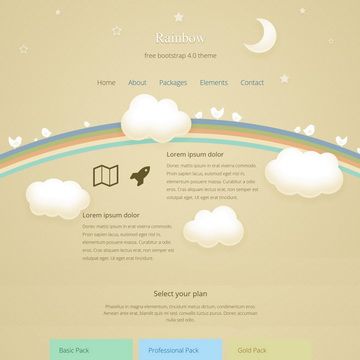
A free responsive one-page HTML template with a rainbow header/footer, khaki background, and rainbow-styled tables.
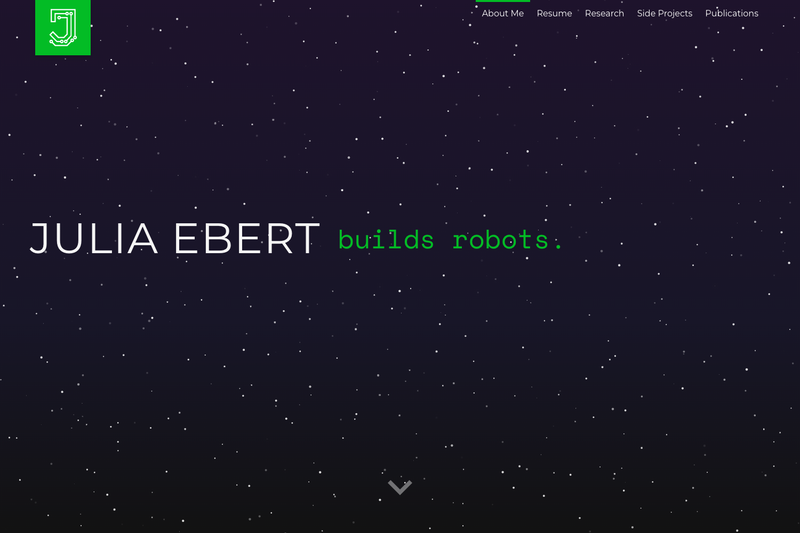
Personal website template built with Nuxt.js, featuring a printable CV, publication list, and project showcase components.

A minimal dark Hugo theme that builds a single responsive links page, styled with Bootstrap and licensed under MIT.
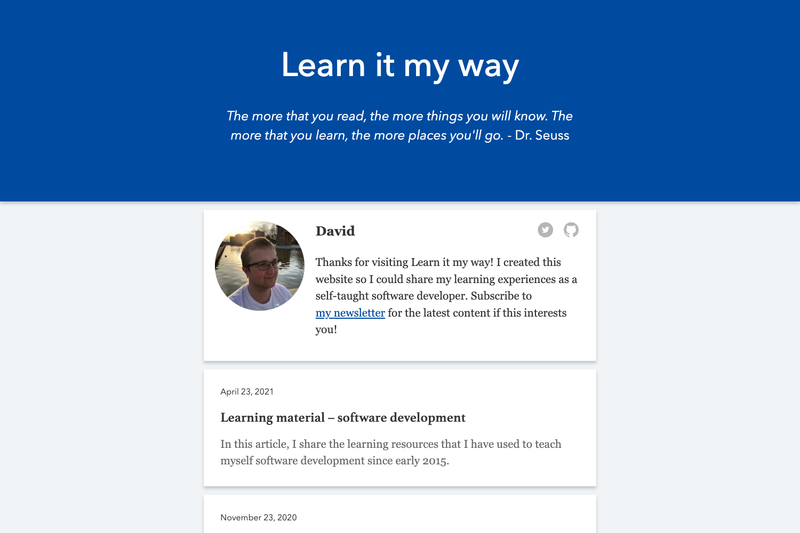
Personal Hugo website template with Netlify deployment, based on the Ananke theme.

The John Doe template converted into a Jekyll theme.
The Yevgeniy Brikman Home Page is an open-source Jekyll template for a personal homepage that the author, Yevgeniy Brikman, uses to publish his writing, talks, projects, and photos. It is designed to be fast, mobile-friendly, free to build, and easy to update, and it is released under the MIT License.
The Yevgeniy Brikman Home Page is a static website template built with Jekyll. It takes content written in basic HTML or Markdown and generates a complete personal site that is hosted on GitHub Pages. The template includes sections for writing, talks, projects, and photos, and it uses a clean, simple design. The code is available on GitHub with a repository description of 'The Yevgeniy Brikman Home Page.'
serve --drafts.The template is cloned from GitHub, then Jekyll is installed locally. The developer creates a _config.dev.yml file with an Algolia API key that allows access from localhost, runs bundle install once, and then runs bundle exec jekyll serve --drafts --limit 100 --config _config.yml,_config.dev.yml to build and preview the site at http://localhost:4000. For production, the site is hosted on GitHub Pages, where Jekyll builds are triggered on push.
Yes. The code is released under the MIT License, and the recommended hosting platform, GitHub Pages, offers free static site hosting. Additional free tiers are available for CloudFlare CDN and Disqus comments.
Basic HTML and Markdown are used for pages and blog posts. Since it runs on Jekyll, you can also use Liquid templating and the standard Jekyll front matter to structure posts, drafts, and collections.
You need to create a _config.dev.yml file that contains a dev value for algolia_search_api_key — an API key that allows access from localhost. This file should not be committed to version control. The production configuration in _config.yml uses a different key.
Yes, any static hosting provider works because Jekyll outputs plain HTML. However, the template is tailored to GitHub Pages, using the GitHub Pages Gem and only plugins available on that platform, so switching hosts may require adjusting the build process.