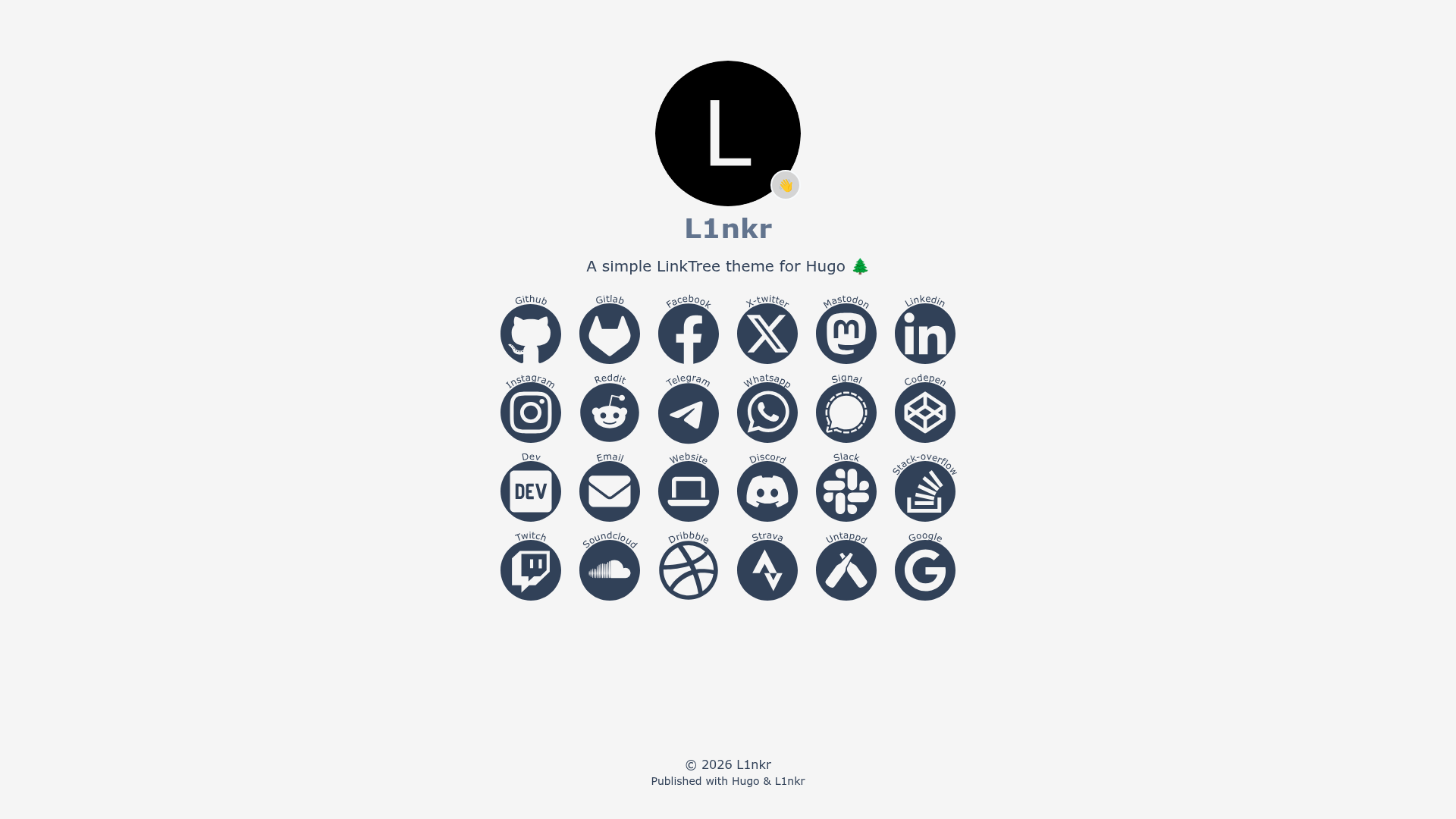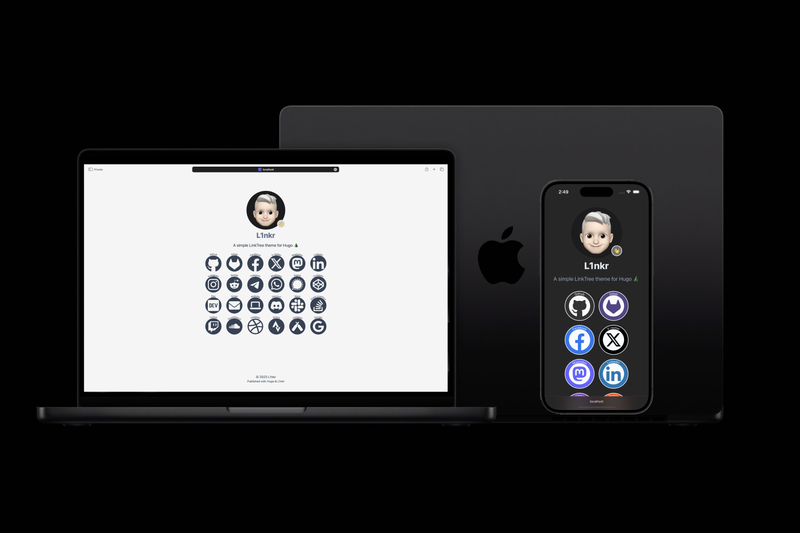
L1nkr is a mobile-first Hugo theme for building LinkTree-style link-in-bio pages, created by chrede88 and available as a free open-source GitHub template.
What is L1nkr?
L1nkr is a Hugo theme that takes a configuration file and produces a static single-page website listing your links, social profiles, and brands. It runs on the Hugo static site generator, requiring a minimum Hugo version of v0.158.0 and Go installed locally. The theme is maintained by chrede88, and a starter template, L1nkrTemplate, is provided for rapid setup. The output is a lightweight, mobile-first HTML page with an optional healthcheck endpoint at /healthcheck.json.
Key Features
- Mobile-first design — The layout is optimized for phone screens and scales gracefully to larger displays.
- Automatic dark mode — The theme follows the system color scheme setting, switching between light and dark automatically.
- Colorful or monochromatic scheme — Configure links to appear either with vivid colors or a uniform monochrome style.
- Emoji support — Add emojis to links and page elements for a more expressive design.
- More than 50 brand links — Built-in support for over 50 brand icons, letting you link to popular platforms without custom code.
- Healthcheck endpoint — A /healthcheck.json file is generated for uptime monitoring services.
- Quick-start template — The L1nkrTemplate repository contains a ready-to-use Hugo site so you can launch in minutes.
- Lighthouse-tested — The repository displays Lighthouse badges for performance, accessibility, best practices, and SEO.
Who is it for?
- Content creators — who need a single link aggregator for their social media bios, replacing hosted services with a self-hosted static page.
- Developers — who want a hackable, git-versioned link page built with Hugo and deployable to GitHub Pages or any static host.
- Freelancers and small businesses — that want to present a set of links to services, portfolios, and contact channels without maintaining a full website.
What can you do with L1nkr?
- Streamers and YouTubers: Publish a custom LinkTree-style page with branded icons for Twitch, YouTube, Discord, and other platforms.
- Job seekers: Build a clean, professional link page that aggregates your resume, portfolio, LinkedIn, and email contacts.
- Event organizers: Use the theme as a temporary link hub for a conference or meetup, listing tickets, schedule, and social accounts.
How does L1nkr work?
To use L1nkr, install Hugo and Go, clone the L1nkrTemplate repository, and follow its installation guide. Configuration is done in Hugo's config file, where you define links, color scheme, and emoji usage. The wiki provides instructions for updating the theme and deploying the finished site to GitHub Pages.
Pros and cons
- Pros: Free and open source, static output for fast load times, minimalist design, and full control over your link page.
- Cons: Requires knowledge of Hugo and Go; the theme does not include built-in analytics (you would need to add your own tracking).
Alternatives
- LinkTree — the original hosted link-in-bio service, which handles hosting and link management for you.
FAQ
Is L1nkr free to use?
Yes, the theme is freely available on GitHub under the L1nkr repository, and the L1nkrTemplate starter can be cloned and modified without charge. The license specifics are not listed in the README, but the source is publicly accessible.
What minimum Hugo version does L1nkr require?
L1nkr requires Hugo version v0.158.0 or newer. You also need Go installed because Hugo themes often use Go modules for dependencies.
How do I deploy a L1nkr site to GitHub Pages?
The project wiki includes step-by-step instructions for deploying to GitHub Pages. In general you build the Hugo site and push the generated static files to your repository's Pages branch or use a GitHub Action.
Does L1nkr support dark mode?
Yes, dark mode is automatic and based on the visitor's system settings. There is no manual toggle; the theme switches colors to match the operating system's appearance.
What is /healthcheck.json?
It's an endpoint that outputs a JSON response, intended for uptime monitoring services to verify your page is live. It's a simple file generated by the theme during build.