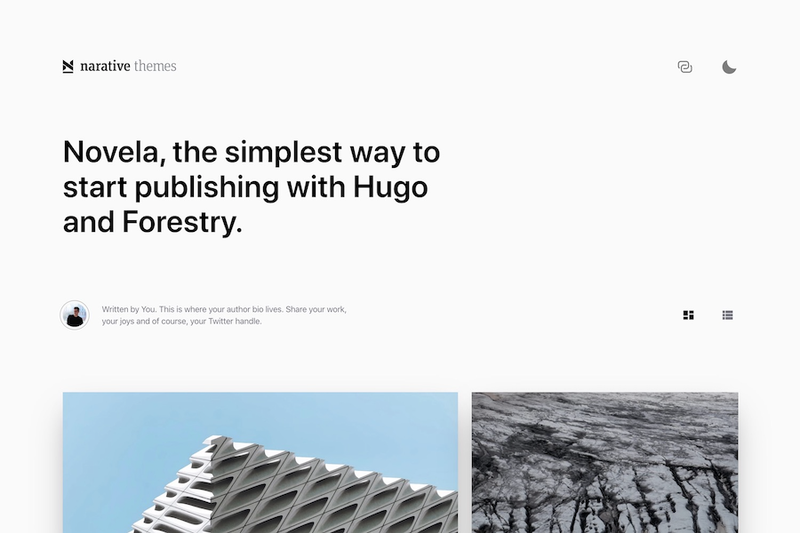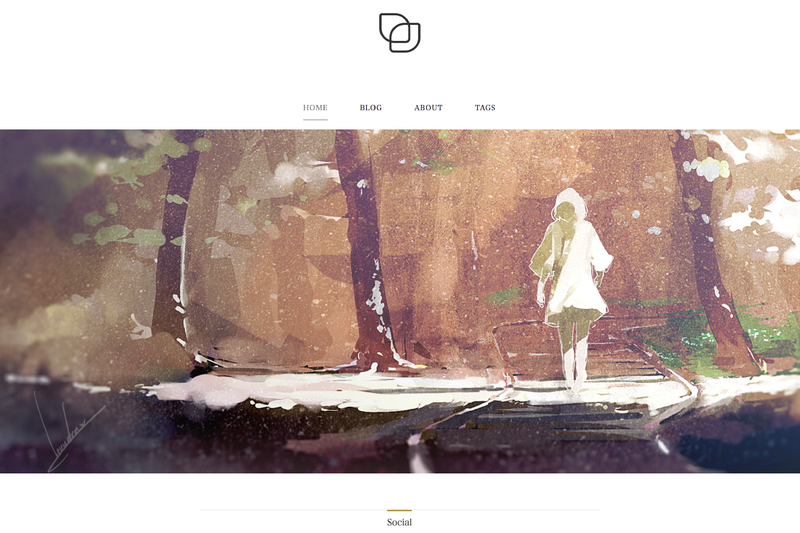
Yuki is a minimal Hugo theme for personal blogs, built around a clean, snow-like aesthetic, that turns Markdown content into a responsive static website.
What is Yuki?
Yuki is a Hugo theme developed by iCyris, published on GitHub under the MIT License. It takes a Hugo site's Markdown content and renders it as a static website with a responsive layout. The theme is configured through a config.toml file and supports standard Hugo content organization under content/post and content/pages.
Key Features
- Responsive design — The layout adapts to mobile and desktop viewports without separate configuration.
- Syntax highlighting — Code blocks are highlighted with highlightjs, supporting a wide range of programming languages.
- Customizable social links — Social media links can be configured through the site's configuration file, with no code changes required.
- Custom pages — Pages like About can be created under content/pages or at the content root.
- Related content — Hugo's built-in related content feature is enabled, letting posts link to similar articles.
- Tag support — Posts can be organized with tags, and tags are rendered on the site.
- Google Analytics — The theme includes built-in support for the Google Analytics tracking code.
- SCSS styling — Styles are written in SCSS, allowing deep customization via SASS recompilation or a custom.css override.
Who is it for?
- Bloggers — Yuki provides a clean, responsive layout for personal blogs, with tag support and related content to help readers discover older posts.
- Developers — The SCSS source files and documented customization path make it straightforward to fork or adjust the theme's styles.
- Technical writers — Custom pages let you add an About page or other static content alongside your posts, and syntax highlighting suits code-heavy tutorials.
What can you do with Yuki?
- Start a personal blog — Create posts with
hugo new post/your-new-post.md, setdraft = false, and publish with the built-in tag and related-content features. - Add a portfolio or About page — Use custom pages to add content outside the blog post flow.
- Track site traffic — Enable Google Analytics in the theme configuration to collect visitor statistics.
How does Yuki work?
Yuki installs by cloning the repository into your Hugo site's themes directory and then running Hugo with the -t hugo-theme-yuki flag. Content is authored as Markdown in the standard Hugo directories, and the theme's CSS is compiled from SCSS files, which you can override by editing /static/scss/custom.css.
Pricing
Yuki is free and open source under the MIT License, so it can be used for personal and commercial projects without licensing fees.
FAQ
Is Yuki free?
Yes, Yuki is released under the MIT License, which permits free use, modification, and distribution, including for commercial purposes.
How do I install Yuki?
Clone the repository into your Hugo site's themes folder (git clone https://github.com/iCyris/hugo-theme-yuki), then run Hugo with -t hugo-theme-yuki.
How do I create a post?
Posts live in the content/post directory. Run hugo new post/your-new-post.md, then set draft = false in the front matter or build with --buildDrafts.
Does Yuki support tags?
Yes, the theme includes tag support, so posts with tags in their front matter will display those tags on the site.
How can I customize the look?
You can edit the SCSS source files and recompile them, or simply add overrides to /static/scss/custom.css; the theme automatically uses that file to overwrite inline styles.