Newsletter
Join the Community
Subscribe to our newsletter for the latest news and updates

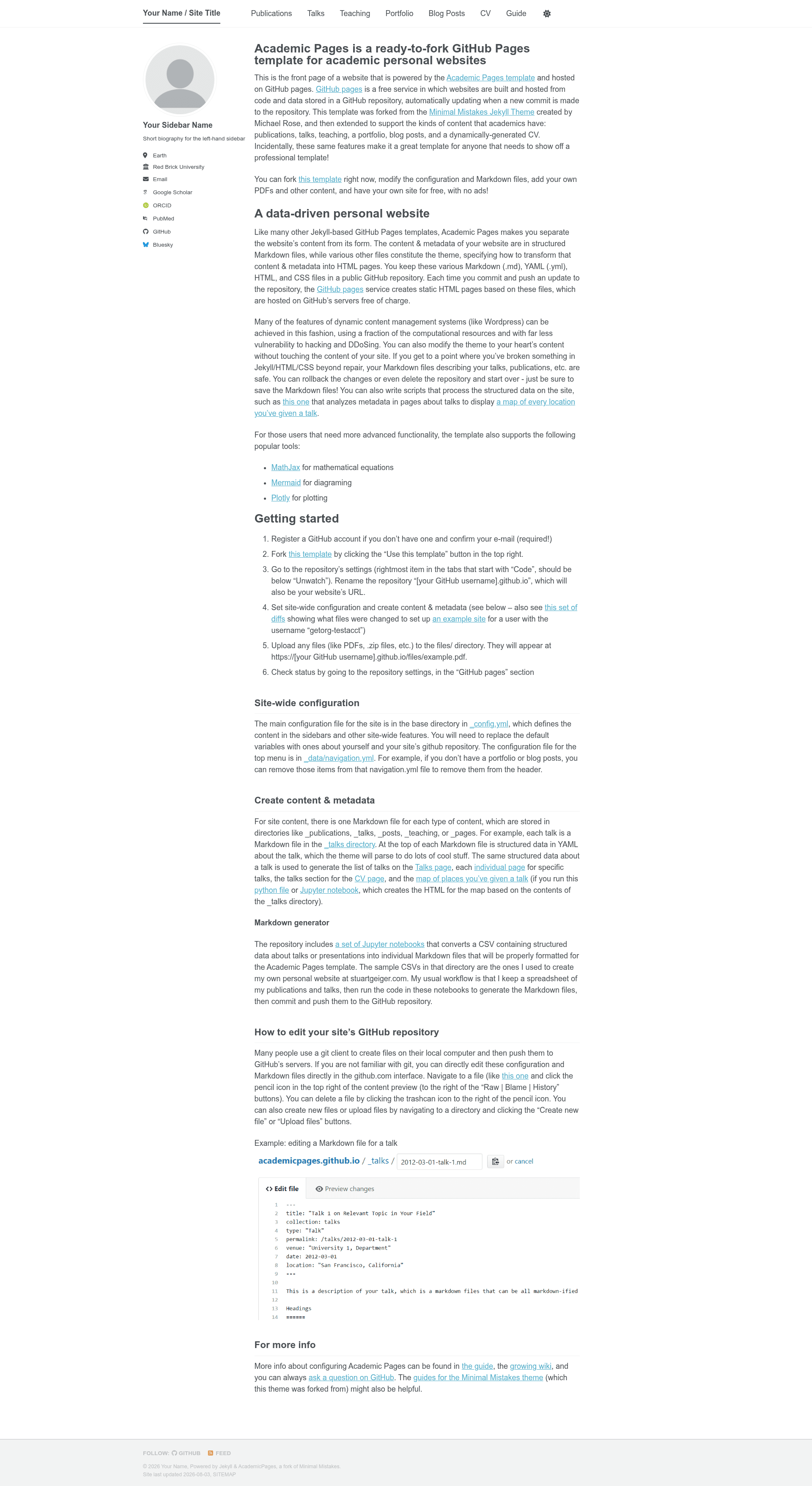
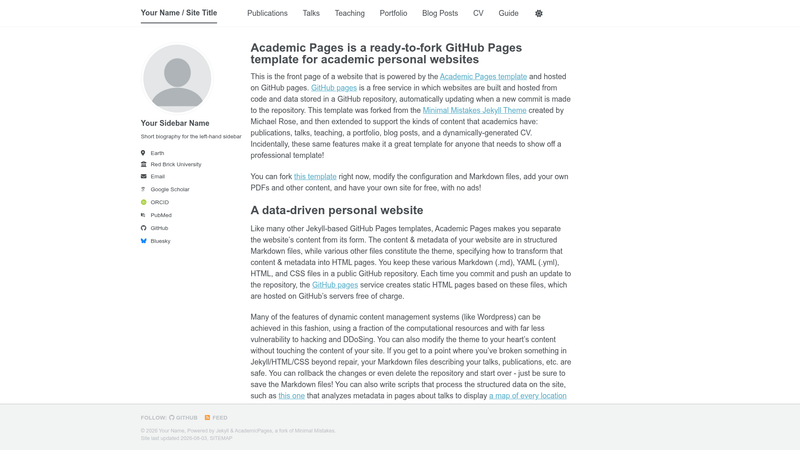
GitHub Pages template for personal and portfolio-oriented academic websites built on Jekyll and Markdown.

A free, open-source Jekyll portfolio theme for developers with an animated particle.js background, SASS customization, and Gulp workflow.

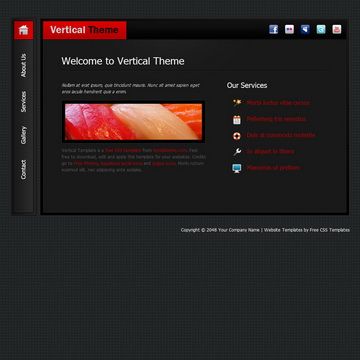
Rosey Pixel is a free one-page HTML/CSS template with a dark red background and pixelated header graphics.

A Hugo theme for posting web apps, with full-page embedding, Disqus, Google Analytics, and responsive design.

Free responsive HTML5 single-page portfolio template powered by Bootstrap 3 from Technext Limited.
Academic Pages is a free GitHub Pages template for building personal and portfolio-oriented academic websites using Jekyll and Markdown.
Academic Pages is a Jekyll-based static site template designed to run on GitHub Pages. It takes Markdown content and a _config.yml configuration file as inputs and generates a complete personal website, including homepage, publications, talks, and portfolio sections. The template was forked by Stuart Geiger from the Minimal Mistakes Jekyll Theme and is currently maintained by Robert Zupko, with an MIT License.
username.github.io; the template includes a pages-build-deployment GitHub Actions workflow that builds the site automatically..github.io, and edit configuration in _config.yml to get a live site.markdown_generator folder contains Jupyter notebooks and Python scripts that convert a TSV file into Markdown pages for publications and talks.files/ folder; they appear at https://username.github.io/files/example.pdf.jekyll serve -l -H localhost to serve the site at localhost:4000; Markdown and HTML changes rebuild automatically, though changes to _config.yml require restarting Jekyll.docker compose up to serve the site on localhost:4000 without installing Ruby dependencies.username.github.io URL with no server costs.files/ for direct, permanent links from your site.To get started, register a GitHub account, click "Use this template," and name the repository yourusername.github.io. Then edit _config.yml to set the site URL and repository path, add content as Markdown, and check the GitHub Pages status in repository settings. Optionally, run the markdown generator to create publication and talk pages, and use bundle install plus jekyll serve to preview locally.
Yes. The template is open source under the MIT License, and hosting it on GitHub Pages is free for public repositories. You only pay if you choose a custom domain or a private repository plan.
Basic familiarity with Git and YAML helps, but the quickstart is entirely click-based: use the template, edit _config.yml, and add Markdown files. The optional markdown generator scripts for TSV-to-Markdown require Python or Jupyter, but they are not required.
Yes, although the template is oriented to academics with built-in sections for publications and talks. The underlying Jekyll/Minimal Mistakes structure is general enough to be customized for any personal or portfolio website.
Using it as a template makes it your own repository, but you cannot easily pull in upstream bug fixes later. Forking lets you sync changes from the original repository, but you must handle merge conflicts from your customizations.