Newsletter
Join the Community
Subscribe to our newsletter for the latest news and updates

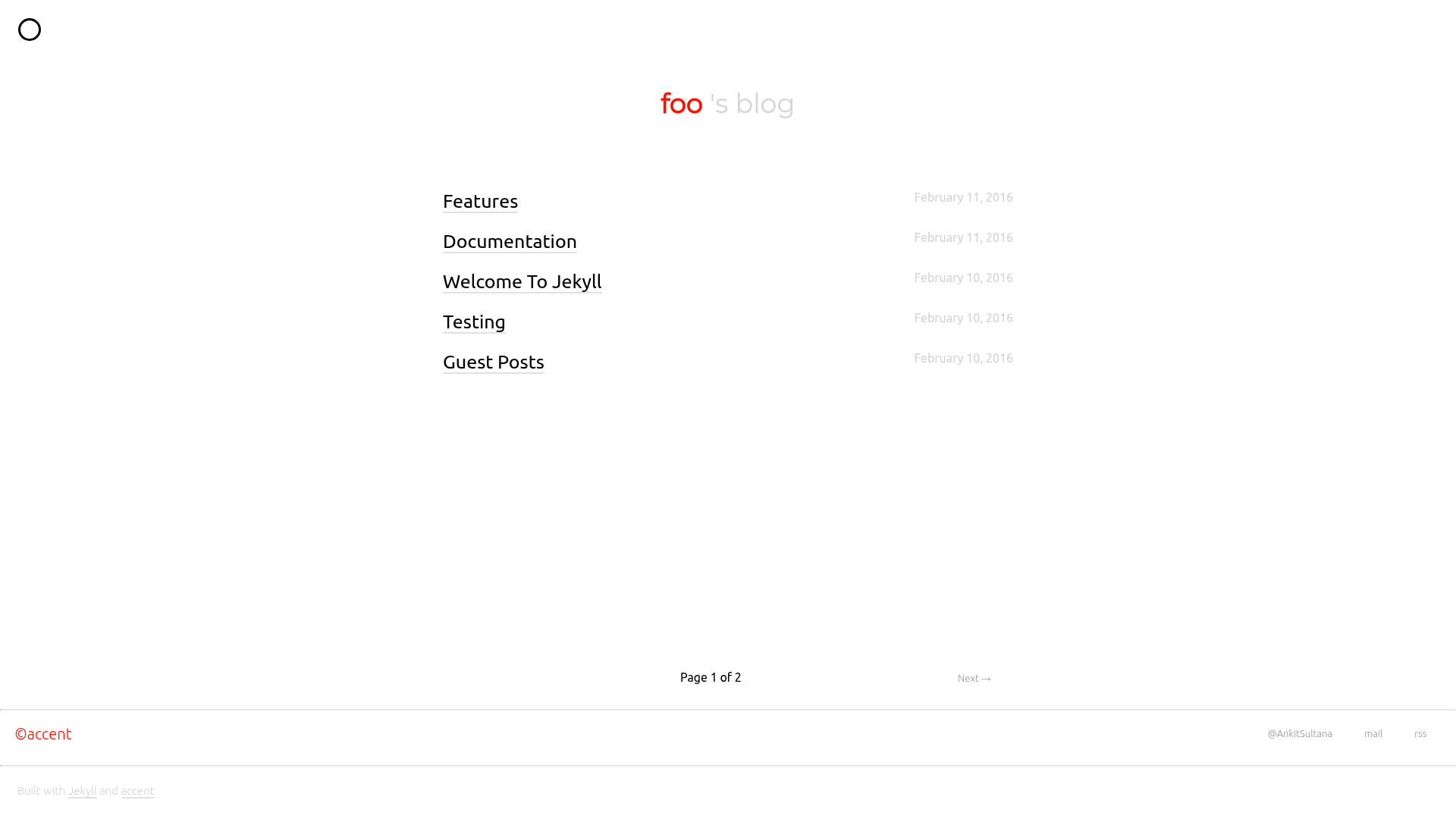
A single accent, single column Jekyll theme for minimal blogs and portfolios.

An Astro v6 blog theme inspired by hexo-theme-butterfly, with bilingual support, Pagefind search, PWA, and Waline comments.
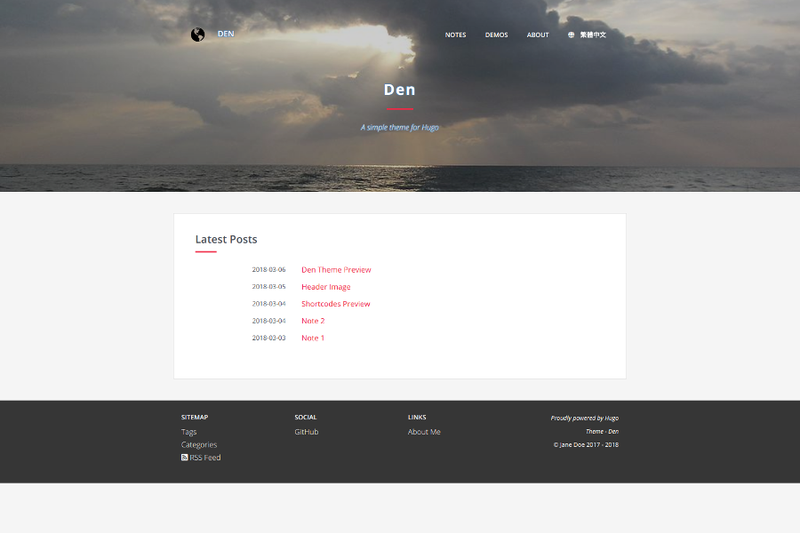
A simple, responsive Hugo blog theme ported from the Nest Pelican theme, with Bootstrap 4 and i18n support.
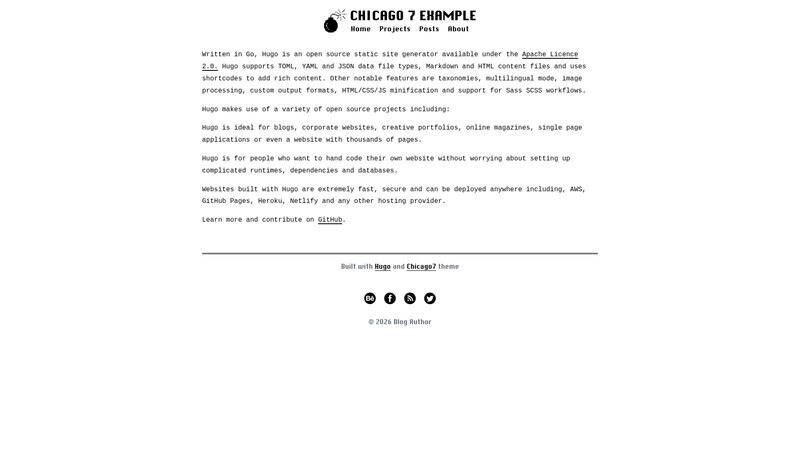
A minimal, zero-JS Hugo theme with a retro Apple System 7 aesthetic built on PicoCSS.

City Blog is a dark brown 2-column blog template with 5 pages and multi-level comments.
accent is a minimalist single-column Jekyll theme whose defining feature is a single user-defined accent color, designed for personal blogs and lightweight portfolios.
accent is a Jekyll theme built by Ankit Sultana that renders a single-column blog layout with a customizable accent color. It takes Markdown posts placed in the _posts directory and generates a static site via Jekyll, with support for syntax highlighting through Rouge, Google Analytics integration, and optional author bio sections.
$accent-color variable in _sass/_style.scss to recolor links and highlights across the entire theme.intro to true in _config.yml to reveal a short bio on the index page.about_footer to show or hide a short about section at the bottom of every post.description variable in _config.yml feeds summaries to Facebook thumbnails, Twitter cards, and Google search results.tracking_id in _config.yml to enable analytics..markdown file in _posts using year-month-day-name-of-the-file.markdown naming._posts and get a clean single-column site with minimal setup.bundle exec jekyll serve locally._config.yml variables for content, analytics, and SEO without touching the build settings.After forking or cloning the repo, users edit user settings in _config.yml (only the section marked User Settings), optionally change the accent color in the Sass file, and create posts as .markdown files in _posts. Running bundle exec jekyll serve builds and serves the site locally, or users can deploy the generated static files anywhere Jekyll supports.
Yes, accent is released under the MIT license, as stated in the repository license file. It can be freely used, modified, and distributed with attribution.
Edit the $accent-color variable in _sass/_style.scss to any hex value. This changes the theme's accent color site-wide.
Posts must be saved in _posts with the format year-month-day-name-of-the-file.markdown, for example 2025-01-01-hello-world.markdown.
Yes, set the tracking_id variable in _config.yml to your Google Analytics tracking ID. The theme will then include analytics tracking.
Yes, it uses Rouge, the default highlighter in Jekyll 3 and above. Code blocks are highlighted according to Jekyll's standard syntax.