Newsletter
Join the Community
Subscribe to our newsletter for the latest news and updates

Minimal markdown-based blog theme for Astro with Tailwind CSS, dark mode, Netlify CMS, and search.
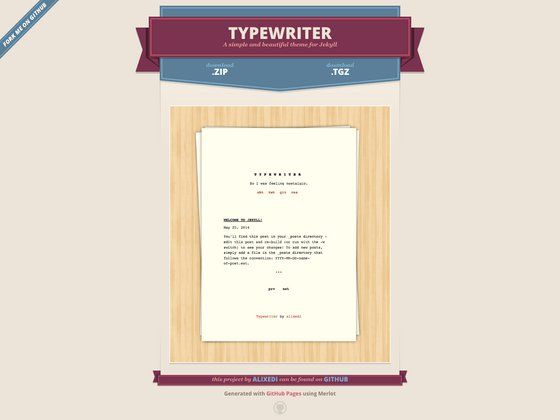
A simple and beautiful theme for Jekyll.
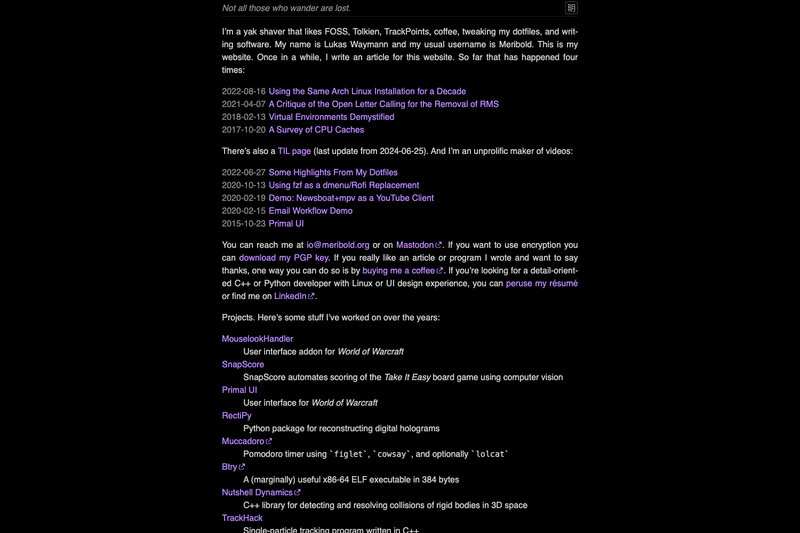
Minimal Jekyll-powered personal website and blog built with HTML, CSS, and JavaScript.
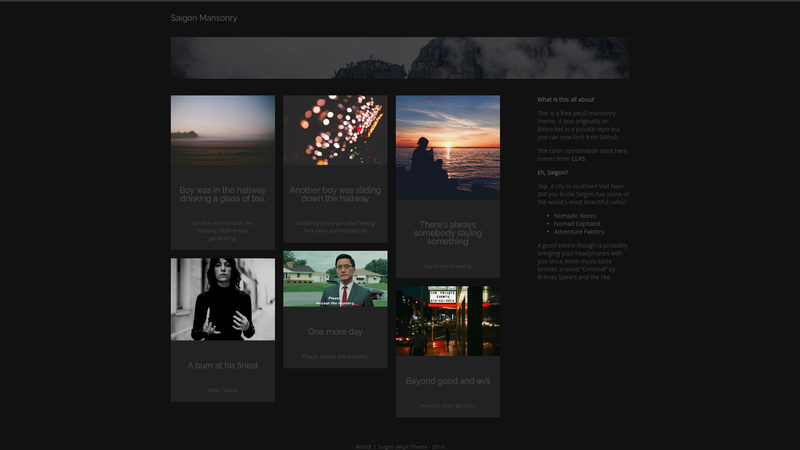
Saigon is a Jekyll masonry blog theme with a tile-based layout, based on a theme by Pasindu De Silva and colored with clrs.cc.
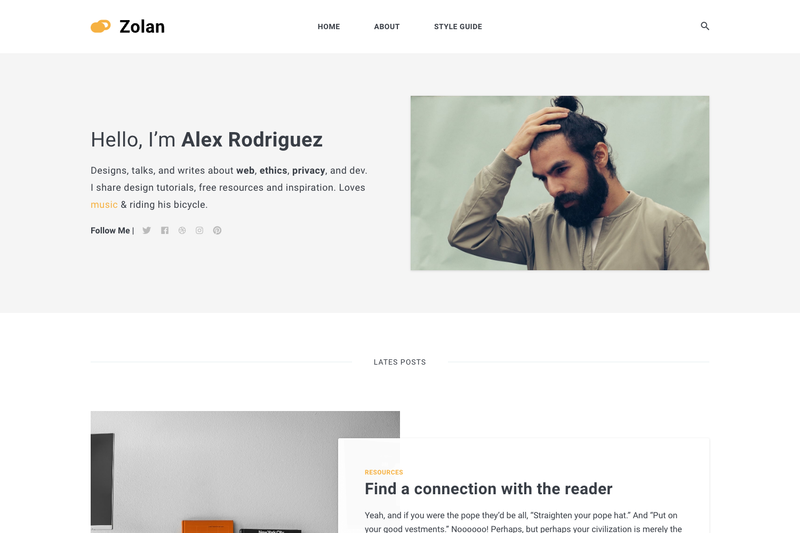
A minimal, responsive Jekyll blog theme with Disqus comments, Instagram feed, and clean design.
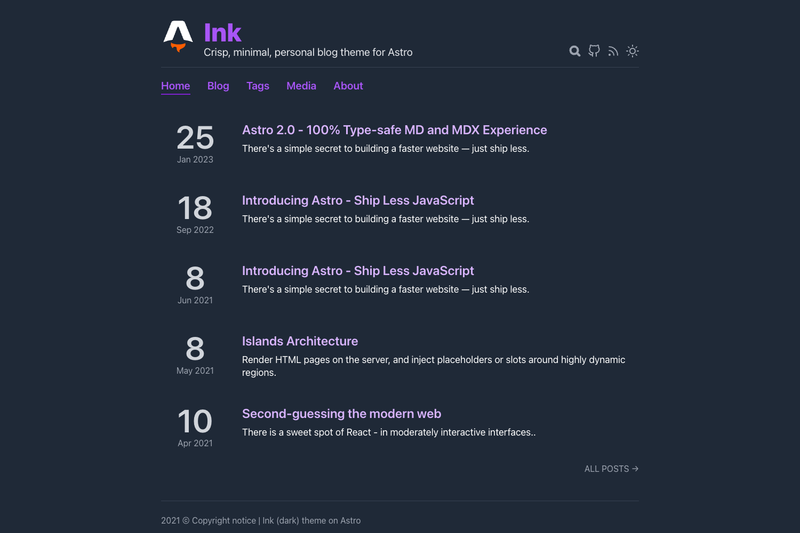
Astro Ink is a minimal, markdown-based personal blog theme built on Astro that provides a lightweight, fast starting point for blogs that ship less JavaScript by default. This open-source GitHub template, created by Aftab Alam (one-aalam), is inspired by the Hugo Ink theme and currently tracks Astro's 2.x release. It produces either static or SSR-ready output depending on your astro.config.mjs settings, and it integrates Tailwind CSS, Svelte, Netlify CMS, Lunr.js client-side search, and an optional Redis-backed view counter.
Astro Ink is a minimal blog theme for the Astro framework, built for markdown-based content. It takes markdown files from a blog directory as input and outputs a responsive blog site with tag-based dynamic pages, pagination, dark mode, and optional author cards. The theme is developed by Aftab Alam and is available as a GitHub template; it is currently aligned with Astro 2.x and uses Tailwind CSS for styling, with Svelte powering interactive components such as the theme switcher. You can clone it with npx degit one-aalam/astro-ink to start without git history.
THEME_KEY=purpleheart astro build.To get started, clone the template with npx degit one-aalam/astro-ink, then set up a .env file with your SITE_URI, and run npm run dev. The theme reads posts from the /blog directory, applies tag-based dynamic pages via content collections, and offers configuration switches in src/config.ts for features like author cards and image overlays. Deployment to Netlify or Vercel is supported through adapters, and optional features like the views counter require a Redis connection URL.
Yes, Astro Ink is an open-source theme released on GitHub under a license badge on the repository. You can clone it, modify it, and use it for personal or commercial projects without cost.
You can select from 6+ color themes by passing a THEME_KEY value to your dev or build commands, such as THEME_KEY=purpleheart astro build. The available themes are defined in tailwind.theme.config.js, and you can customize the blog's prose colors by adding Tailwind Typography's prose-{color} classes in the Prose component.
Un-comment the connection code in the views API file at src/pages/api/blog/views/[slug].ts, configure a Redis host, and put the connection URL in your hosting provider's environment or a .env file. Also set USE_VIEW_STATS to true in the config.ts file.
Yes. By default the template generates server (SSR-ready) output with a Vercel adapter. To produce a static build, change the output value from 'server' to 'static' in astro.config.mjs, remove the Vercel adapter, delete the views counter API endpoint, and set USE_VIEW_STATS to false in the config.
Yes. After deploying to Netlify, you can access the CMS at your-site.netlify.com/admin with Netlify Identity and Git Gateway enabled. This lets you add, edit, and update all posts in the /blog directory through a web-based editor.