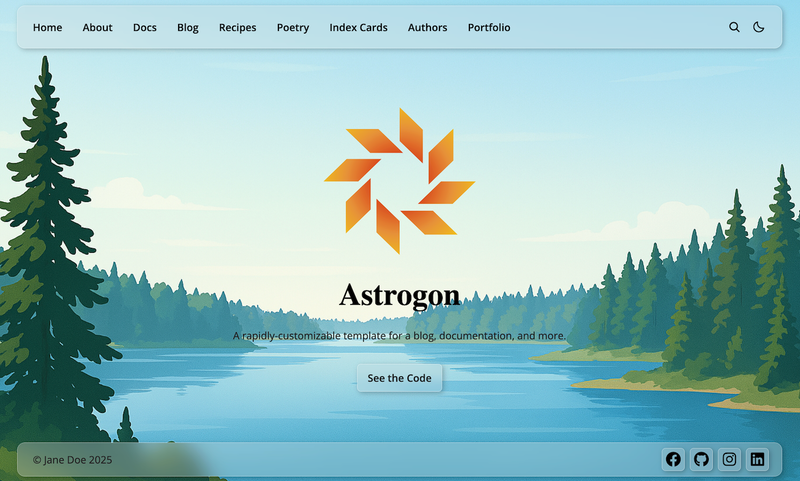
Astrogon is a rapidly-customizable multipurpose website template built on Astro JS, Tailwind CSS, and a sprinkle of React, delivered as an open-source static site starter that ships with blog, documentation, and content collection structures.
What is Astrogon?
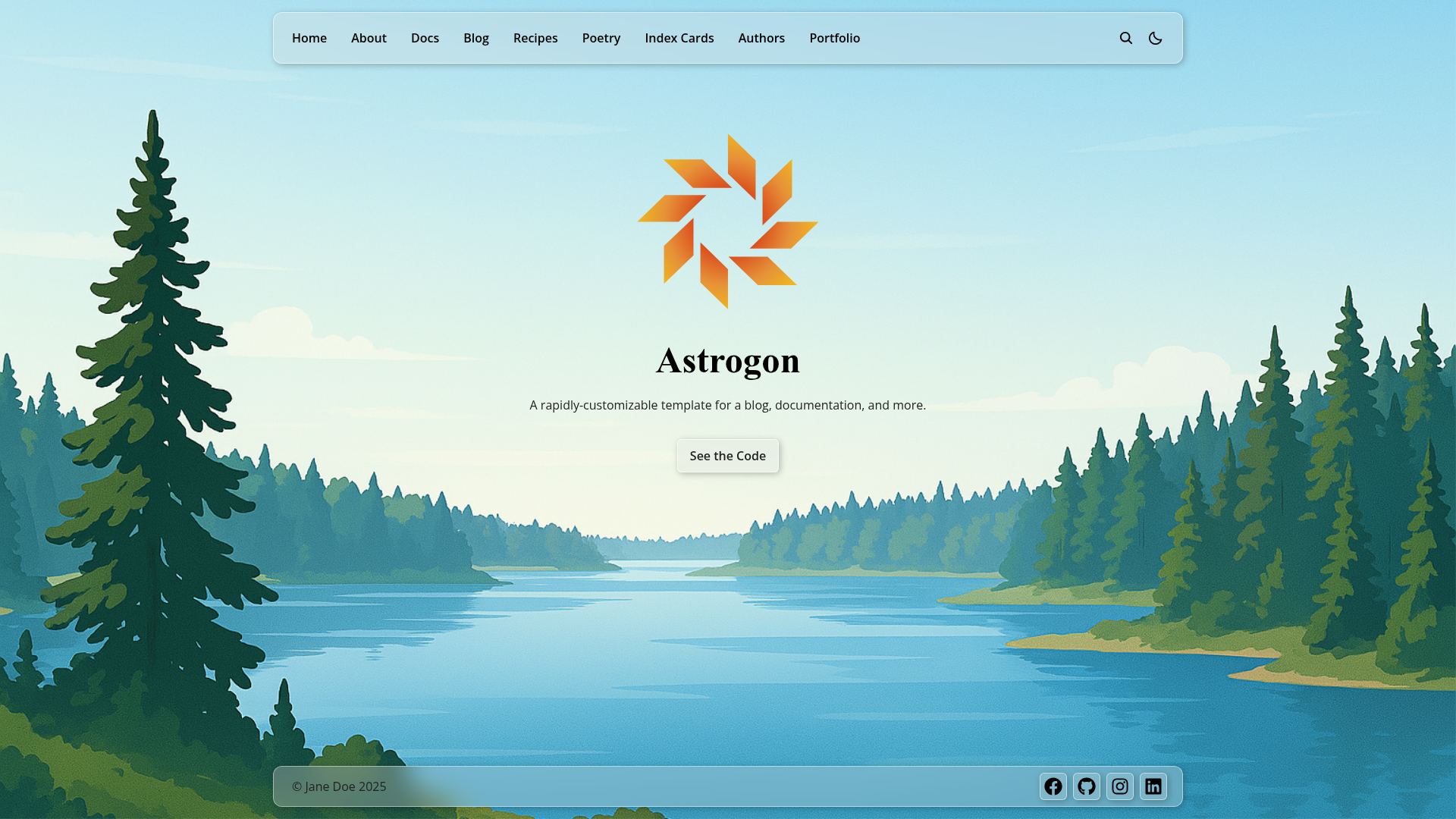
Astrogon is a multipurpose website template created by reednel, built with Astro JS, Tailwind CSS, and React. It takes content written in Markdown or MDX and generates a static website with pages for blogging, documentation, recipes, poetry, and portfolio display. The template is free to use under the MIT License and is designed for rapid customization through modular components and content collections.
Key Features
- Content Collections — Includes Blog (with categories and tags), multi-level Documentation, Recipes, Authors, Poetry, Index Cards, plus Homepage, About/Bio, Portfolio, Terms and Conditions, and 404 pages. Each collection can link entries through the Author field.
- MDX Components — Ships with Accordion, Tabs, Code Block with syntax highlighting, Quote Block, Notice Blocks (note, tip, info, warning), Embedded YouTube video, and LaTeX support for inline and block math.
- Appearance Controls — Full light and dark mode with automatic system-preference detection, a toggleable frosted-glass effect on components, customizable color scheme and typography, and animated transitions between components.
- Navigation Aids — Search over all included content, tooltips on interactive elements, breadcrumbs, auto-calculated reading time, auto-populating related content sections, and pagination for content collections.
- Built-in SEO and Sharing — Includes patterns for search engine optimization and a social media sharing component.
- Cloudflare Deployment Ready — Development instructions include building with
npx astro buildand deploying vianpx wrangler dev, with a note that Astro 5.8+ does not support Node 18.
Who is it for?
- Bloggers and writers — use the Blog collection with categories and tags to publish and filter articles.
- Documentation teams — use the multi-level Documentation collection with toggleable sidebar and table of contents to structure product docs.
- Portfolio owners — use the Portfolio page and customizable components to present work samples.
- Developers building static sites — use the Astro + Tailwind + React stack to quickly scaffold a content-driven website with minimal configuration.
What can you do with Astrogon?
- Create a personal blog with categories, tags, pagination, reading time, and a related-content sidebar.
- Publish a documentation site with nested documents, sidebar navigation, and a table of contents.
- Showcase recipes or poetry with the templated Recipes collection and the lightweight Poetry collection (including Index Cards for single-file content).
- Deploy to Cloudflare Workers using the provided Wrangler workflow.
How does Astrogon work?
- Fork the repository to your GitHub account and clone it locally.
- Install Node 22 using nvm (
nvm install 22). - Run
npm installto install dependencies, thennpm run devto preview athttp://localhost:4321. - Build the static site with
npx astro build, or deploy directly to Cloudflare usingnpx wrangler dev.
Alternatives
Astrogon credits its inspiration to other Astro-based templates: astroplate, astro-design-system, and manual. Each offers a different structure, but all are open-source static site starters.
Pricing
Astrogon is free and open source, released under the MIT License. The maintainer accepts donations via GitHub Sponsors but the template itself has no paid tier.
FAQ
Is Astrogon free?
Yes, Astrogon is completely free and released under the MIT License. You can use it for personal or commercial projects without paying a license fee.
What does Astrogon do?
Astrogon is a multipurpose website template that generates a static site from Markdown/MDX content using Astro, Tailwind, and React. It includes prebuilt collections for blogs, documentation, recipes, poetry, and portfolio pages.
What technologies does Astrogon use?
Astrogon is built with Astro JS, Tailwind CSS, and React (a "sprinkle"), with TypeScript support. It recommends Node 22 and includes configuration for deployment to Cloudflare Workers.
Does Astrogon support dark mode?
Yes, Astrogon supports light and dark modes with automatic detection of the system preference. You can also toggle a frosted-glass effect and customize the color scheme and typography.