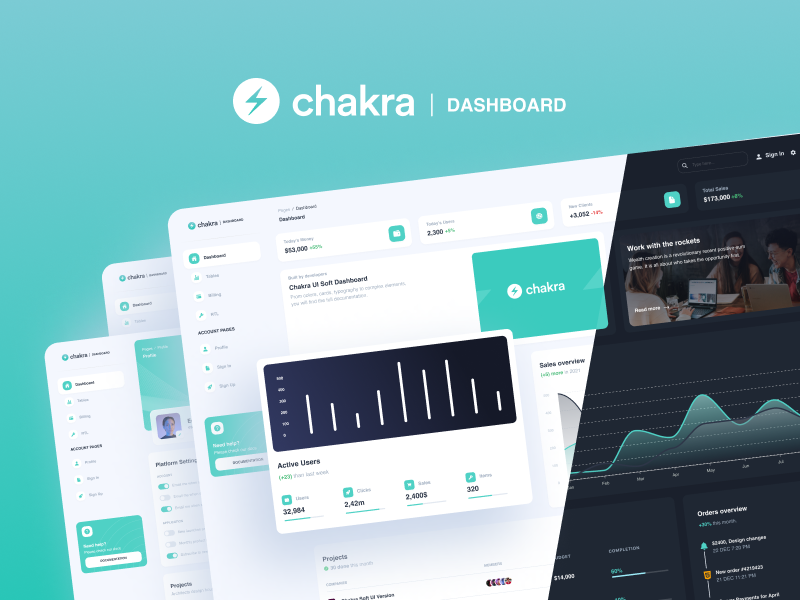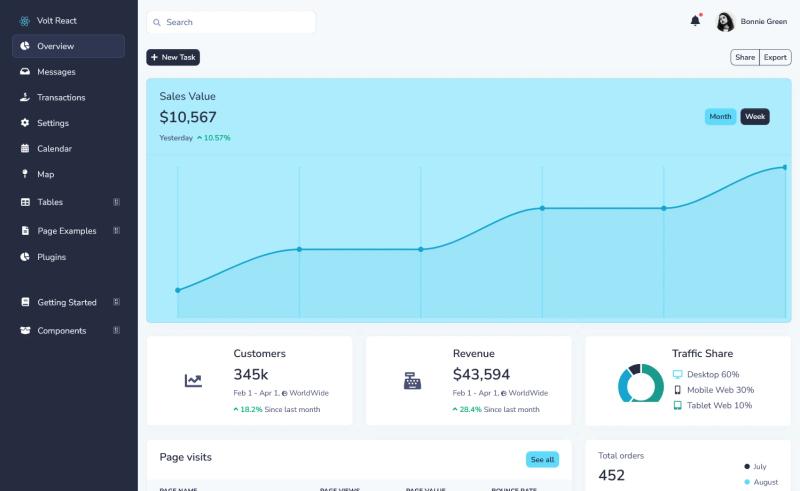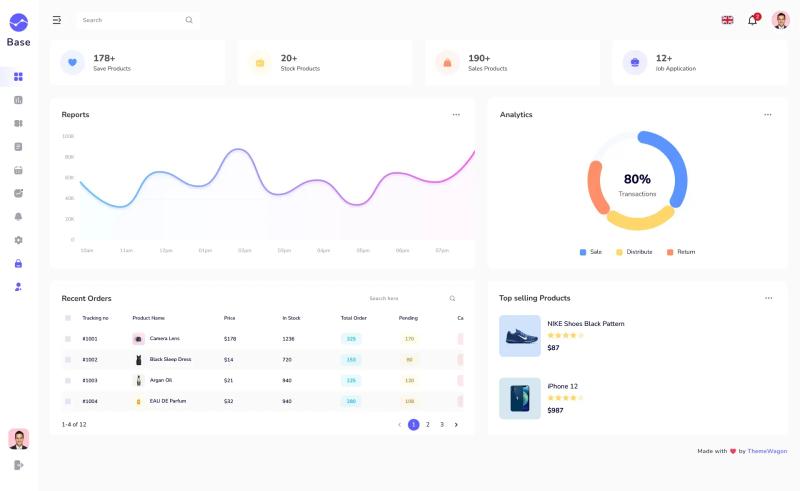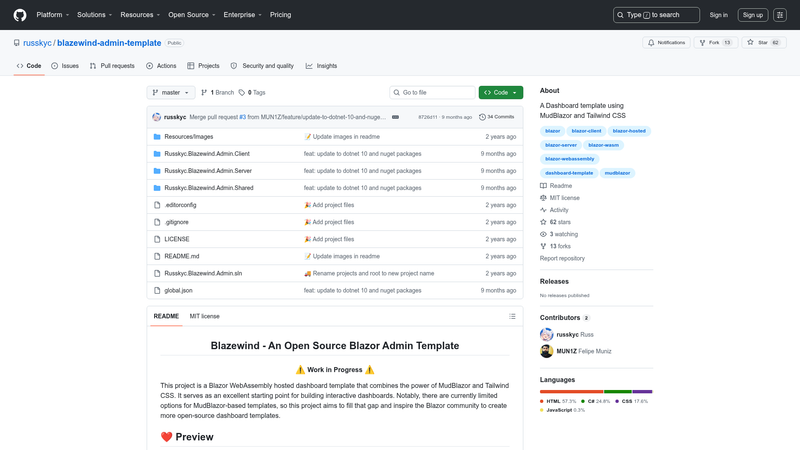
Blazewind is an open-source Blazor WebAssembly admin dashboard template that pairs MudBlazor with Tailwind CSS to give developers a pre-built, interactive dashboard foundation.
What is Blazewind?
Blazewind is a hosted Blazor WebAssembly dashboard template designed to be a starting point for building interactive admin interfaces. It takes no input itself; instead, developers clone the repository and customize the included pages and components. The template outputs a working dashboard with five pages: Dashboard (Home), Products, Invoice, Billing, and Profile. It is built on the .NET Blazor WebAssembly hosting model and uses MudBlazor as the component library alongside Tailwind CSS for utility-based styling. The project is maintained as an open-source GitHub repository and notes that there are currently few MudBlazor-based dashboard templates, which this project aims to address.
Key Features
- Pre-built dashboard pages — Includes five ready-to-use pages: Dashboard (Home), Products, Invoice, Billing, and Profile, covering common admin panel sections.
- MudBlazor integration — Uses MudBlazor as the primary Blazor component library for UI elements like tables, forms, navigation, and cards.
- Tailwind CSS styling — Combines MudBlazor with Tailwind CSS so developers can apply utility-class styling alongside a component framework.
- Blazor Apex Charts — Integrates Apex Charts for displaying interactive charts on the dashboard, useful for metrics and analytics.
- Bogus placeholder data — Leverages the Bogus library to generate realistic dummy data for the Products and other pages during development.
- Morris Blazor Validation — Includes form validation via Morris Blazor Validation for the Invoice, Billing, and Profile forms.
- BlazorComponentBus — Uses BlazorComponentBus to handle communication between components, simplifying state updates across pages.
- Open-source with JetBrains support — The project is open source and acknowledges JetBrains for providing IDE licenses through their open-source support program.
Who is it for?
- Blazor developers — Those who want a quick, pre-built dashboard UI in Blazor WebAssembly without starting from scratch, especially if they prefer MudBlazor.
- .NET teams prototyping admin panels — Teams building internal tools or admin dashboards can use the included pages as a foundation and replace placeholder data with real APIs.
- Open-source contributors — Developers interested in filling the gap for MudBlazor dashboard templates can suggest new pages or submit pull requests to expand the template.
What can you do with Blazewind?
- Dashboard developers: Display key metrics with Apex Charts on the Dashboard home page and link to Products, Invoice, Billing, and Profile from the navigation.
- Admin panel builders: Use the Products page with Bogus-generated data to prototype inventory or catalog management interfaces before wiring up a backend.
- Blazor learners: Study how MudBlazor and Tailwind CSS coexist in a single Blazor WebAssembly hosted project, as this combination is not commonly shown in tutorials.
FAQ
Is Blazewind free?
Yes, Blazewind is an open-source project, so you can freely use, modify, and distribute the template. The repository does not list any paid tiers or premium features; it is a community-driven project.
What pages does Blazewind include?
Blazewind includes five pages: Dashboard (Home), Products, Invoice, Billing, and Profile. The project maintainer notes these are not final and more pages will be added over time.
Is Blazewind production-ready?
No. The repository is marked as a work in progress, so it is not yet production-ready. You should treat it as a starting template for development, not as a finished product.
Which Blazor hosting model does Blazewind use?
Blazewind is built as a Blazor WebAssembly hosted template, meaning it runs client-side in the browser with a hosting server. The repository topics also reference other Blazor hosting models, but the template's primary target is WebAssembly.
What libraries and packages does Blazewind use?
The template uses MudBlazor for UI components, Tailwind CSS for styling, Bogus for generating placeholder data, Blazor Apex Charts for charts, Morris Blazor Validation for form validation, and BlazorComponentBus for component communication.