Newsletter
Join the Community
Subscribe to our newsletter for the latest news and updates

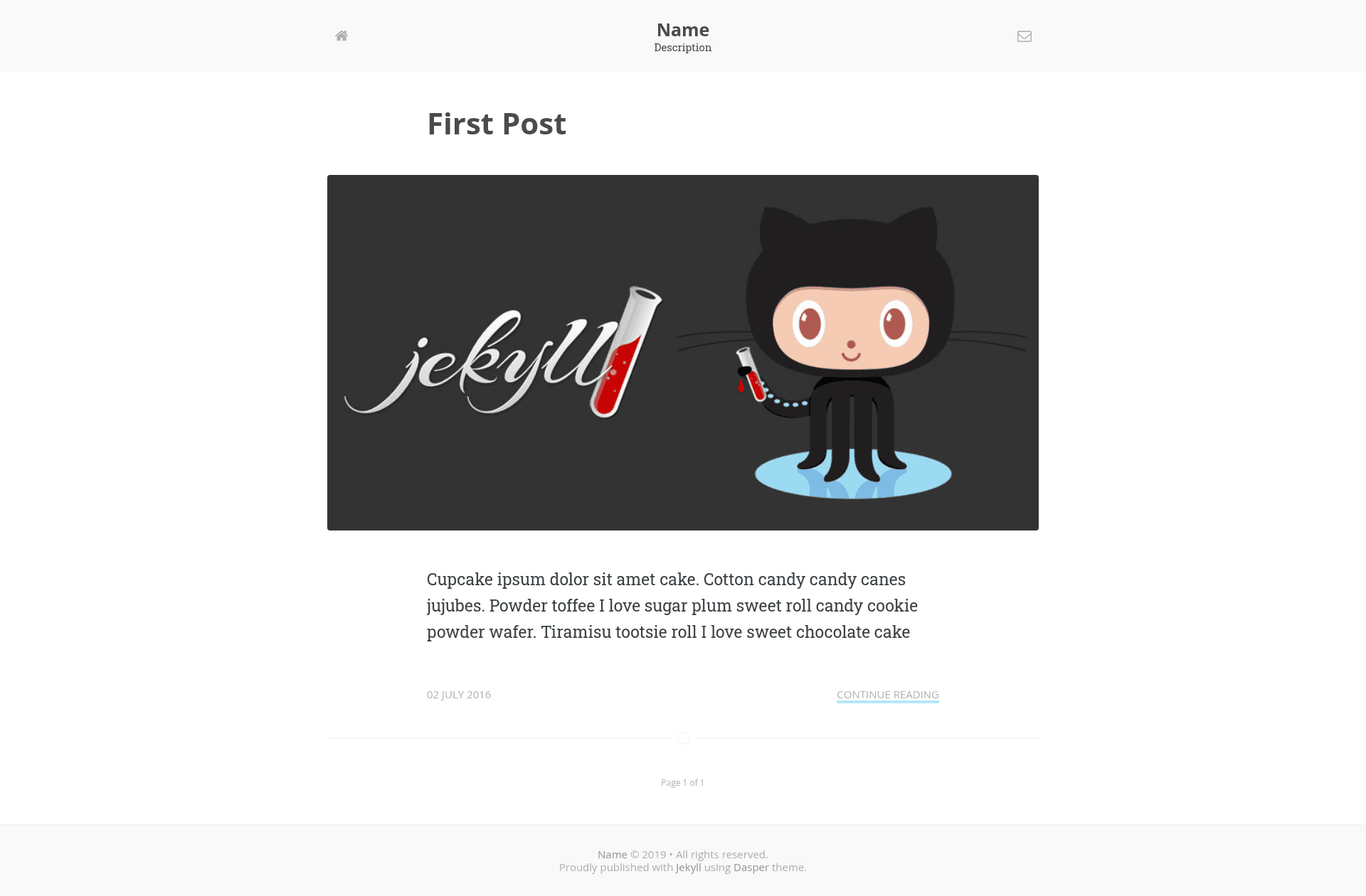
A free Jekyll blog theme inspired by Ghost's Casper, with pagination, syntax highlighting, and Disqus comments.

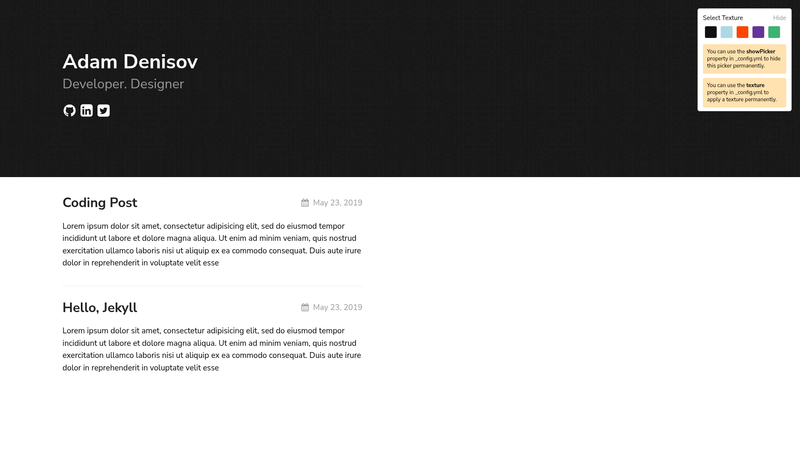
A Jekyll blog template for creating markdown-based posts and pages with customizable taglines and categories.

Free HTML5 personal website and blog template built with Bootstrap 4, featuring multi-page layout, carousel slider, and right sidebar.
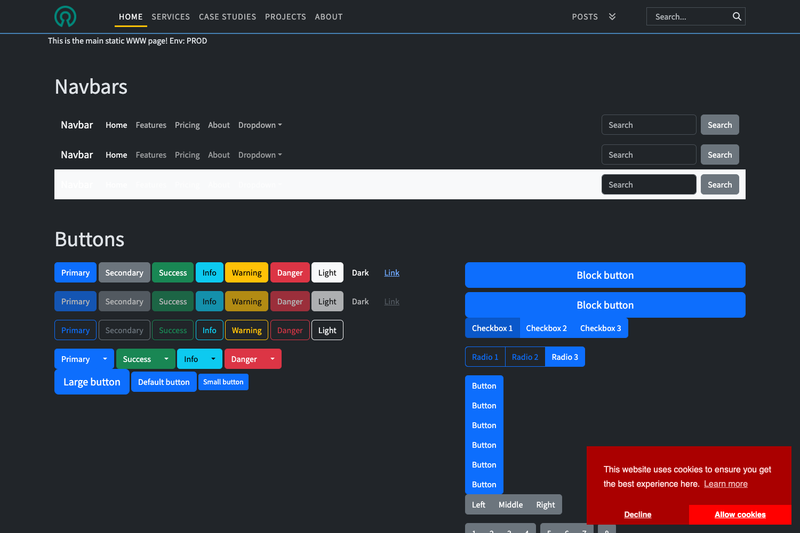
A feature-rich static blog starter built with Eleventy (11ty), including search, taxonomy, sticky sidebars, RSS, and GitHub Actions.
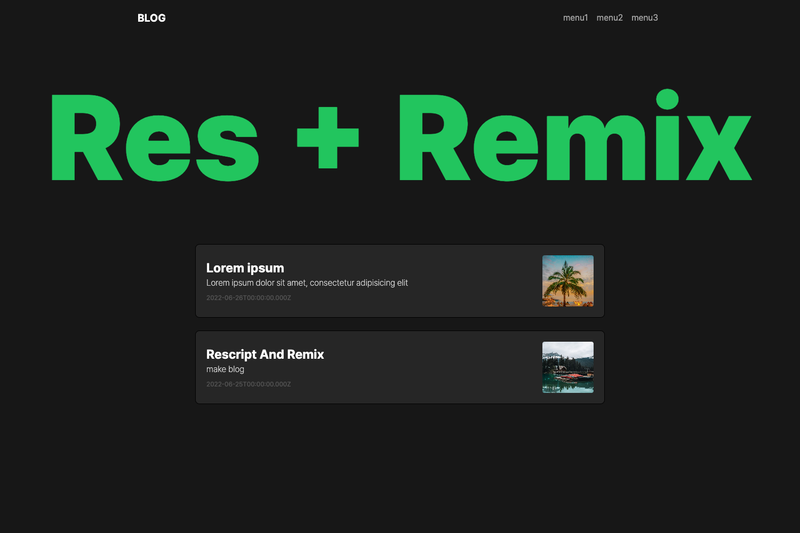
Blog Template built using rescript, remix, MDX, tailwind, Vercel ❤️🔥
Dasper is a free, MIT-licensed Jekyll theme for static blogging that recreates the visual style of Ghost's default Casper theme, packaged as a GitHub Pages-ready repository. Built as a fork-style starting point, it takes Markdown posts and Liquid templates as input and outputs a static HTML site that can be hosted on GitHub Pages or any static file server.
Dasper is a Jekyll theme created by ozgrozer and first released in 2016, drawing inspiration from Ghost's Casper theme as well as the Jasper and Kasper themes. The theme includes templates for blog posts, page layouts, a custom 404 page, and paginated post listings, so a user can fork the repository and have a working blog with minimal setup. Its output is purely static files, which means it runs without a database or server-side application.
Dasper is aimed at developers, writers, and hobbyists who want a clean, card-style blog theme similar to Ghost's default look without paying for a hosted platform. It is particularly useful for Jekyll users comfortable editing a _config.yml file and deploying through GitHub Pages. Theme developers can also use it as a reference for implementing pagination, PrismJS, and comment integration in a Jekyll project.
username.github.io, and editing the configuration file.Dasper works like any Jekyll theme: you write content as Markdown files with YAML front matter, and Jekyll generates static HTML using the theme's Liquid templates. After forking the repository, you rename it from dasper to username.github.io, update your site details in _config.yml, and push the changes. GitHub Pages then serves the generated site at https://username.github.io/, and a live demo is available at ozgrozer.github.io/dasper.
Yes, Dasper is released under the MIT License, which allows free use, modification, and distribution, including for commercial projects.
The theme includes both Disqus for comments and Google Analytics for tracking. To enable them, you need to add your Disqus shortname and Google Analytics tracking ID to the site configuration.
Yes, because Jekyll generates static HTML, the output can be deployed to any static hosting service, such as Netlify or a traditional web server. The theme itself has no dependency on GitHub Pages beyond the convenience of its name-based URL workflow.
Dasper bundles several common blog features that Jekyll does not provide out of the box: pagination plugins, PrismJS syntax highlighting, an RSS feed plugin, a sitemap plugin, Fastclick touch handling, and AddThis sharing buttons.