Newsletter
Join the Community
Subscribe to our newsletter for the latest news and updates

Django, Vercel and Postgres Setup using Tailwind CSS and new Vercel Storage (Beta)
A Jekyll theme showcasing the U.S. Web Design System
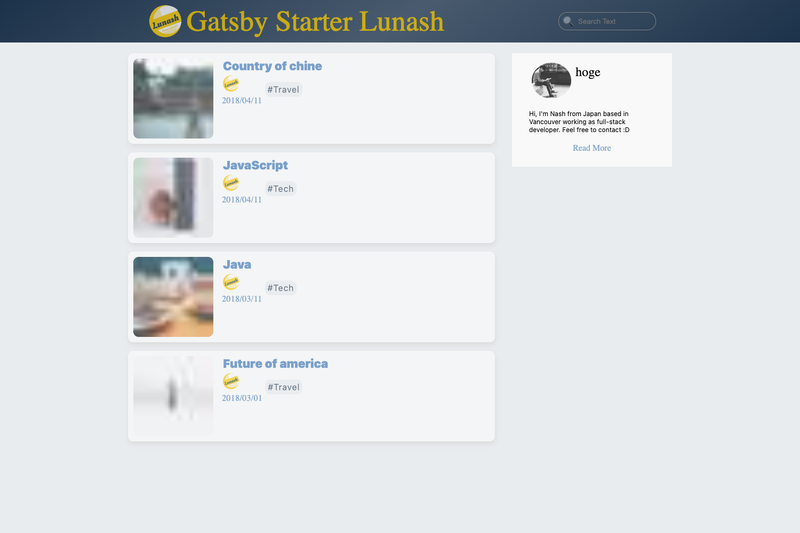
A Gatsby.js v3 blog starter using TypeScript, styled-components, and Atomic Design.
Next.js example connecting to thirdweb's NFTDrop contract for minting NFTs and viewing collections on Ethereum testnet.
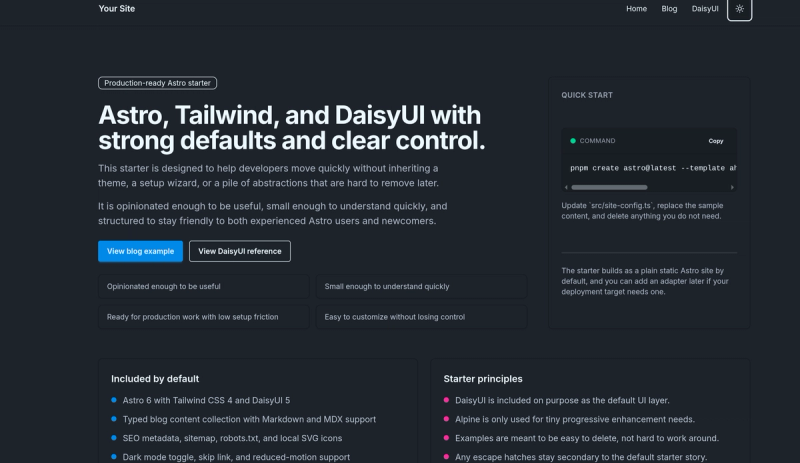
Production-ready Astro starter with Tailwind CSS 4, DaisyUI 5, blog support, SEO basics, and optional Alpine JS for tiny progressive enhancement.
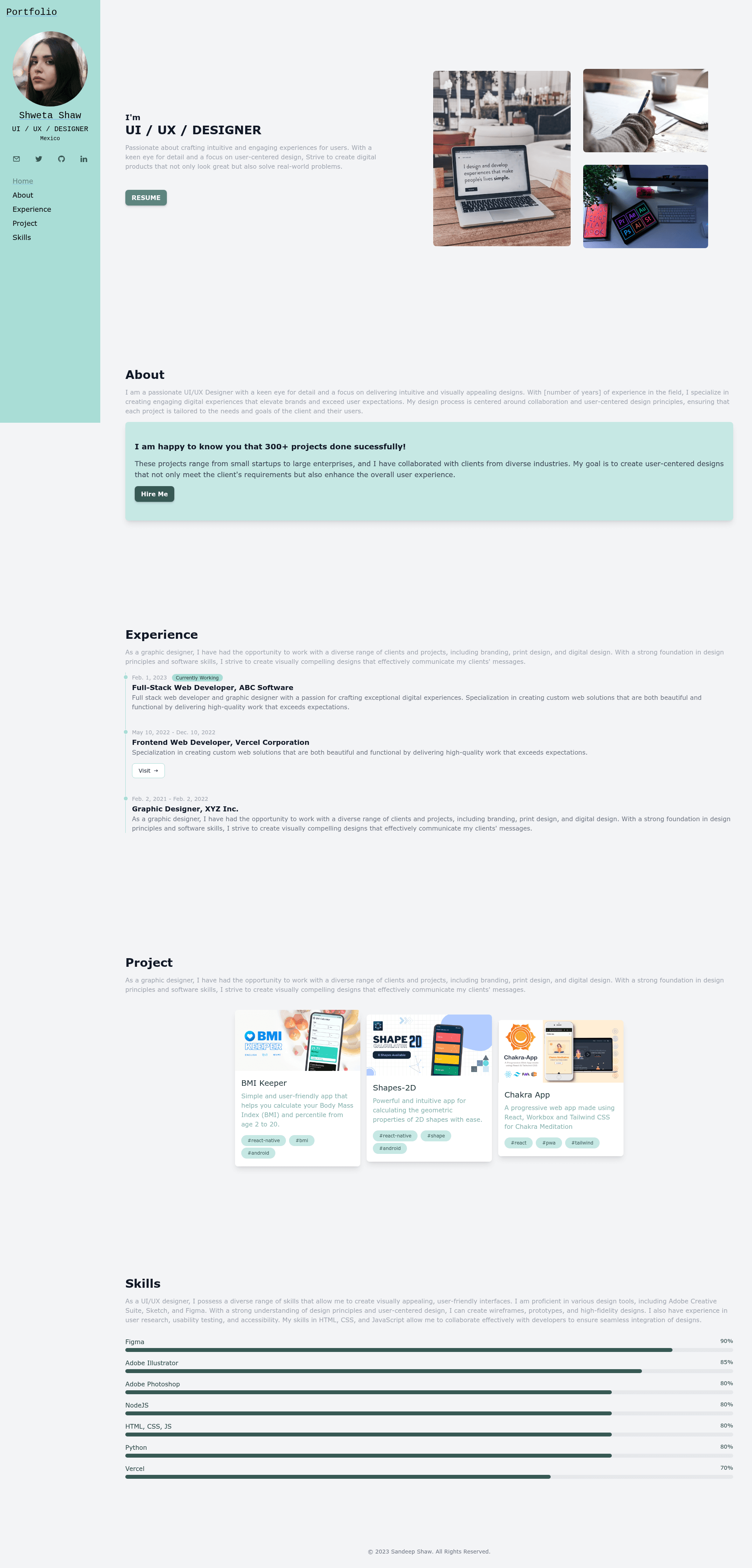
Django + Vercel + Postgres is a starter template for deploying a Django portfolio website on Vercel with a Postgres database from Vercel Storage (Beta).
This template provides a working Django 4.2.1 project configured for deployment on Vercel's serverless platform, with Tailwind CSS for styling and a Postgres database provisioned through Vercel Storage. It takes a Django project with configuration files for environment variables, static files, and custom admin settings, and outputs a live portfolio website hosted on Vercel. The template was created by sandeep-shaw10 and is published on GitHub.
The template follows a standard Django project structure with additional Vercel-specific setup. You clone the repository, create a virtual environment, install dependencies from requirements.txt, and create a .env file with the necessary Postgres and Django settings. After pushing the code to GitHub, you import the repository into Vercel, add the five required environment variables (ALLOWED_HOSTS, DEBUG, SECRET_KEY, ADMIN_PATH, POSTGRES_DB_PORT), and connect a Postgres database from Vercel Storage. Vercel then injects the remaining Postgres variables. You run migrations and createsuperuser locally against the same database, redeploy, and the site goes live.
Yes, the README states that Python 3.11 or higher is required.
Set the ADMIN_PATH environment variable to a custom path (for example, my-admin). The admin will be accessible at your-app-name/my-admin. If not set, it defaults to /admin.
Yes, the project is licensed under the MIT License, so you can use, modify, and distribute it freely.
It uses Postgres provided by Vercel Storage (currently in Beta). The setup connects Vercel's Postgres environment variables to Django via python-dotenv and psycopg2-binary.
The README links to a step-by-step video tutorial on YouTube (accessible via the README badge) that demonstrates the full setup.