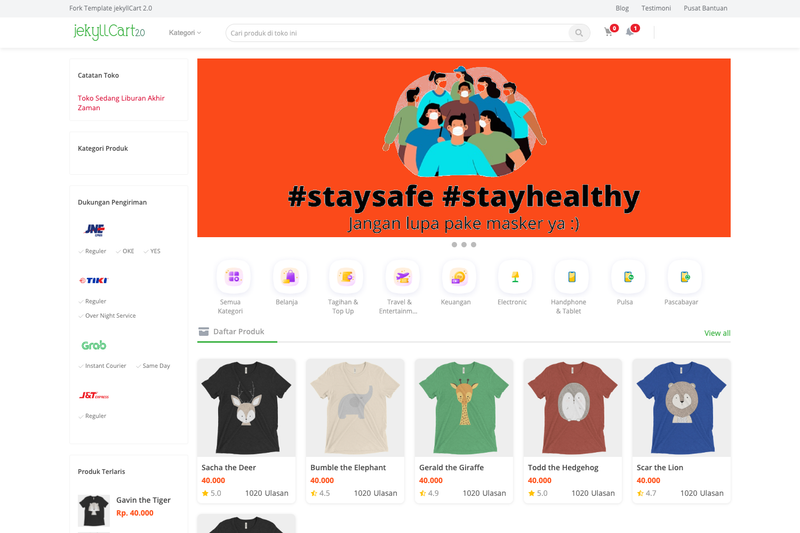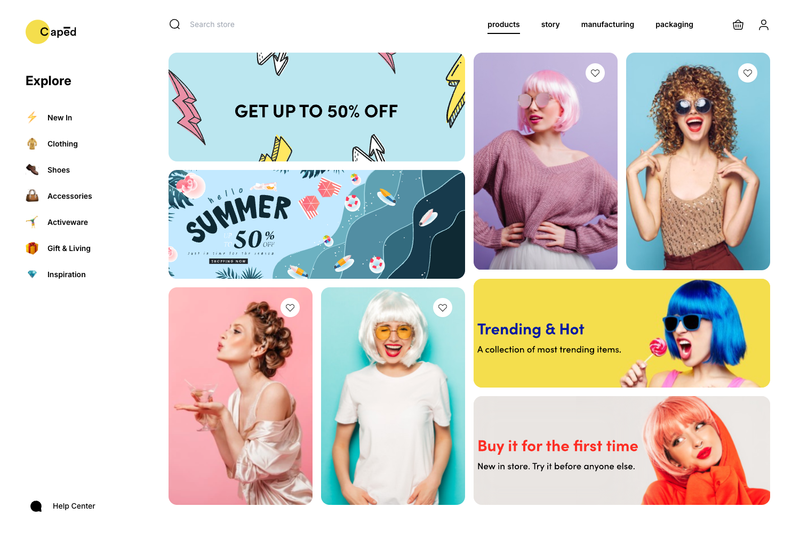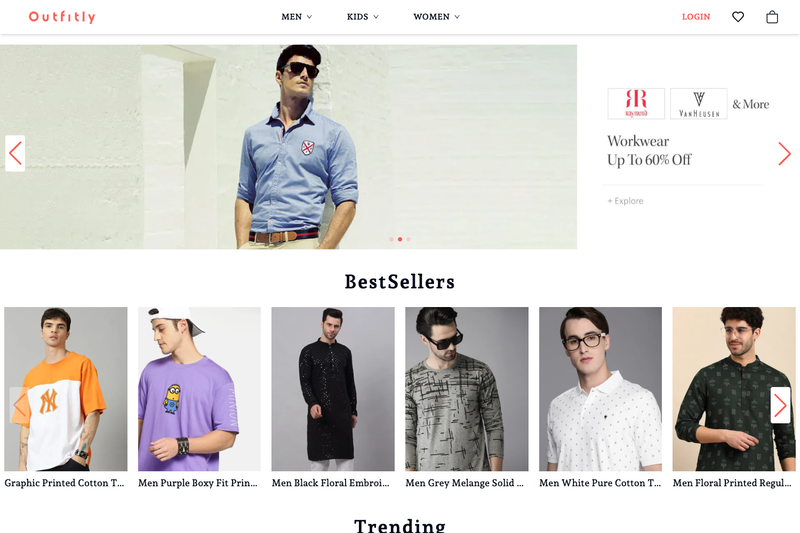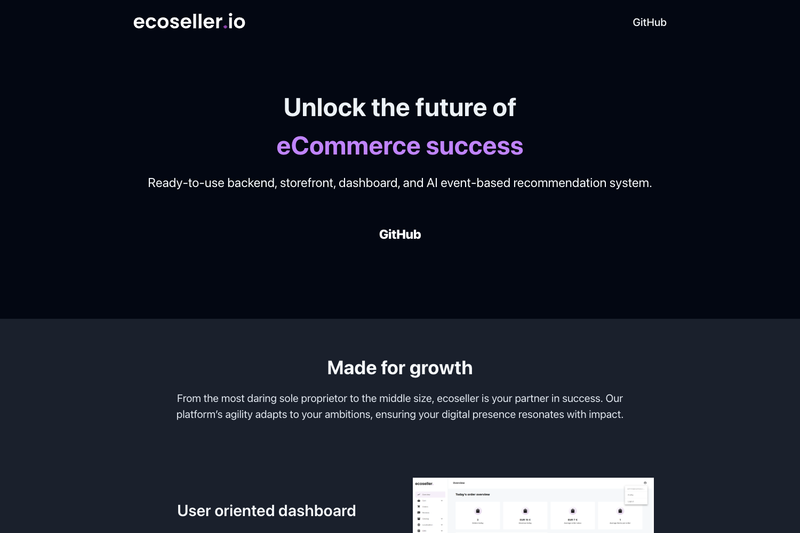
Ecoseller is an open-source, full-stack e-commerce system that packages a ready-to-use backend, storefront, dashboard, and event-based recommendation engine into a single GitHub repository. Built by the ecoseller project, it targets businesses that want to launch an online store without assembling separate services.
What is Ecoseller?
Ecoseller is a headless e-commerce platform powered by Django Rest Framework on the backend and Next.js on the frontend. The system takes product catalogs, orders, and customer events as input and produces a customer-facing storefront, an administrative dashboard, and personalized product recommendations as output. Roughly 90 percent of the codebase is written in TypeScript or Python, with Flask used elsewhere in the stack.
Key Features
- Full-stack codebase — Combines a Next.js/React storefront with a Django Rest Framework API, so the entire e-commerce system lives in one repo.
- Event-based recommendation system — Uses customer events to surface product suggestions that aim to boost engagement and sales without manual curation.
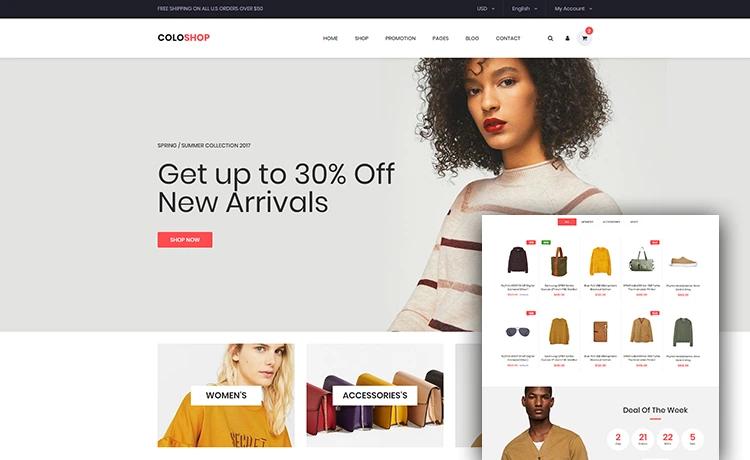
- Ready-to-use storefront and dashboard — Includes both the customer-facing shop and an admin panel out of the box, so no frontend scaffolding is required.
- Notification API — Provides an extensible notification layer designed to connect to external APIs for email, SMS, or other messaging services.
- Flexible product data model — Supports unlimited product types with unique attributes, letting merchants sell heterogeneous items without schema migrations.
- Docker-based installation — The development environment starts with a single
docker compose up -dcommand, and Docker is the only prerequisite listed. - MIT License — The project is free to use, modify, and redistribute under the terms of the MIT License.
Who is it for?
Ecoseller is aimed at developers and businesses that want a self-hosted e-commerce platform they can extend. Developers use it to spin up a complete stack locally with Docker and then customize the Next.js storefront or the Django Rest Framework backend. Business owners use the included dashboard to manage products and orders. Teams evaluating open-source commerce solutions use it as a starting point for headless storefront experiments.
Use cases
- Developers: clone the repository, run
docker compose up -d, and get a full e-commerce environment with frontend and backend in minutes. - Store owners: manage catalogs and orders through the built-in dashboard without writing code.
- Platform builders: extend the system with the notification API and flexible product attributes to support niche merchandise.
- Sales teams: rely on the event-based recommendation engine to suggest relevant products and increase average order value.
FAQ
Is Ecoseller free?
Yes, Ecoseller is open-source and distributed under the MIT License. You can download, modify, and deploy it without paying licensing fees.
What technologies does Ecoseller use?
The frontend runs on Next.js and React, and the backend uses Django Rest Framework with Flask. About 90 percent of the code is TypeScript or Python.
How do I install Ecoseller?
The quickest way is to install Docker and run docker compose up -d in the repository root. Full installation and administration instructions are available at docs.ecoseller.io.
Does Ecoseller work for any type of product?
The data model is designed to support unlimited product types with unique attributes, so you can represent physical goods, digital items, or configurable products without changing the core schema.