Newsletter
Join the Community
Subscribe to our newsletter for the latest news and updates

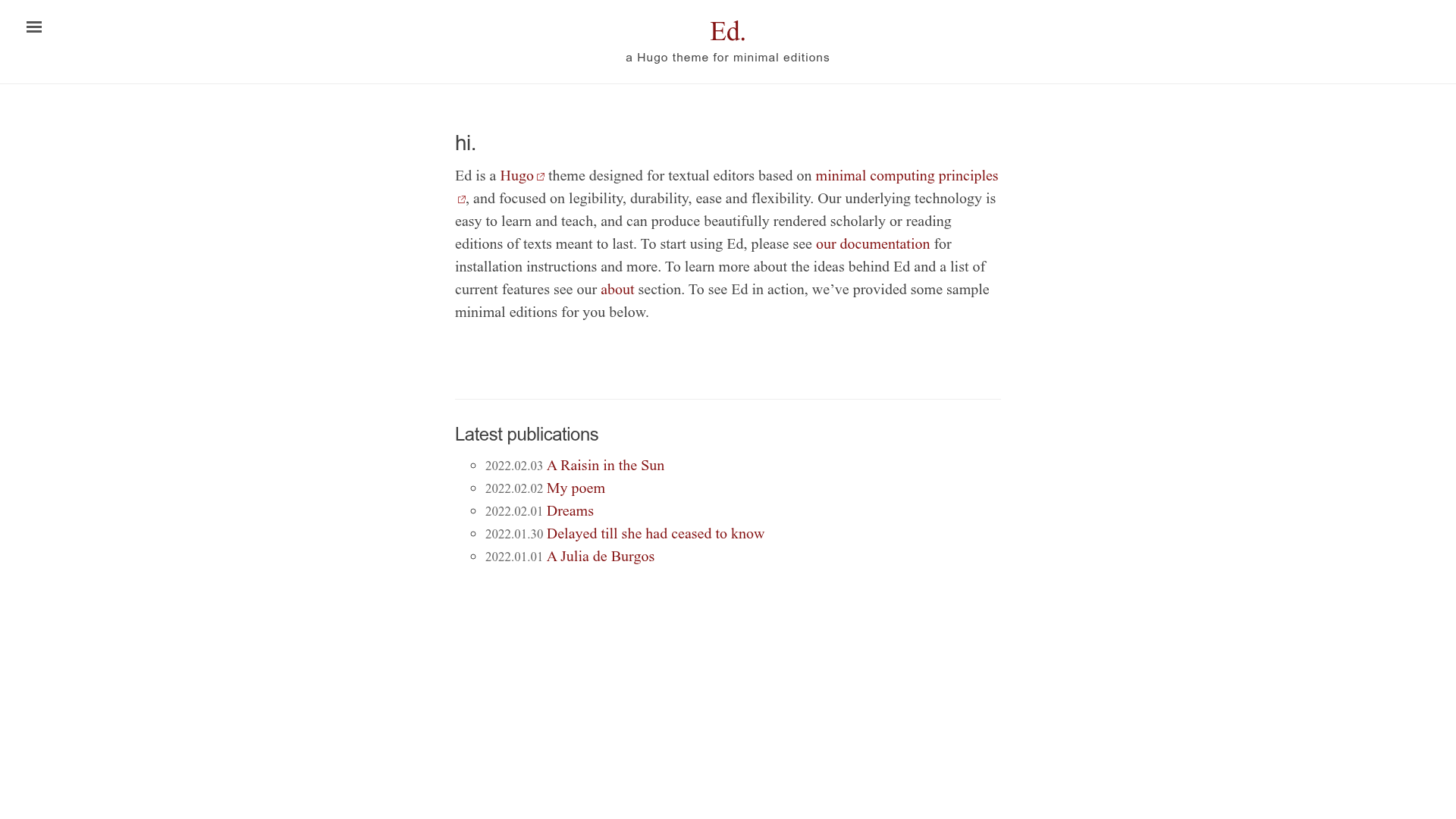
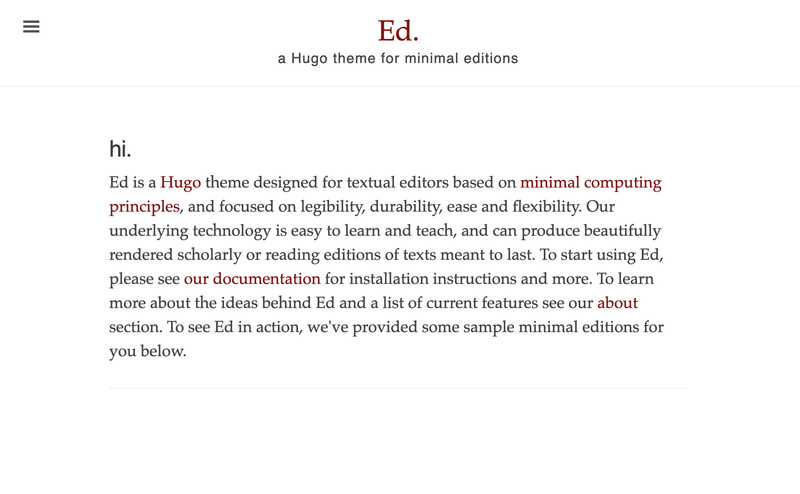
Ed is a minimal Hugo theme for textual editors, designed for legibility and low-bandwidth digital editions.
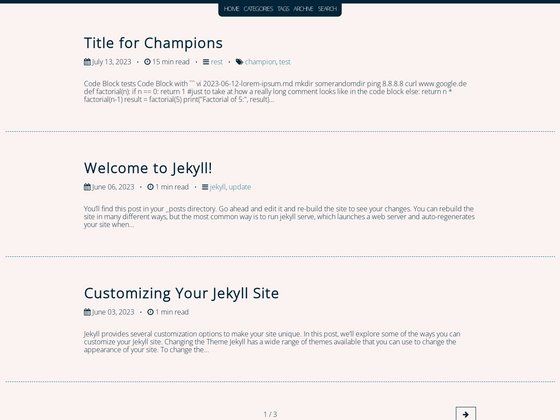
A mobile-friendly Jekyll blog theme with a fixed navigation header, configurable footer sidebar, tags, categories, archive, and search.
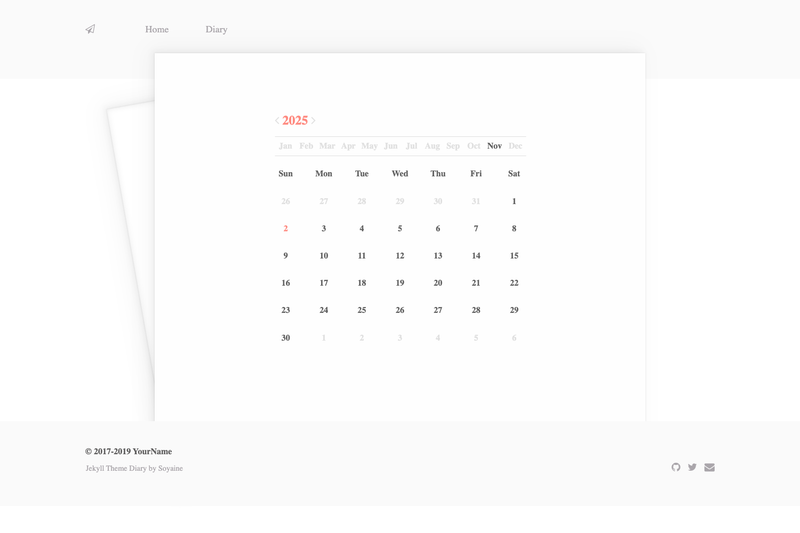
A minimal Jekyll theme for diary blogs with a calendar view, responsive layout, and configurable colors.
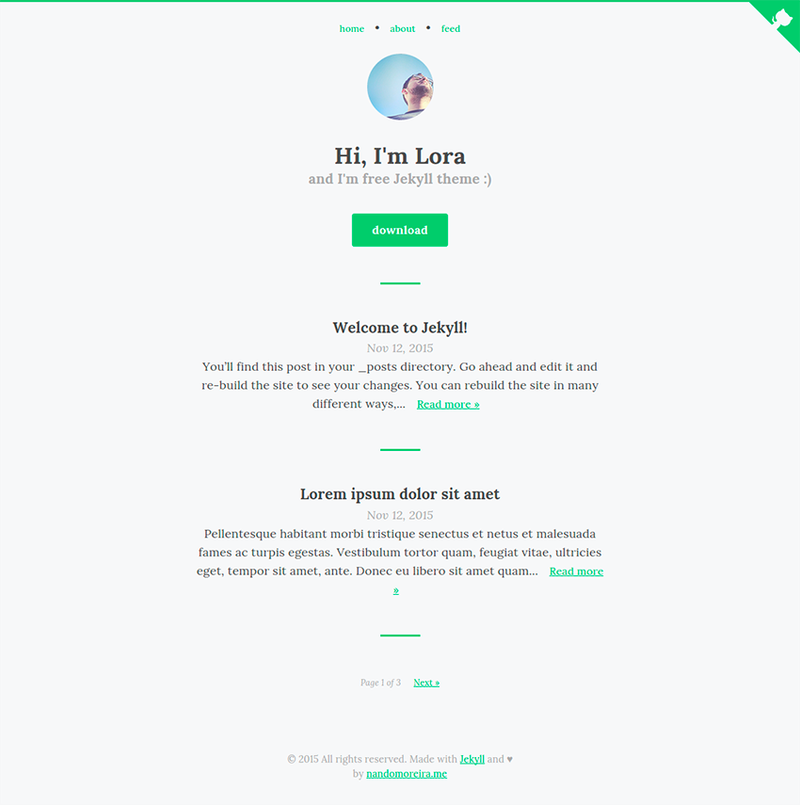
Free, MIT-licensed Jekyll blog theme with Rake automation for pages, posts, and GitHub Pages deployment.
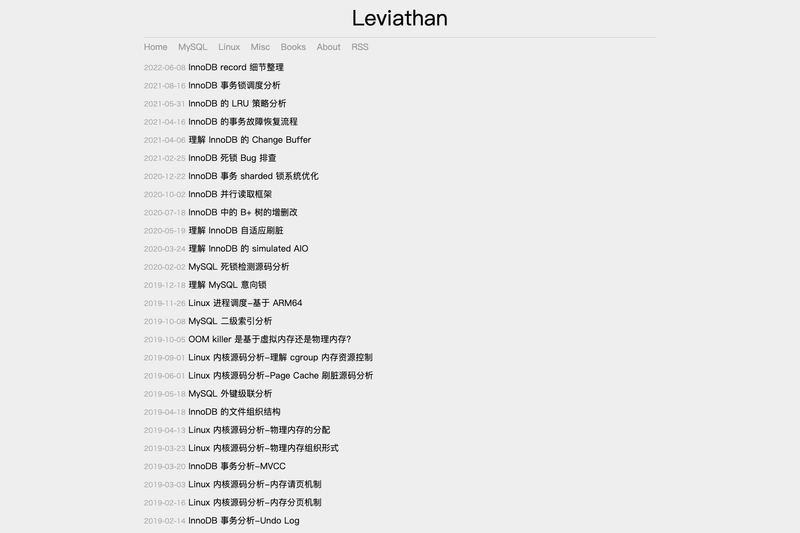
A minimalist Hugo blog theme with Atom feed, pagination, TOC, and easy customization.
Ed is a Hugo theme for blogs and digital editions, built under minimal-computing principles to prioritize legibility, durability, ease, and flexibility. Originating as an adaptation of the Jekyll Ed theme by Alex Gil, this open-source template runs on Hugo's static site generator and produces lightweight websites suitable for scholarly editions, archives, and literary publications.
Ed is a Hugo theme tailored for textual editors and digital humanities projects. It takes Markdown content structured as narrative, drama, or poetry and renders a static website with automatic table of contents, search, footnotes, and OpenGraph metadata. The theme is hosted at github.com/sergeyklay/gohugo-theme-ed and is an adopted, feature-extended port of the original Jekyll Ed theme created by Alex Gil. A live demo is available at gohugo-theme-ed.netlify.app.
Ed differentiates itself through a minimal-computing ethos, focusing on legibility, durability, ease, and flexibility rather than JavaScript-heavy interactivity. Its key features include:
Ed is primarily aimed at scholars and editors who publish critical or annotated editions of literary works. Digital humanities practitioners can use its narrative, drama, and poetry templates to structure texts faithfully. Archives and libraries benefit from the theme's emphasis on durability and minimal computing, which makes preservation easier. Educators teaching digital publishing can adopt Ed as a relatively easy-to-learn and teach Hugo theme.
Ed is free and open source under the MIT License, so there are no licensing fees and no usage restrictions beyond the license terms.
Yes, Ed is released under the MIT License, meaning it is free to use, modify, and distribute as long as the license terms are honored. It is an open-source theme with no paid tiers or premium features described.
Ed includes templates for narrative, drama, and poetry, enabling editors to structure different literary genres appropriately. This makes it especially suited for digital editions, anthologies, and creative writing sites.
Ed is a Hugo port of the Jekyll Ed theme by Alex Gil. The Hugo version has been adopted and finalized with new functionality, including enhanced metadata, search, comments, and environment-aware robots.txt, while preserving the original minimal-computing goals.
Ed includes a comments system and integrates with hypothes.is for collaborative annotation of texts. The repository topics also list Giscus, which may be the underlying comment engine, allowing reader discussions directly on the page.