Newsletter
Join the Community
Subscribe to our newsletter for the latest news and updates

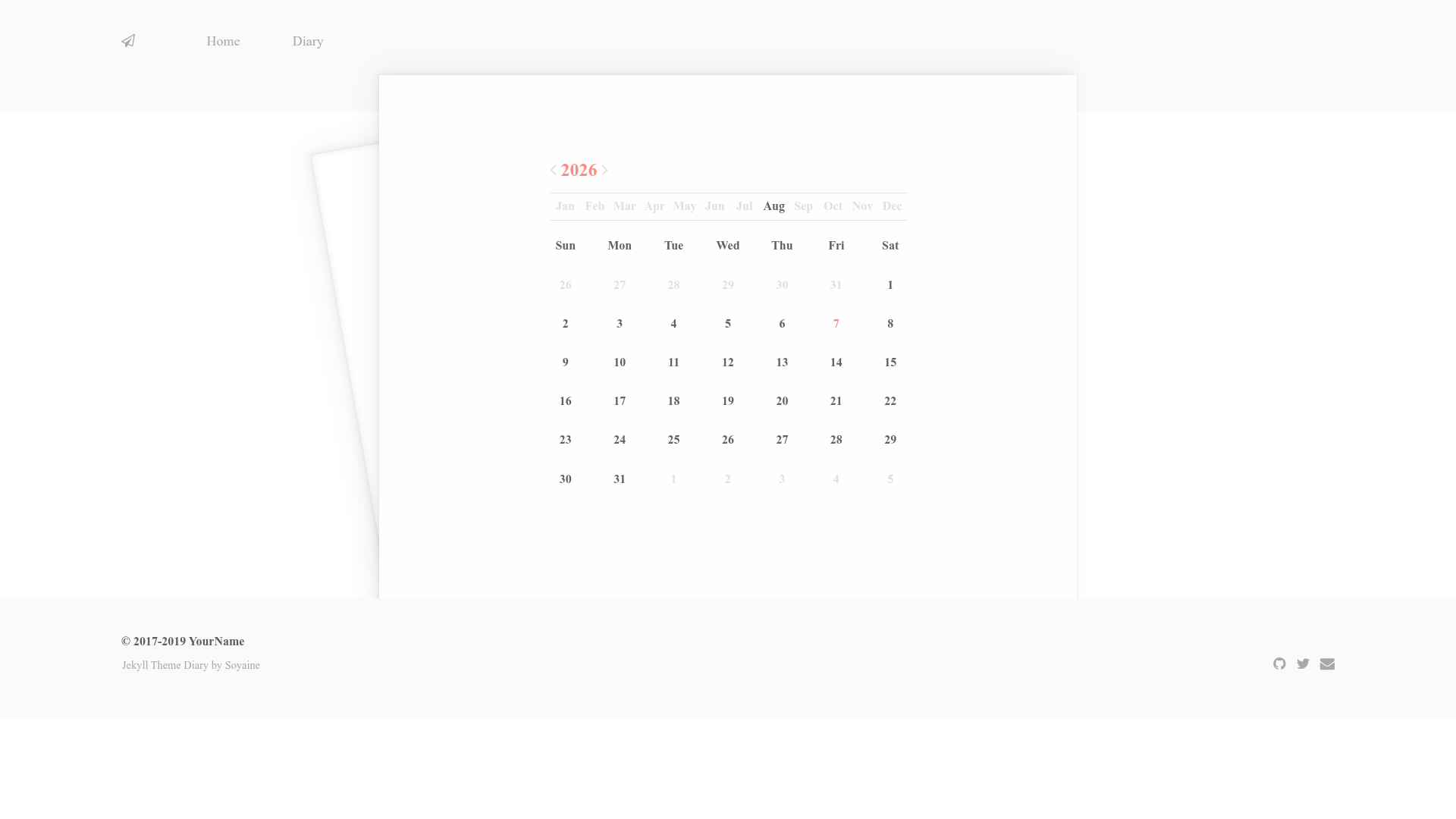
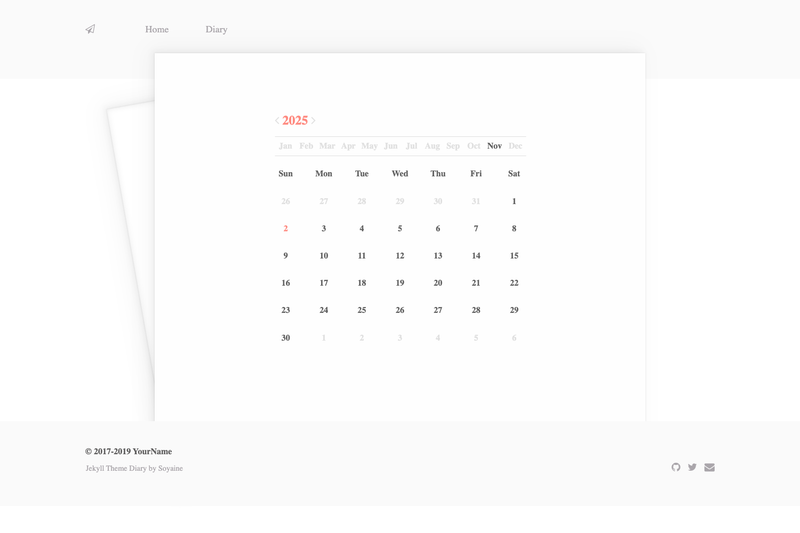
A minimal Jekyll theme for diary blogs with a calendar view, responsive layout, and configurable colors.
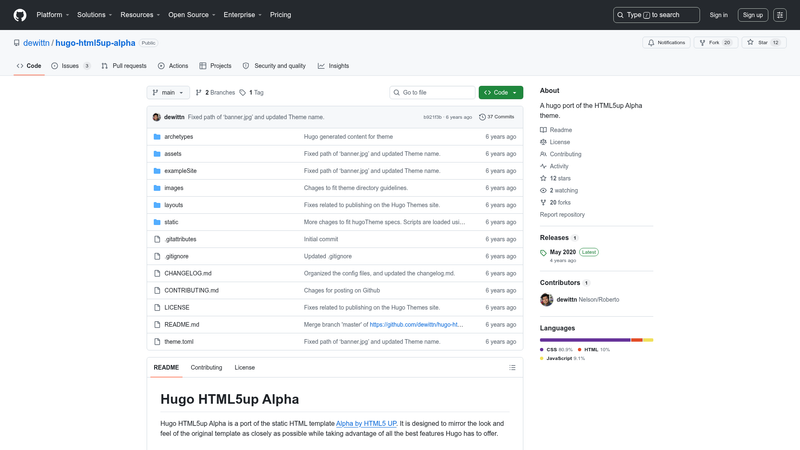
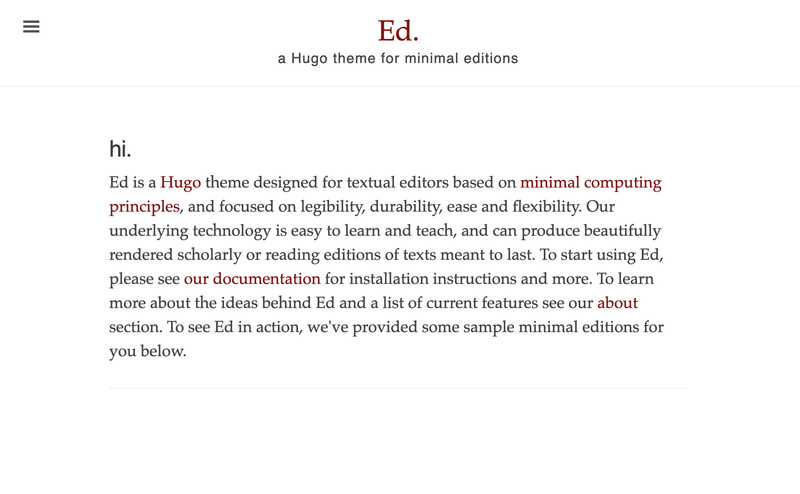
A Hugo port of the HTML5 UP Alpha theme with customizable homepage sections, blog support, and Disqus integration.
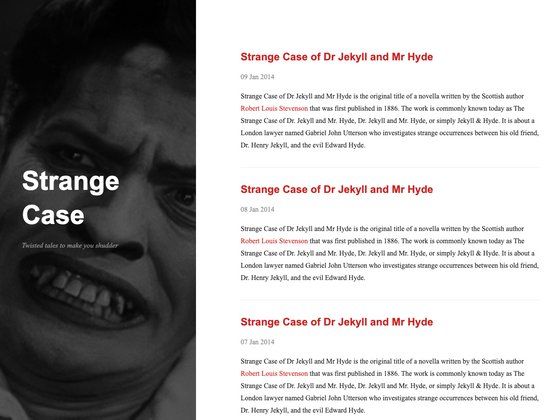
A simple, clean, responsive Jekyll theme with a fixed sidebar cover image and minimal design.
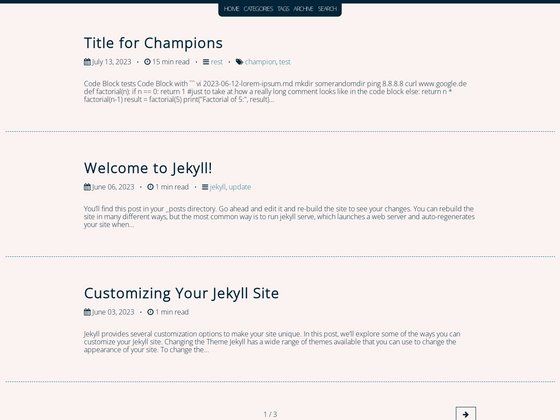
A mobile-friendly Jekyll blog theme with a fixed navigation header, configurable footer sidebar, tags, categories, archive, and search.
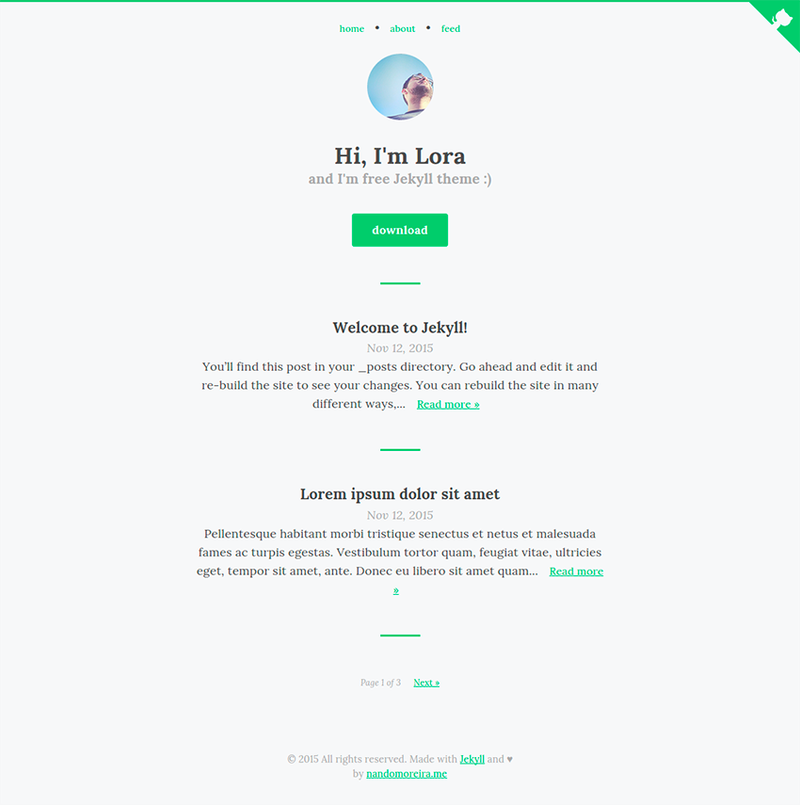
Free, MIT-licensed Jekyll blog theme with Rake automation for pages, posts, and GitHub Pages deployment.
Jekyll Theme Diary is a minimal, MIT-licensed Jekyll theme built for personal diary blogs, with a calendar view that lights up the days you post. It is created by developer soyaine and is available as a public GitHub repository with a live demo hosted at https://soyaine.github.io/jekyll-theme-diary/.
Jekyll Theme Diary is a static site theme for the Jekyll generator, intended for diary-style personal blogs. It produces a light-colored, responsive website with a calendar widget that highlights each day a diary entry is published, and it takes Markdown content as input. The theme is free to use under the MIT License, and its configuration is managed through a single _config.yml file.
_config.yml, and they appear in the footer.nav section of _config.yml lets you add any number of links with custom names and URLs._sass/predefine.scss, so you can change the entire color palette by editing one file._sass/predefine.scss to match your brand or mood without editing layout files.git clone https://github.com/soyaine/jekyll-theme-diary.git._config.yml to set your name, social media handles, and navigation links._posts directory, then build and serve the site with Jekyll.Yes, the theme is released under the MIT License, so you can use, modify, and distribute it freely for personal or commercial projects.
Edit the _sass/predefine.scss file, where all theme colors are defined. Change any color value and rebuild the site to see the update.
The footer supports email, GitHub, and Twitter links. You set your usernames in the link section of _config.yml.
Yes. The nav section in _config.yml lets you add any number of links with custom names and URLs, such as Home, Diary, or anything else.
The theme includes typo.css for improved Chinese typesetting. It's optional — you can remove it if you don't need it.
The demo's placeholder articles are generated by Lorem Markdownum, the icon set is Font Awesome, and the Chinese typography enhancement uses typo.css. The author welcomes questions and feedback via email or GitHub issues.