Newsletter
Join the Community
Subscribe to our newsletter for the latest news and updates

A simple minimalist Gatsby starter for your blog, using markdown for content and Netlify for deployment.

Free Eleventy (11ty) blog template with SEO focus, mobile-first design, and static site output.

A free, clean Jekyll theme for blogs with responsive SASS layout, pagination, syntax highlighting, and Disqus comments.
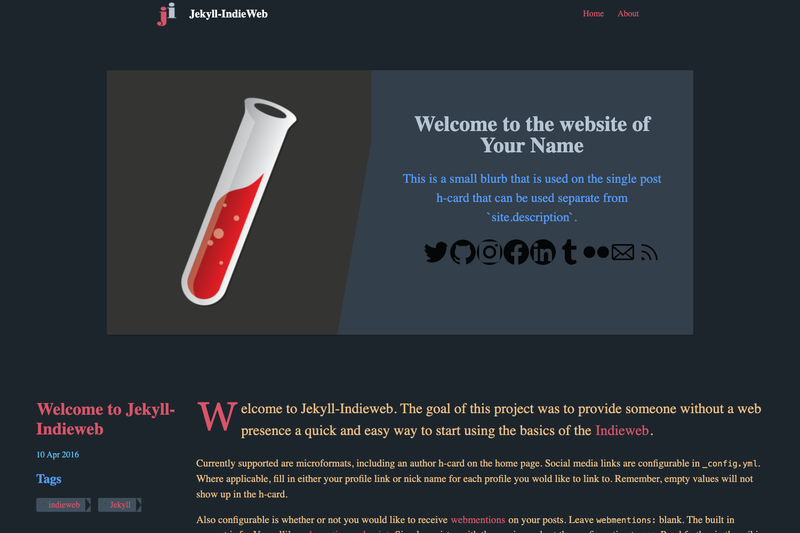
A Jekyll quick start to getting up and going with the IndieWeb
Flexible Gatsby is a minimalist, open-source Gatsby starter template for building a blog, created by wangonya and inspired by the flexible-jekyll theme.
Flexible Gatsby is a simple, clean Gatsby starter that turns markdown files in the content/blog directory into a static blog site. It runs on the Gatsby framework, with site metadata configured in gatsby.config.js and content added as markdown. The project is hosted on GitHub and deployed to Netlify, with a live demo at flexible-gatsby.netlify.com. The repository metadata describes the theme as "a simple and clean theme for Gatsby."
Yes. It is an open-source GitHub project, so you can clone, modify, and deploy it for free. The repository is publicly accessible, and the starter itself can be used as the base for any blog.
Create a new markdown file inside the content/blog directory. Look at the example posts that come with the starter to see the required frontmatter and body format. Once the file is saved, Gatsby will rebuild and the post will appear on the site.
During development, visiting http://localhost:8000/___graphql opens GraphiQL, an interactive GraphQL explorer. It lets you run queries against your site's data, which is useful for understanding what data is available when customizing templates.
Yes. The repository includes a Netlify deployment status badge, and the live demo is hosted on Netlify, so the starter can be deployed there without additional configuration beyond the standard Gatsby build command.
The starter is authored by GitHub user wangonya and has contributions from scottelundgren, sparky005, wozniaklukasz, and SMagic-L. The repository currently has about 50 stars.