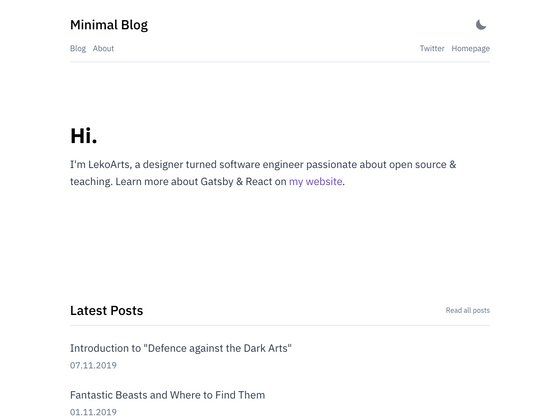
Futu is a minimal Hugo theme for building lightweight, multilingual blogs, with its built-in styles derived from the classless CSS framework water.css and built-in support for AMP pages.
What is Futu?
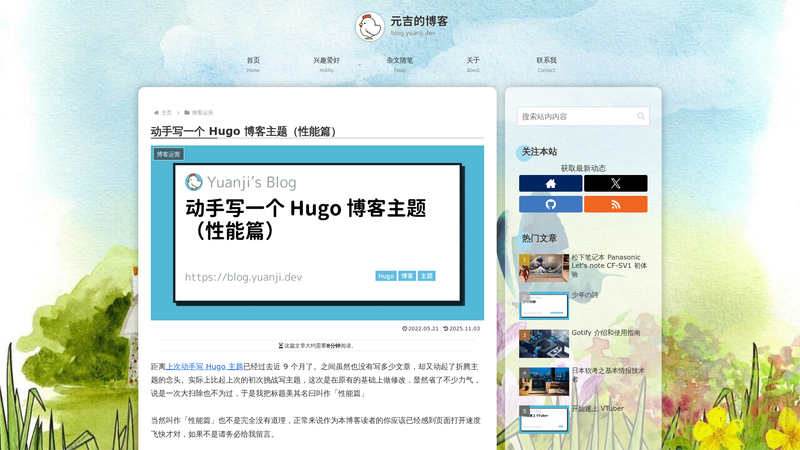
Futu is a minimal Hugo theme for personal blogs and content-focused websites. It runs on Hugo, the open-source static site generator, and requires Hugo version v0.108.0 or later. The theme takes Markdown content files and a config.toml configuration file as input, then generates static HTML output. Its styling is based on a modified version of water.css, a classless CSS framework that styles plain semantic HTML, so no utility classes or JavaScript frameworks are needed. The theme is released under the MIT license and is used on live sites such as Yuanji's Blog.
Key Features
- Minimal design — No CSS framework utilities or client-side JavaScript; the visual style comes from water.css applied to semantic HTML.
- Multilingual support — Built-in i18n works with Hugo's translation features, letting you publish content in multiple languages from one project.
- AMP integration — Generates Accelerated Mobile Pages to improve loading speed on mobile devices.
- Favicon customization — Override default favicons by generating your own set on favicon.io and placing the files directly in your static directory.
- Easy installation — Copy the provided
config.toml.exampletoconfig.toml, adjust settings, and the theme is ready. - MIT licensed — Free to use, modify, and distribute for both personal and commercial projects.
Who should use Futu?
- Personal bloggers — Want a distraction-free writing environment with a clean, readable presentation and fast page loads.
- Multilingual creators — Need a theme that supports Hugo's multilingual workflows without extra configuration.
- Performance-focused site owners — Care about AMP compliance to boost mobile search performance.
- Hugo developers — Prefer a bare-bones starting point to fork and extend with their own templates and styles.
What can you do with Futu?
- Publish a blog — Write posts in Markdown and get clean static HTML pages with built-in water.css styling.
- Build a multilingual site — Create content variants in multiple languages and let Hugo's i18n system handle translations and language switching.
- Customize the theme — Modify the water.css-based styles or replace the AMP templates to match your own design.
- Self-host a fast site — Deploy the generated static files to any host, such as Netlify, Vercel, or GitHub Pages, without needing a server.
How does Futu work?
To get started, copy config.toml.example from the theme repository into your Hugo project and rename it to config.toml, then adjust the configuration values. For favicon overrides, generate a favicon set on favicon.io and place all extracted files directly under the static directory of your project. After that, Hugo builds the site using the theme's templates, producing static HTML and AMP pages.
FAQ
Is Futu free?
Yes, Futu is open source and released under the MIT license, so you can use, modify, and redistribute it without cost, including in commercial projects.
What version of Hugo does Futu require?
Futu requires Hugo v0.108.0 or later, as stated in the theme's installation notes.
Does Futu support multiple languages?
Yes, Futu includes multilingual support and works with Hugo's translation system to serve content in multiple languages.
Does Futu support AMP?
Yes, Futu has built-in AMP support, so it can generate Accelerated Mobile Pages for better mobile performance.
How do I customize the favicon?
Generate your own favicon set on favicon.io, then copy all extracted files directly to the static directory of your Hugo project to override the theme's defaults.