Gatsby Advanced Blog System is a Gatsby starter repository that demonstrates how to build a complete blog with pagination, categories, featured posts, author pages, SEO, and navigation. Created by Danilo Woz as a companion demo to his article "Advanced blog system in Gatsby", this repository serves as a practical reference for implementing advanced blogging features on the Gatsby static site generator.
What is Gatsby Advanced Blog System?
It is a demo and starter codebase built on Gatsby and React that outputs a static blog site. The repository takes blog content as input and generates pages with pagination, category listings, featured post sections, author profiles, SEO metadata, and a navigation menu. It is authored by Danilo Woz and is linked from his article that walks through building the system step by step.
Key Features
- Pagination — automatically splits the blog post list into multiple pages, making long archives easier to browse.
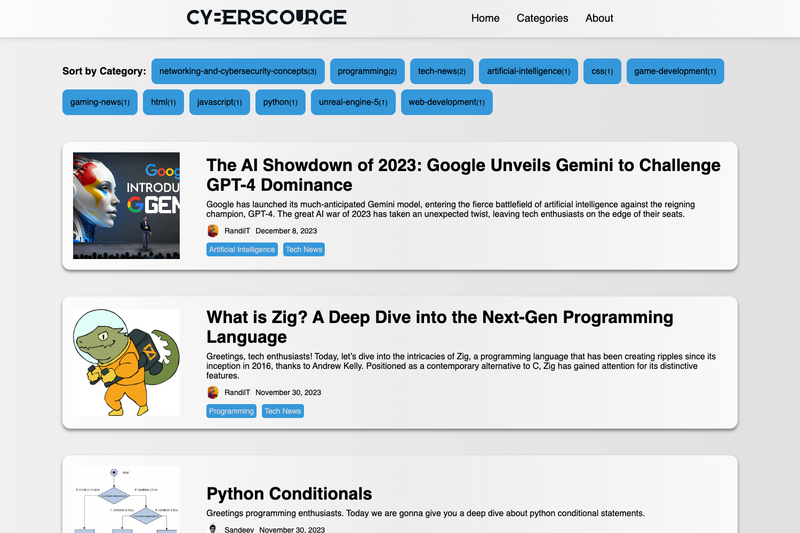
- Categories — groups posts into category pages so readers can filter content by topic.
- Featured posts — lets you highlight selected posts on the blog's main listing or a dedicated section.
- Author profiles — associates each post with an author and generates author bio pages.
- SEO — includes metadata handling for titles, descriptions, and social sharing.
- Navigation — provides a configurable navigation menu to connect the blog's main sections.
- Gatsby and React — built with the Gatsby static site generator and React, making it fast and deployable to any static host.
- Demo and article — accompanied by a live demo and an in-depth article explaining how each feature is implemented.
Who is it for?
- Gatsby developers who want to learn how to structure a blog with advanced features like categories and featured posts.
- Bloggers and content sites looking for a feature-rich blog template to customize with their own branding.
- Developers who prefer to build their own blog from a minimal, understandable codebase rather than using a turnkey theme.
What can you do with it?
- Create a blog with pagination: split your post archive into multiple pages to improve navigation and load times.
- Organize content by categories: automatically generate category pages that list related posts.
- Highlight featured posts: mark specific posts as featured so they stand out to readers.
- Show author information: display author bios alongside posts and on dedicated author pages.
- Improve SEO: leverage built-in metadata patterns to help your posts rank in search engines.