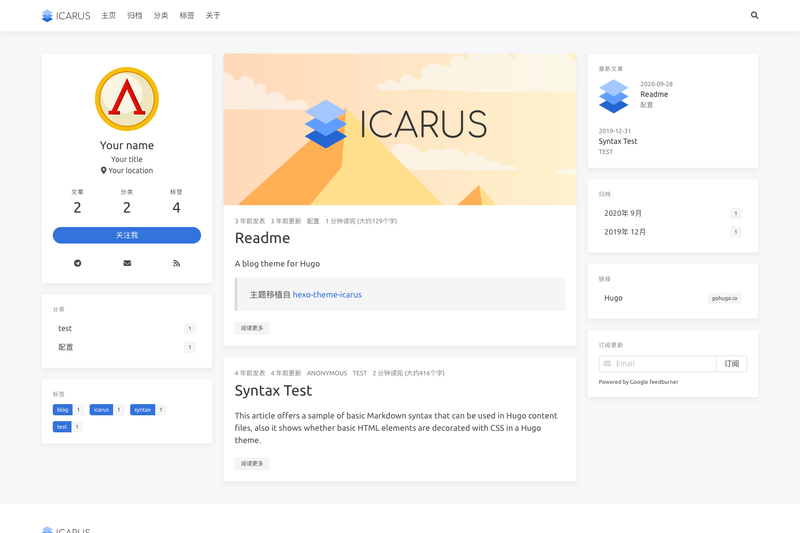
Hugo Theme Icarus is a blog theme for the Hugo static site generator, ported from the hexo-theme-icarus theme to bring its distinctive layout to Hugo-based projects.
What is Hugo Theme Icarus?
Hugo Theme Icarus is a free, open-source theme designed for personal and content-focused blogs. It is a direct port of the hexo-theme-icarus, a theme for the Hexo static site generator. The theme takes Hugo site content and renders it into a blog layout with the design language of the original Icarus. It is maintained on GitHub and released under the MIT License, allowing unrestricted use and modification.
Key Features
- Hugo-native implementation — Built specifically for the Hugo static site generator, leveraging its template engine and content organization.
- Icarus design port — Faithfully recreates the look and structure of hexo-theme-icarus, including its sidebar, typography, and overall layout.
- Example site included — The repository ships with a complete exampleSite containing sample content and configuration, so you can start with a working blog immediately.
- Git submodule install — Installation is done via
git submodule add, and updates are handled withgit pullinside the theme directory. - Config.toml-based configuration — The theme is configured through Hugo's standard config.toml file, with guidance pointing users to the original Icarus documentation.
- MIT License — The theme is free for commercial and personal use, with no attribution requirements.
- Blog-focused features — Includes support for posts and other standard blog content types, though some advanced features like sharing, Open Graph, and structured data are listed as TODO items.
Who is it for?
Hugo Theme Icarus is aimed at bloggers and content creators who prefer Hugo's static site workflow and want a clean, content-first design. It is also a solid choice for developers migrating from Hexo to Hugo, since it offers a familiar look and feel. Beginners can benefit from the included example site to quickly set up a personal blog.
What can you do with Hugo Theme Icarus?
- Personal bloggers: Create a personal blog by copying the example site, adding your own Markdown posts, and running
hugo server -Dto preview locally. - Hexo-to-Hugo migrants: Rebuild an existing Hexo blog with a nearly identical visual design by porting your content to Hugo and applying this theme.
- Developers: Use the theme as a base to customize or extend, thanks to its open-source MIT license and relatively simple Hugo structure.
How does Hugo Theme Icarus work?
The theme works like any Hugo theme: you create a new Hugo site, add the theme as a git submodule, copy the provided exampleSite into your project root, and delete any root config.toml that conflicts. Then you create Markdown posts under content/posts/ and run hugo server -D for local development or hugo to build a static site for deployment.
FAQ
Is Hugo Theme Icarus free?
Yes, Hugo Theme Icarus is completely free to use. It is open-sourced under the MIT License, which permits commercial use, modification, and redistribution without restriction.
How do I install Hugo Theme Icarus?
The recommended method is to create a new Hugo site, run git submodule add https://github.com/iMaple/hugo-theme-icarus.git themes/icarus from your site root, then copy the exampleSite contents into your project. After that, create posts under content/posts/ and start the development server with hugo server -D.
Does Hugo Theme Icarus support Open Graph?
According to the project's TODO list, Open Graph support is not yet implemented. This means social-media preview cards may not be generated automatically from your pages.
How do I update Hugo Theme Icarus?
To update the theme, navigate to the theme directory (themes/icarus) and run git pull. This will fetch the latest changes from the repository.
Where can I find the configuration documentation?
The README points to the original hexo-theme-icarus configuration documentation for details on theme options. While the Hugo port may not support every option from the original, the documentation is a good starting point.