Newsletter
Join the Community
Subscribe to our newsletter for the latest news and updates

Next JS Blog Slicing
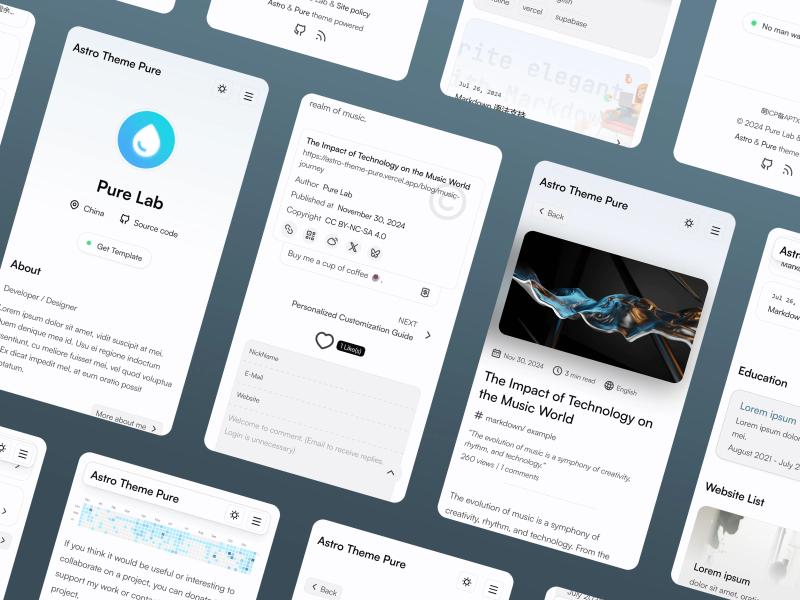
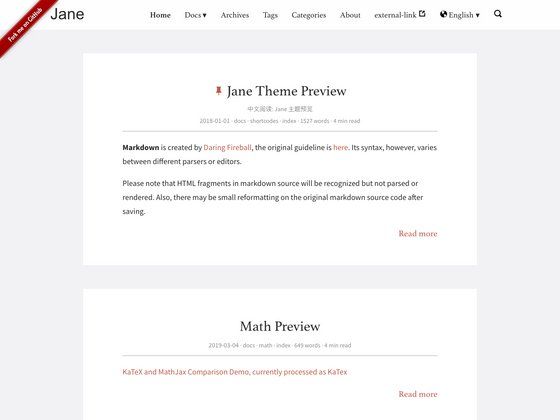
A simple, fast and powerful blog & document theme built by Astro.
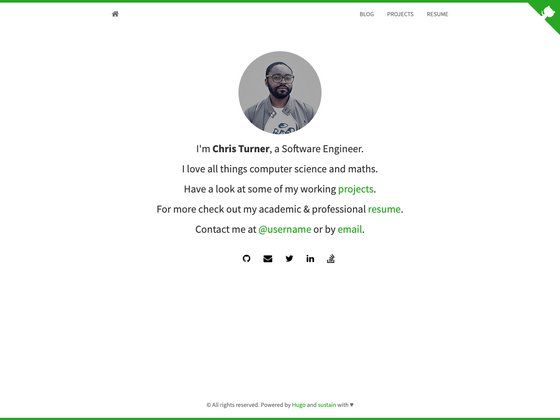
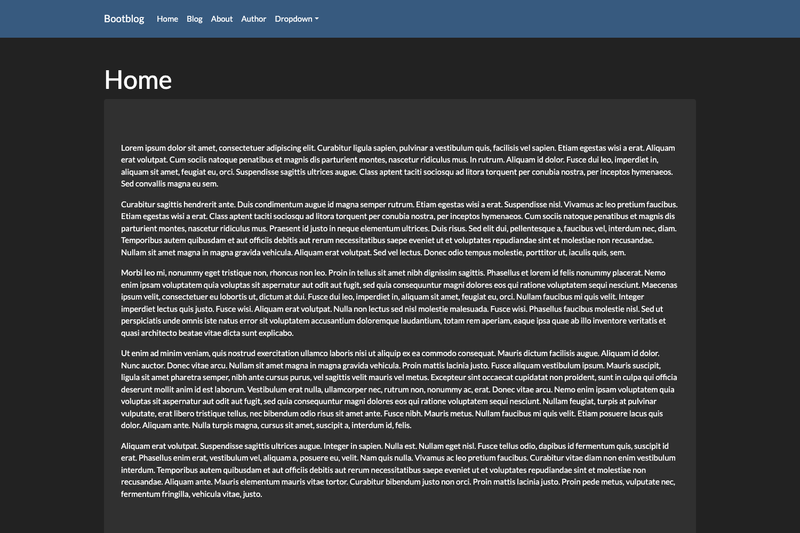
A Hugo personal blog theme built with Bootstrap, offering syntax highlighting, Disqus comments, and Google Analytics support.
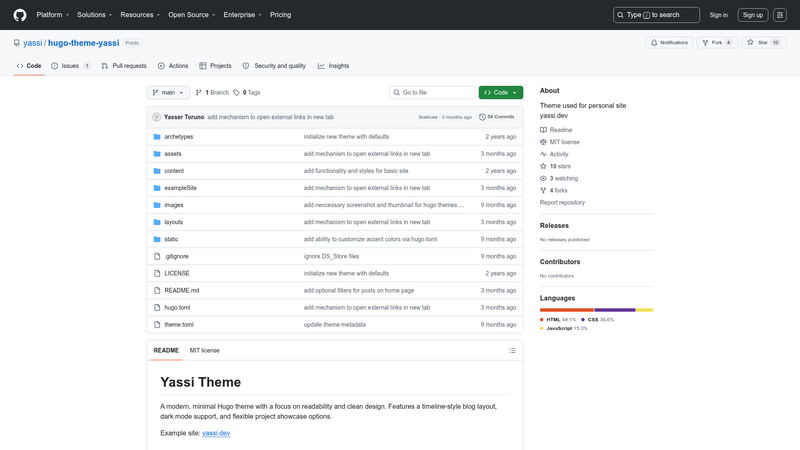
A modern, minimal Hugo theme with timeline blog layout, dark mode, and flexible project showcase options.
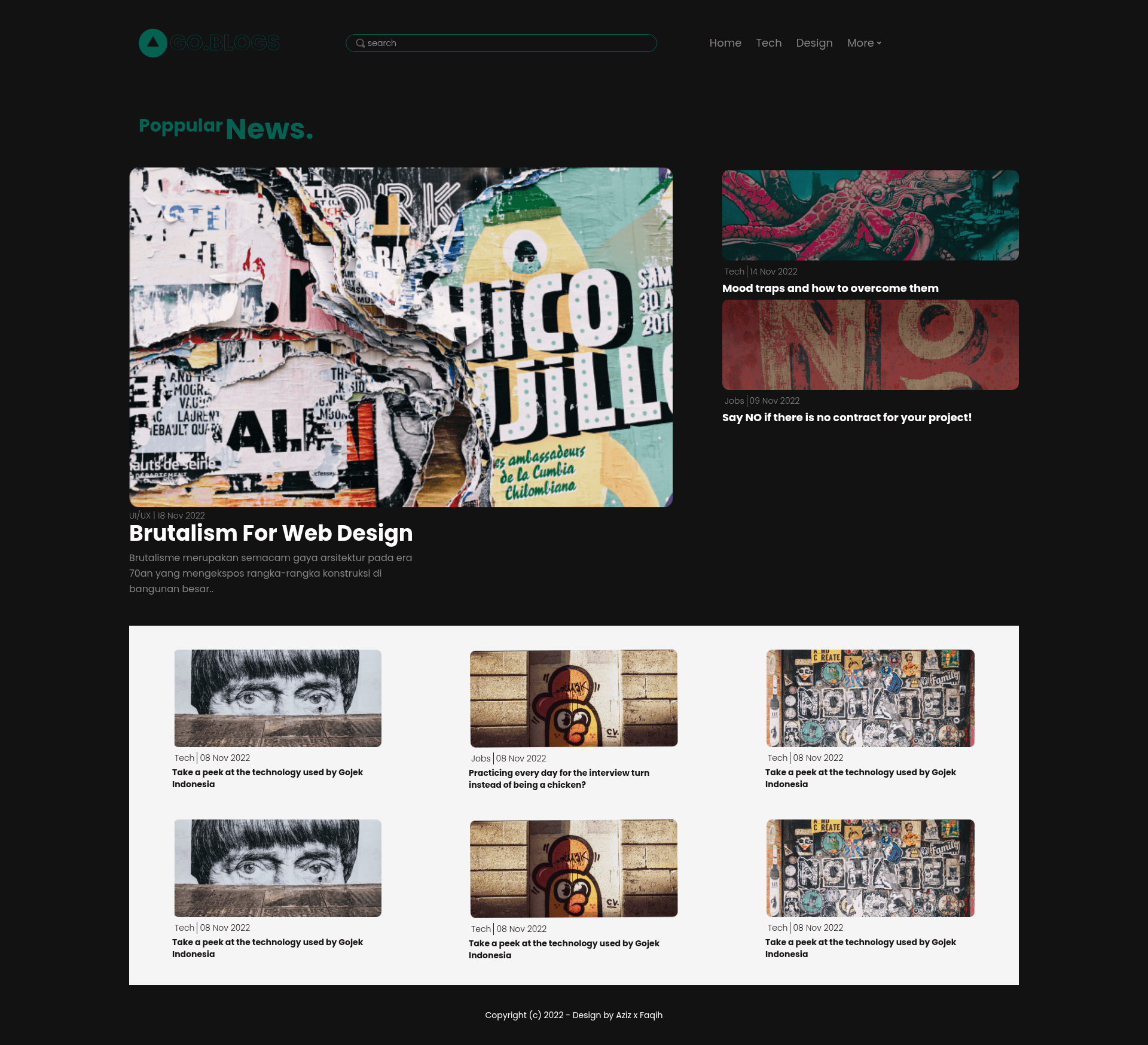
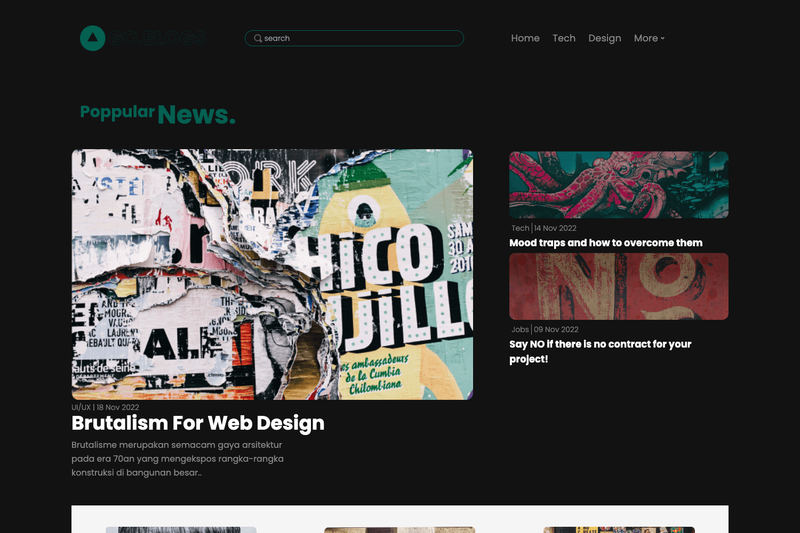
Goblogs is a Next.js blog template — a UI slicing of a Figma design into React and Tailwind CSS — that gives you a working blog site with API routes and a direct path to deployment on Vercel.
Goblogs is a front-end project bootstrapped with create-next-app, so it includes the standard Next.js structure: a pages/index.js home page, a pages/api/hello.js API endpoint, and the pages/api directory which Next.js treats as API routes rather than React pages. The template's styling is built with Tailwind CSS, with PostCSS used for CSS processing, as indicated by the project metadata. Because the repository description calls it "Next JS Blog Slicing," the project is understood to be a coded reproduction of a blog design — likely from a Figma file — into a runnable Next.js site.
pages/api directory lets you create serverless API endpoints; a sample /api/hello endpoint is included.npm run dev or yarn dev starts a local server at http://localhost:3000 that auto-updates as you edit your files.create-next-app), which works alongside Tailwind for CSS transformations.npm run dev, edit the page, and push.pages/index.js to add your own posts and layout.pages/api and calling them from your front end.The template runs like any standard Next.js app: clone the repository, install dependencies with npm install (or yarn), then start the development server with npm run dev. Open http://localhost:3000 to see the default page, edit pages/index.js to change content, and the browser refreshes automatically. When ready, follow the Vercel deployment link in the README to publish.
The repository is public, so you can clone it directly and use it as a starting point. The README contains no mention of payment or a commercial license.
Yes. The repository topics list tailwind and tailwindcss, and the styling approach is based on Tailwind utility classes within the Next.js components.
Slicing refers to converting a visual design — in this case a blog layout, likely from Figma — into HTML/CSS/React code. The topic figma and the word "slicing" in the description indicate the template is the coded result of such a process.
Run npm run dev or yarn dev from the project root. Then open http://localhost:3000 in your browser to see the site. Any changes you make to pages/index.js will reload automatically.
Yes. Next.js maps every file in the pages/api directory to an API route. The template includes a default pages/api/hello.js endpoint you can test at http://localhost:3000/api/hello.