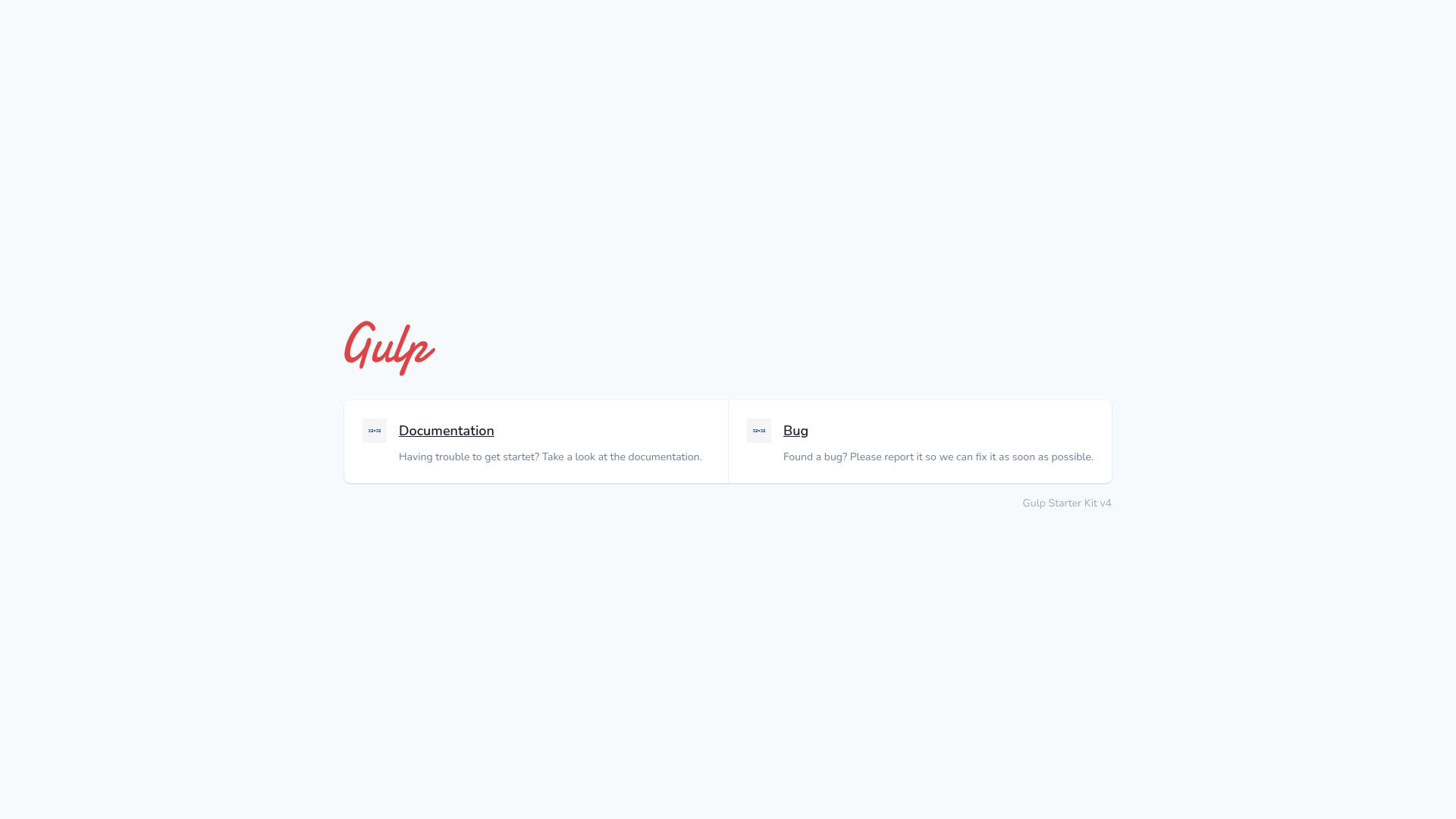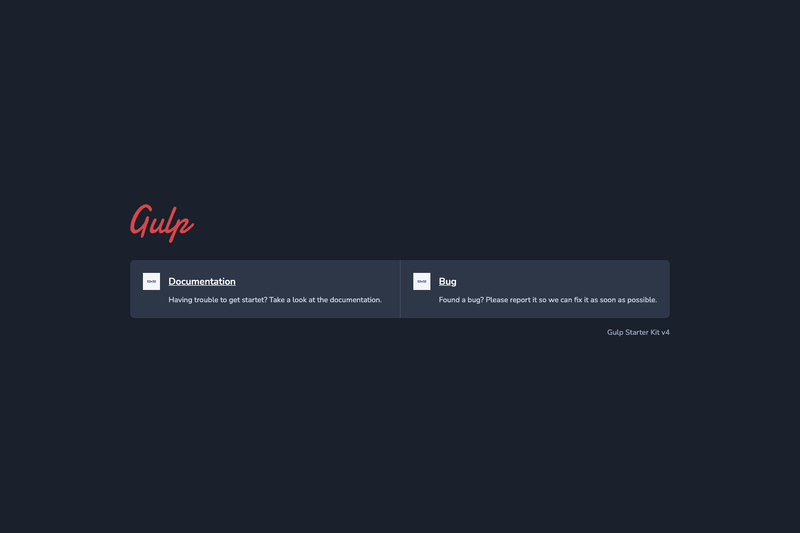
Gulp Starter Kit is a front-end automation boilerplate that uses Gulp 4 to turn SCSS, ES6+ JavaScript, and Eleventy templates into optimized static HTML, CSS, and JS.
What is Gulp Starter Kit?
The Gulp Starter Kit is an open-source build pipeline boilerplate for front-end developers, published on GitHub by nstungcom. It takes source files written in SCSS, modern JavaScript (ES6+), and template languages such as Nunjucks, Markdown, Liquid, Handlebars, Mustache, and Pug, then outputs production-ready HTML, CSS, and JavaScript. The kit runs on Node.js (tested on v12.22.1 and v14.17.1) and Gulp 4.
Key Features
- Independent front-end framework — The build pipeline is framework-agnostic, so you can use Bootstrap 4 or any other CSS/JS framework; the docs include recipes for pairing it with your stack.
- Sass support (SCSS) — Compiles Sass/SCSS into CSS with variables, mixins, and nesting, handled automatically by Gulp.
- Performance optimization — Minifies and concatenates JavaScript, CSS, HTML, and images to keep pages lightweight.
- ES6+ via Babel — Transpiles ES6+ source code to ES5 with Babel, and adds polyfills automatically for older browsers.
- Linting — Integrates stylelint for CSS/SCSS and ESLint for JavaScript directly into the build process.
- Multiple template language support — Uses Eleventy (11ty) to compile Nunjucks, Markdown, Liquid, Handlebars, Mustache, and Pug into static HTML.
- Built-in HTTP server — Starts a local development server for previewing your site while you work.
- Live browser reloading — Reloads the browser in real time whenever you edit files, via BrowserSync.
- Cross-device synchronization — BrowserSync also syncs clicks, scrolls, and form entries across multiple devices.
Who should use Gulp Starter Kit?
Front-end developers who want a preconfigured Gulp 4 pipeline without writing tasks from scratch can compile SCSS, bundle JavaScript with rollup.js, and render HTML templates. Web designers who need instant live reload and multi-device testing during development will benefit from the integrated BrowserSync server. Agencies and freelancers building static marketing sites or prototypes can scaffold a project quickly and switch between template engines (Nunjucks, Pug, etc.) with minimal setup.
What can you do with Gulp Starter Kit?
- Static site developers: render Nunjucks or Pug templates into HTML and feed the output into a CI workflow — the repository includes a GitHub Actions workflow badge.
- Front-end teams: enforce consistent code quality with stylelint and ESLint checks before the production build is generated.
- Prototypers: spin up a local server with live reload and cross-device synchronization to test interactions during the design phase.
How does Gulp Starter Kit work?
Clone the repository, run npm install, then use npm start or npm run dev to launch the development server with live reload. Run npm run build to produce minified production assets, and npm run clean to remove build artifacts. The Gulp 4 tasks process SCSS through Autoprefixer, bundle JavaScript via rollup.js with Babel, and generate HTML from Eleventy templates.
FAQ
Does Gulp Starter Kit require a specific front-end framework?
No. The kit is framework-independent and works with any CSS/JS framework, including Bootstrap 4 as referenced in the documentation recipes.
What Node.js version does Gulp Starter Kit need?
Node.js 12 or newer is required, and the kit has been tested on versions 12.22.1 and 14.17.1. It also requires Gulp 4, tested with version 4.0.2.
Does Gulp Starter Kit support Sass?
Yes, it compiles SCSS into CSS using Gulp, giving you variables, mixins, and other Sass features.
Can I use Gulp Starter Kit for production builds?
Yes. Running npm run build minifies and concatenates JavaScript, CSS, HTML, and images. The CI workflow badge in the repository shows the build is tested in GitHub Actions.
What template engines can I use with Gulp Starter Kit?
The kit supports Nunjucks, Markdown, Liquid, Handlebars, Mustache, and Pug, all powered by Eleventy.