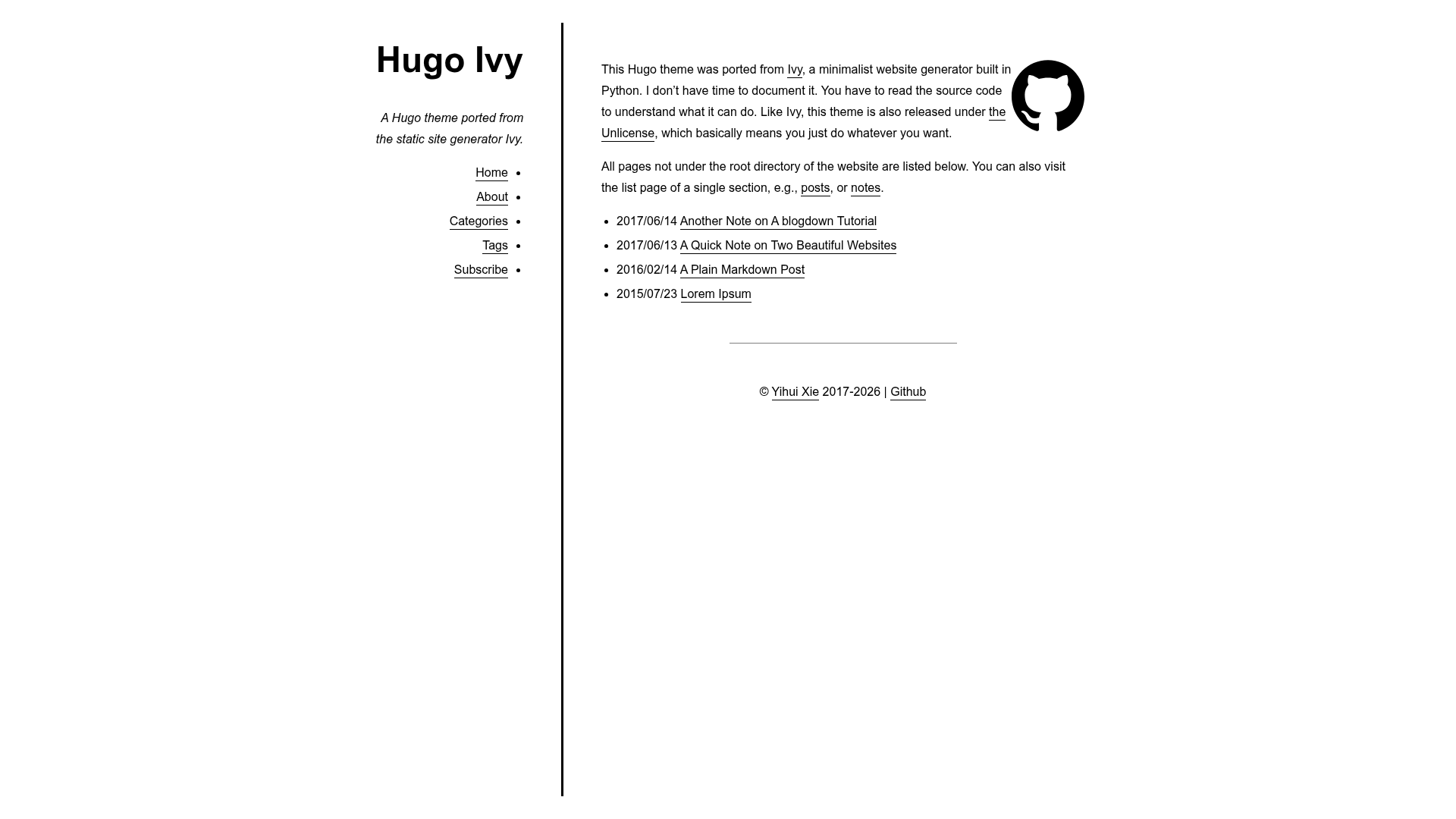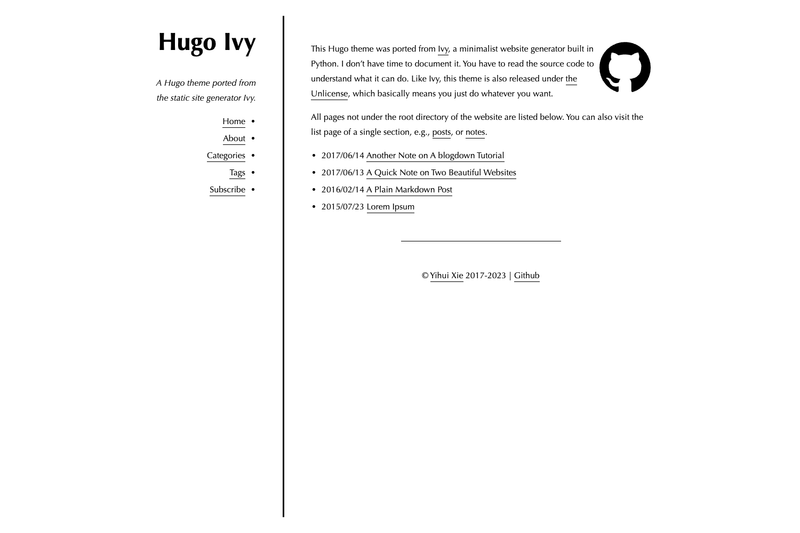
Hugo Ivy is a minimalist, two-column Hugo theme ported from the Ivy website generator, designed for static site users who want a clean blog or personal site with Hugo. The theme is maintained by the GitHub user yihui in the repository yihui/hugo-ivy, which currently has 292 stars.
What is Hugo Ivy?
Hugo Ivy is a two-column Hugo theme ported from Ivy, a minimalist website generator originally built in Python. It takes Hugo content files, such as Markdown posts and pages, and outputs a static website with a two-column layout. The port was created by the GitHub user yihui and is released under the Unlicense, placing it in the public domain.
Key Features
- Two-column layout — The theme presents content in a classic two-column design, with a main content area and a sidebar, typical for blogs and personal sites.
- Minimalist design — No heavy styling or JavaScript; the focus is on content readability and simplicity.
- Ported from Ivy — This Hugo version carries over the minimalism of the original Python-based Ivy generator, making it a direct port rather than a reimplementation.
- Hugo-native — Built as a standard Hugo theme, it integrates with Hugo's content organization, templating, and static site generation workflow.
- Public domain license — Released under the Unlicense, so you can freely use, modify, and redistribute the theme without any restrictions.
- Source transparency — The author states there is no official documentation; users are expected to read the source code to understand and customize the theme.
Who is it for?
- Hugo users — Anyone already using Hugo who wants a simple, two-column theme for a blog, personal site, or documentation.
- Developers — Developers comfortable reading source code will find it easy to customize the theme's layout and behavior, as there is no detailed manual.
- Minimalists — Users who prefer a distraction-free design without UI frameworks or excessive styling.
What can you do with Hugo Ivy?
- Bloggers: Publish Markdown posts with Hugo and generate a clean, two-column static blog that is fast and easy to maintain.
- Personal site owners: Create a simple homepage with a sidebar for bio or links, and a main area for content.
- Theme enthusiasts: Study the minimal Hugo theme source to learn how Hugo themes are structured and how to build your own.
FAQ
Is Hugo Ivy free?
Yes. The theme is released under the Unlicense, which dedicates it to the public domain. You can use it commercially or personally without any restrictions.
Does Hugo Ivy have documentation?
No. The author explicitly mentions they don't have time to document it, so you'll need to read the source code to understand all of its capabilities and configuration options.
What is Hugo Ivy based on?
It is a port of Ivy, a minimalist website generator written in Python. The original Ivy repository is no longer accessible, making this Hugo theme the primary way to use Ivy's design with Hugo.
Can I contribute to Hugo Ivy?
Yes, the repository is publicly hosted on GitHub, so you can fork it, submit issues, or suggest changes through pull requests.