Newsletter
Join the Community
Subscribe to our newsletter for the latest news and updates

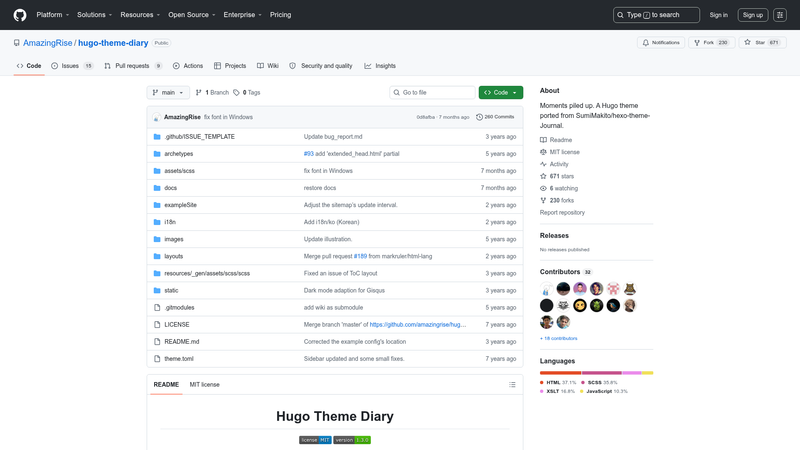
A Hugo theme ported from hexo-theme-Journal — a customizable, multilingual, dark-mode-ready blog theme.
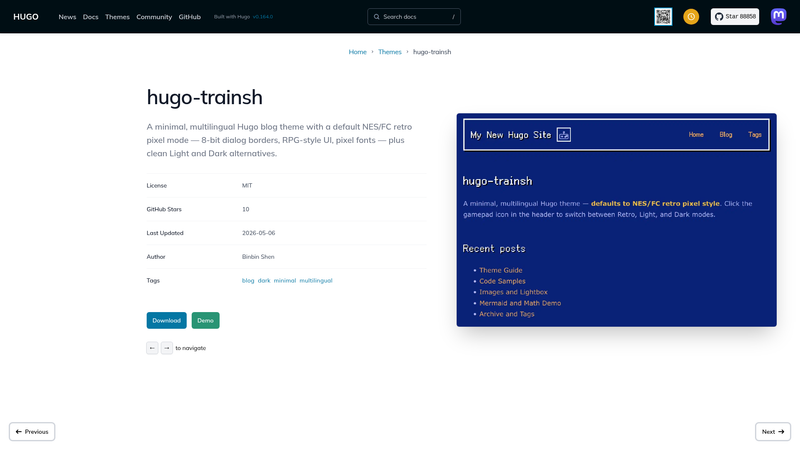
Hugo theme with NES/FC retro pixel style inspired by classic 8-bit RPGs.
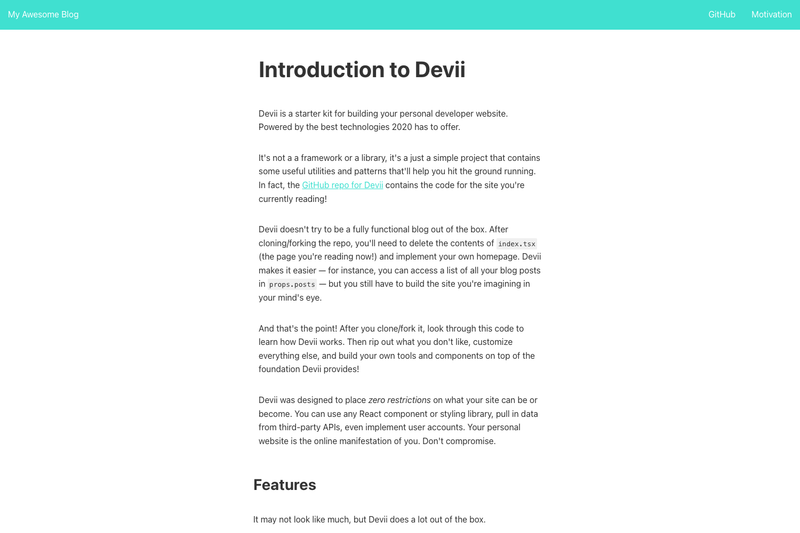
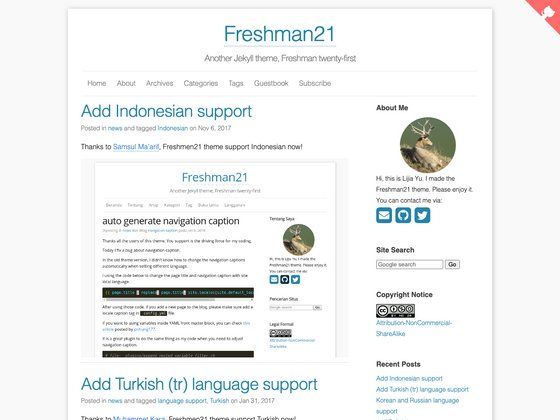
A developer blog starter built on Next.js, React, and TypeScript that generates a static site from Markdown files.
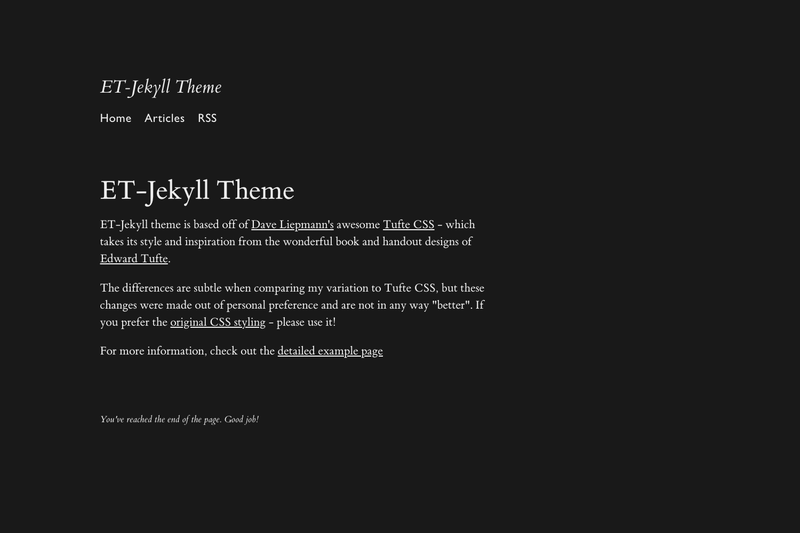
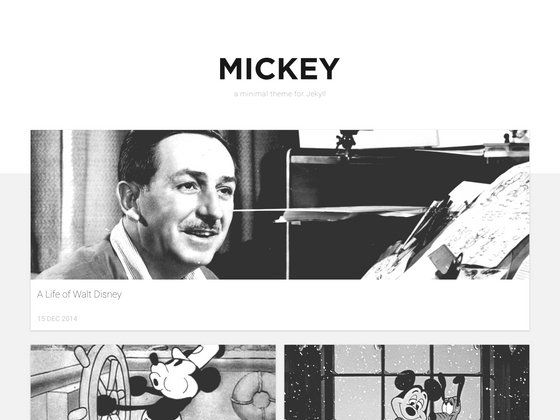
A minimal Jekyll theme inspired by Tufte CSS for clean, content-focused static websites.
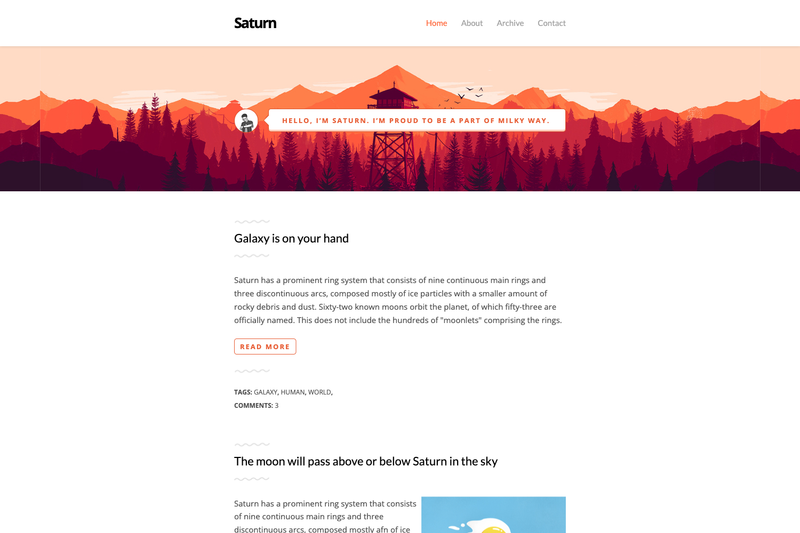
Saturn is a free PSD & HTML blog template with a live demo and GitHub releases.
Hugo Theme Diary is a Hugo blog theme, ported from SumiMakito's hexo-theme-Journal, that turns a static Hugo site into a personal journal-style blog with comment integrations, dark mode, and six languages.
Hugo Theme Diary is an open-source theme for the Hugo static site generator, released under the MIT license at version 1.3.0. It takes Markdown-based Hugo content as input and produces a responsive blog with an index page, post pages, a sidebar, and a table of contents. The theme was ported by AmazingRise from the hexo-theme-Journal design and is distributed via GitHub with an example site.
Installation uses Git submodules: from the root of your Hugo site, run git submodule add https://github.com/AmazingRise/hugo-theme-diary.git themes/diary, then update with git submodule update --remote --merge. A demo site is provided under themes/diary/exampleSite; launch it with hugo server --themesDir ../...
Yes. The theme is open source under the MIT license, so you can use, modify, and redistribute it freely, including in commercial projects.
The theme supports Gitalk, LiveRe, Disqus, Waline, and Twikoo. Configuration for each is documented in the project wiki's Comment Services page.
Yes. The wiki includes instructions for altering the color scheme, code highlight style, font family, and reading-time display through the config file.