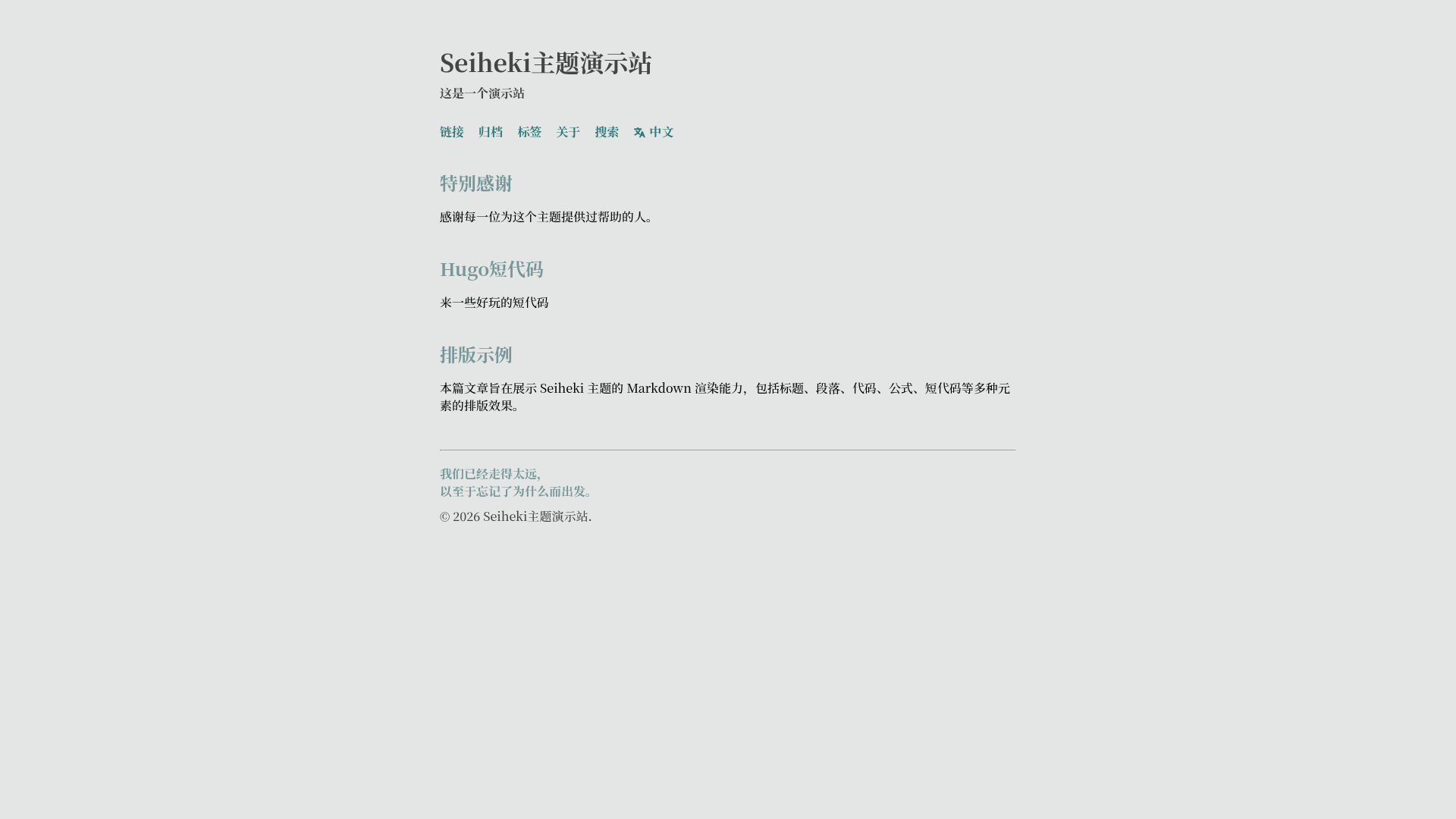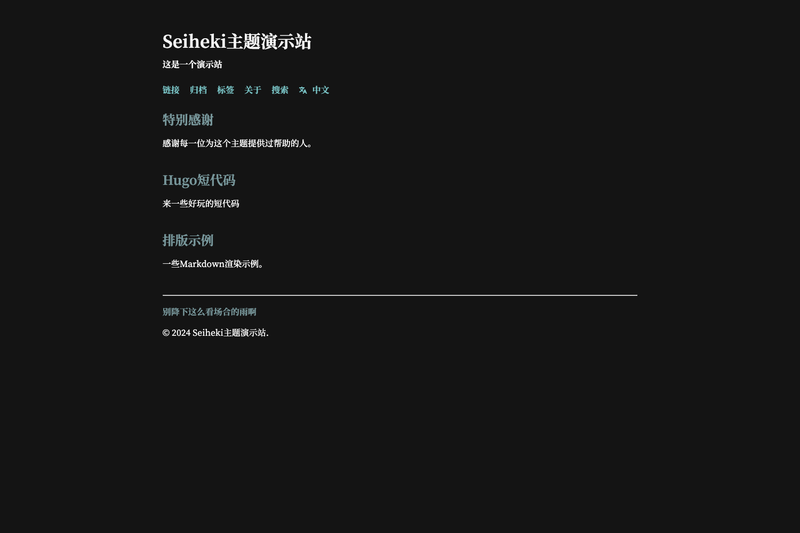
Seiheki (青碧) is a Hugo blog theme by developer Cicada000 that renders a standard Hugo site into a lightweight bilingual blog. It ships with Archives, Tags, Search, pagination, a 404 page, and reading-time stats, and adds integrations for Utterances comments and Umami analytics through settings in config.toml.
What is the Seiheki Hugo theme?
Seiheki is a simple, open-source Hugo theme designed for personal blogs. It takes Markdown content from your Hugo site and outputs a static blog with a clean typographic layout. The theme supports Chinese (zh-cn) and English (en-us) content directories, is mobile-responsive, and includes an image lightbox powered by Fancybox. Its author, Cicada000, maintains it on GitHub under the name Hugo-Theme-Seiheki-Template.
Key Features
- Bilingual i18n — Built-in support for
zh-cnanden-us; you must sync the site title and subtitle in thei18nfolder when customizing. - Search page — A fully functional search page is included out of the box, driven by the site's JSON output.
- Archives and Tags pages — Pre-built archive and taxonomy pages, with tag and category taxonomies configured in
config.toml. - Utterances comments — Enable GitHub-based comments by setting your repository under
[params.Utterances]; leaving the repo empty disables comments. - Umami analytics — Add privacy-friendly analytics by providing your Umami website ID under
[params.Umami]; an empty ID turns it off. - Fancybox lightbox — Toggle the built-in image lightbox with the
fancybox = trueparameter. - Reading time and TOC — Each post displays estimated reading time, and a table of contents is shown on article pages.
- Pagination and 404 page — Control the number of posts per page via the
paginateparameter; a custom 404 page is included. - Vercel one-click deployment — The repository includes a Vercel deploy button that clones the theme and deploys it instantly.
Who is it for?
- Hugo bloggers who want a ready-made, clean theme without building one from scratch.
- Multilingual writers who need built-in
zh-cnanden-uscontent support and per-language configuration. - Developers who value privacy and want self-hosted analytics via Umami and GitHub-hosted comments through Utterances.
- Quick-starters who want to go live via Vercel's one-click deployment instead of manual server setup.
What can you do with it?
- Personal bloggers: publish posts with TOC, reading time, and lightbox images, and let readers search and browse archives.
- Developers documenting projects: use the built-in tags and categories to organize technical notes, and embed custom shortcodes for interactive content.
- Open-source maintainers: collect comments from GitHub issues without hosting a comment server, and track visits with Umami.
How does it work?
To use the theme, clone the repository or download the release archive and place the extracted folder under your Hugo site's themes directory. Then adjust config.toml with your domain, subtitle, favicon, and optionally the Umami and Utterances settings. You can also click the Vercel button in the README to deploy with one click, then customize the configuration afterwards.
FAQ
What languages does the Seiheki theme support?
The theme ships with i18n support for Chinese (zh-cn) and English (en-us). You define both language sections in your config.toml, each with its own content directory, so you can write posts in either language and the interface strings switch accordingly.
How do I enable comments on my blog?
Set the repo field under [params.Utterances] in config.toml to your GitHub repository, for example Cicada000/Blog-Comments. Leaving this value empty disables comments entirely. Utterances creates an issue per post for discussion.
How do I add analytics with Umami?
Add your Umami website ID to the id field under [params.Umami]. If you run your own Umami instance, set the webpanel URL; otherwise it defaults to the Umami cloud. Leaving id empty disables tracking.
Can I customize the theme's shortcodes?
Yes. The repository already includes some shortcodes and you can add your own by creating files in the shortcodes folder of the theme. The README links to a demo page showing the available shortcodes.
Does the theme support mobile devices?
Yes. Mobile adaptation is listed as a completed feature in the development progress, and the layout is responsive so readers get a usable experience on phones and tablets.