Newsletter
Join the Community
Subscribe to our newsletter for the latest news and updates

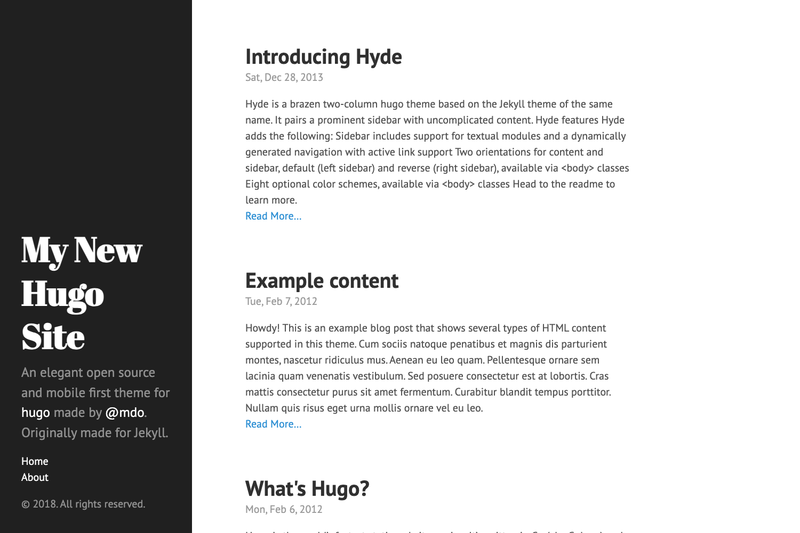
A two-column Hugo blog theme starter with Forestry CMS integration, based on the Jekyll Hyde theme.
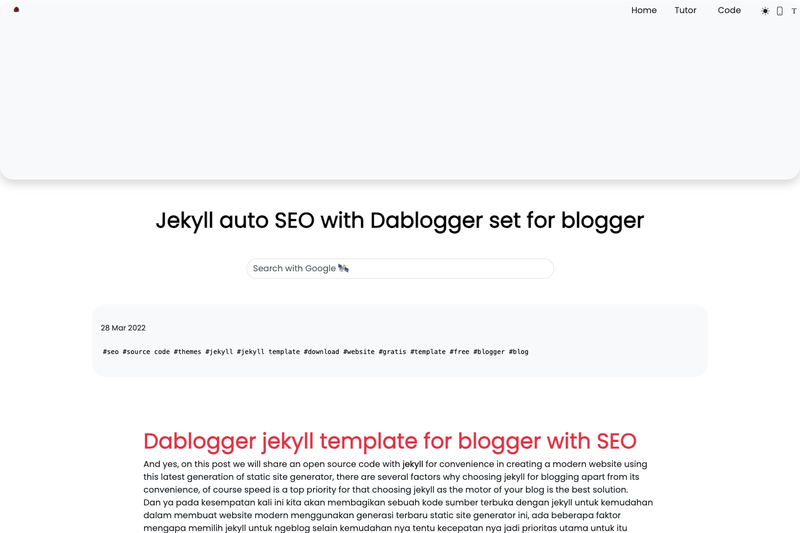
Dablogger is a fast Jekyll template for Blogger with a clean design and automatic SEO features.
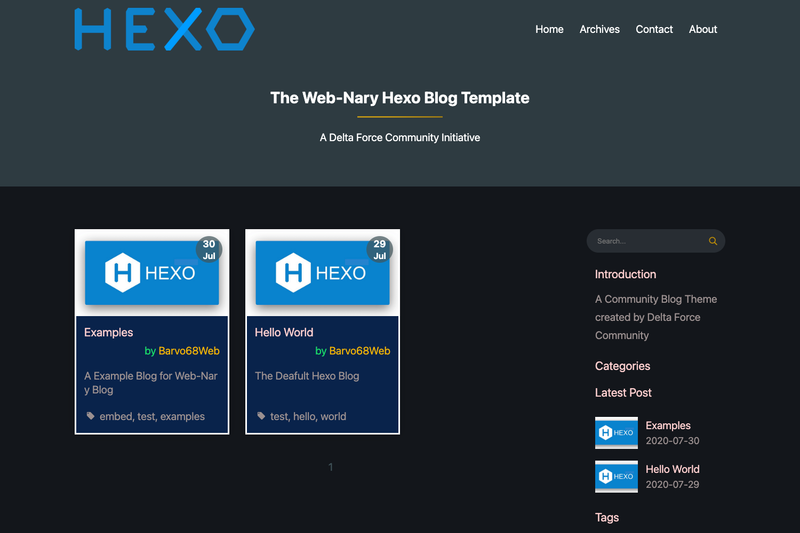
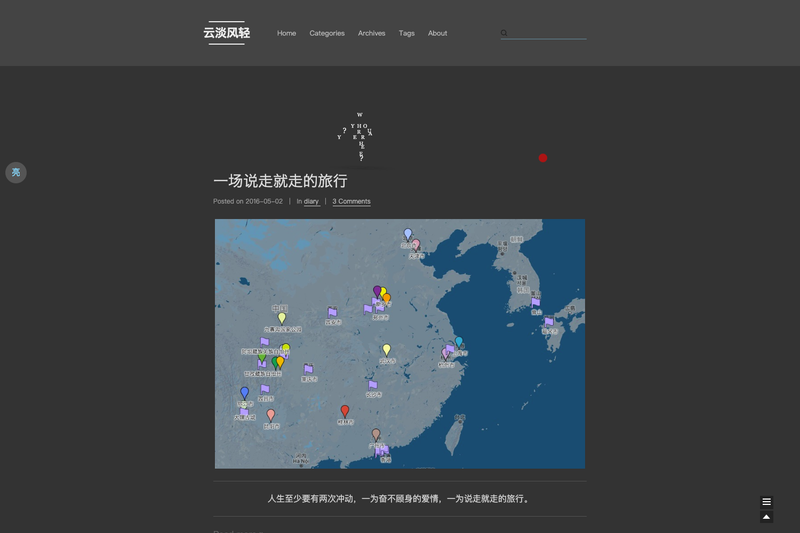
A fully customisable modular flat theme for the Hexo static site generator, adapted from the Skapp theme.
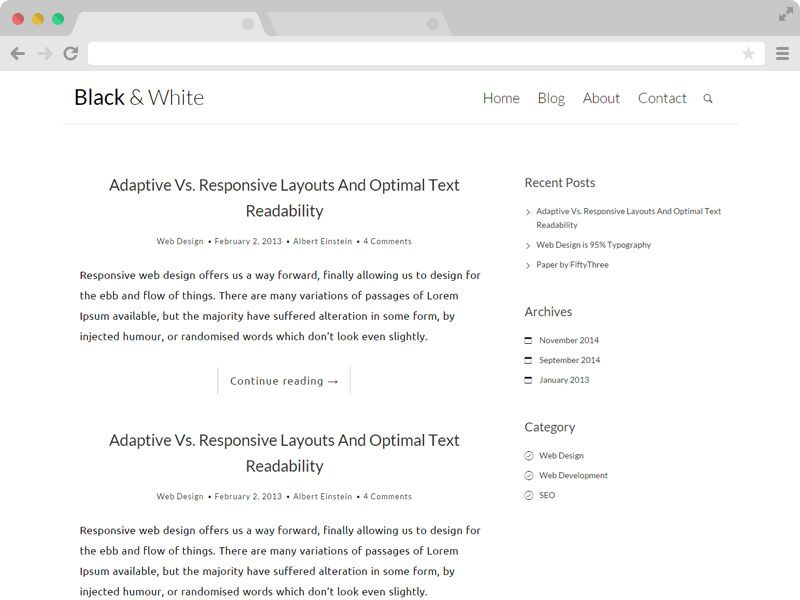
Free responsive blog template based on Bootstrap 3, HTML5 & CSS3, featuring clean design, six pages, and CSS3/jQuery effects.

Jekyll theme styled after the Atom text editor's One Dark theme for developer-focused static sites.
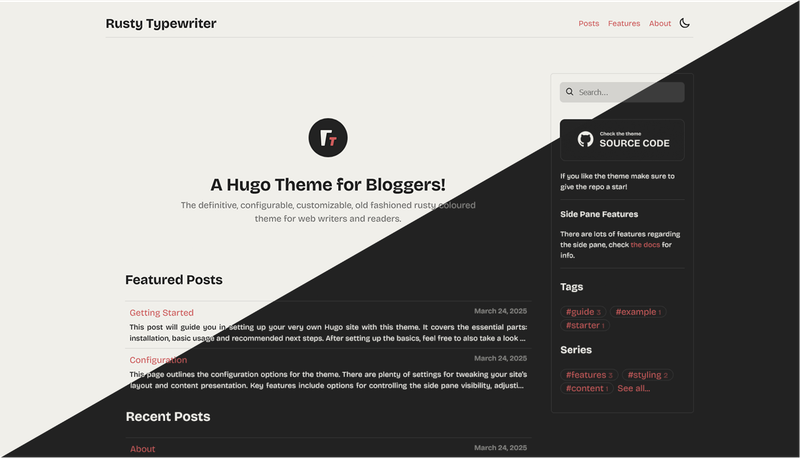
Hyde Hugo Starter is a pre-configured blog theme template for the Hugo static site generator, pairing a two-column layout with the Forestry content management system. Originally created as the Jekyll theme Hyde by Mark Otto and ported to Hugo by Steve Francia, this starter repo is designed to give you a running blog with minimal setup.
Hyde Hugo Starter is a Hugo theme that produces a static blog with a prominent sidebar and straightforward content area. It takes Markdown posts and pages as input and outputs a fully generated HTML site, ready to deploy to any static hosting provider. The template is distributed as a Forestry starter repo, which imports a fully configured Hugo project (using Hugo version 0.42) directly into your Forestry account, letting you edit content in a visual editor rather than editing code by hand.
Hyde Hugo Starter bundles the core Hyde theme features with several Forestry-specific conveniences.
hugo, a publish directory of public, and a HUGO_VERSION environment variable set to 0.42; AWS S3/CloudFront and other hosting options are also covered.Hyde is aimed at anyone who wants a static blog managed through a visual CMS rather than raw Markdown files.
With the starter repo imported and configured, the main workflows are writing, customizing, and publishing content through Forestry.
Setting up Hyde Hugo Starter follows a four-step path: import the starter repo, configure deployment, edit content in Forestry, and publish.
hugo, the publish directory to public, and add a HUGO_VERSION variable of 0.42.Yes. The theme is open sourced under the MIT license, so you can use it for personal or commercial projects free of charge.
Hyde ships with eight optional themes based on the base16 color scheme. You can also create your own theme by copying an existing one in the included CSS file.
Yes, you can enable Disqus comments by entering your Disqus Shortname in Site Configuration -> Additional Settings. If you don't have a Disqus account, you can sign up at disqus.com.
Yes. The documentation covers AWS deployment with S3 and CloudFront, plus other options such as GitHub Pages, Webhooks, and FTP/SFTP.