Newsletter
Join the Community
Subscribe to our newsletter for the latest news and updates

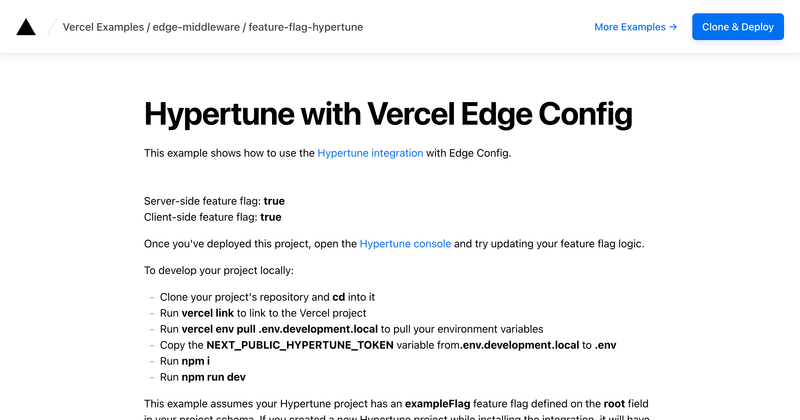
Next.js example that connects Hypertune feature flags and A/B testing to Vercel Global Config, the Flags SDK and the Vercel Toolbar.
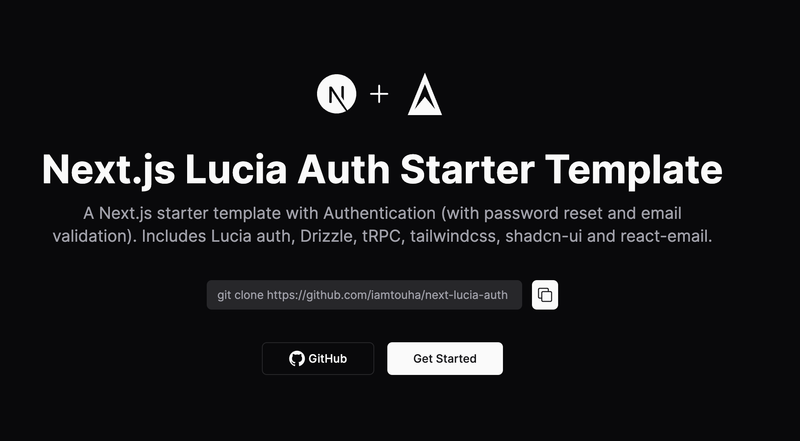
Next.js starter template with Lucia session auth, email verification, password reset, Drizzle ORM, tRPC, Stripe subscriptions and Playwright E2E tests.
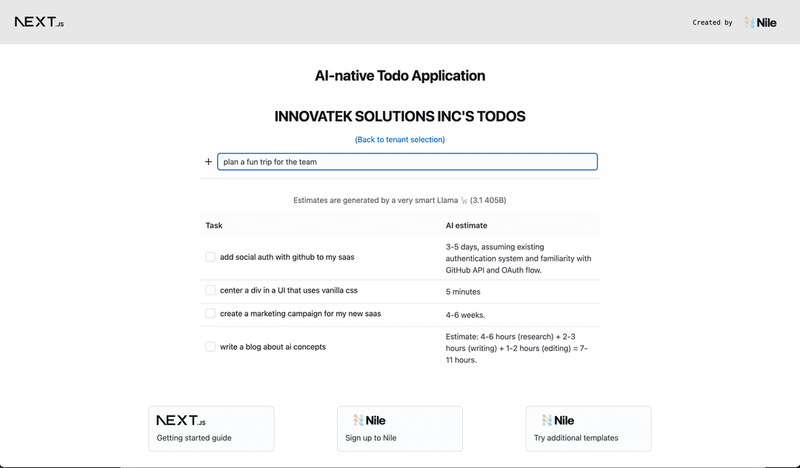
Next.js 13 starter template that builds a multi-tenant, AI-native todo list on Nile's Postgres, with AI-generated task time estimates and embeddings.
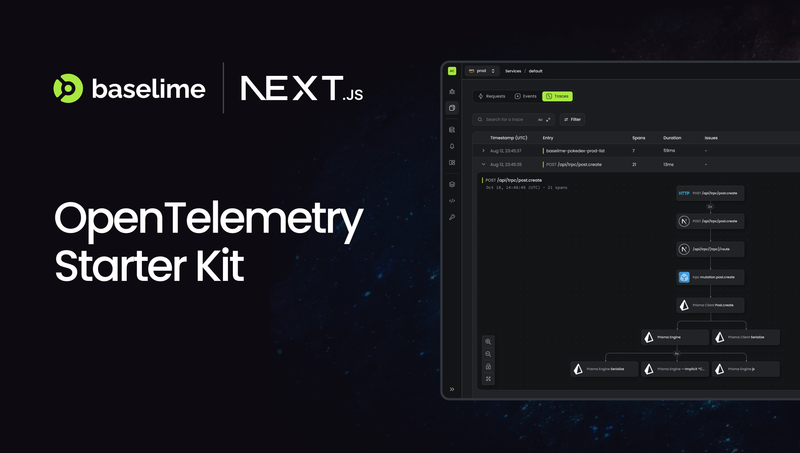
Next.js starter instrumented with OpenTelemetry tracing, Baselime Real User Monitoring, and an automatic Vercel log drain.
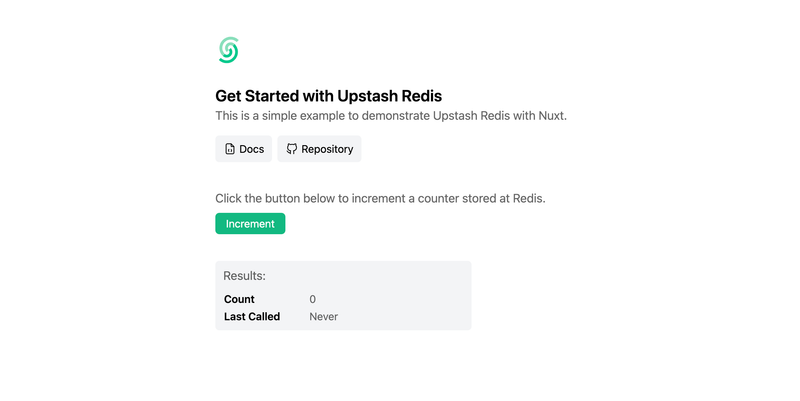
JavaScript example showing how to add Upstash Redis caching to a Nuxt app deployed on Vercel.
A minimal Preact boilerplate from the Vercel examples collection that deploys to Vercel with zero configuration.
Hypertune Integration example is a deployable Next.js starter that connects the Hypertune feature flag, A/B testing, analytics and app configuration platform to Vercel through Vercel Global Config, the Vercel Flags SDK and the Vercel Toolbar.
It is a ready-to-clone example project that shows how to use the Hypertune Vercel integration inside a Next.js app running on Edge Middleware with Tailwind CSS styling. It takes feature flag definitions authored in the Hypertune UI as input and produces a Next.js frontend whose server and client code read flag values and A/B test variants at runtime. Deployment is handled by a one-click "Deploy with Vercel" link that pre-fills five environment variables, and a live demo runs at feature-flag-hypertune.vercel.app. It is published as part of Vercel's edge-middleware examples collection.
pnpm hypertune regenerates a typed client so flag inputs, outputs and logic are statically typed in TypeScript.NEXT_PUBLIC_HYPERTUNE_TOKEN, HYPERTUNE_ADMIN_TOKEN, GLOBAL_CONFIG, GLOBAL_CONFIG_HYPERTUNE_ITEM_KEY and a self-generated FLAGS_SECRET.FLAGS_SECRET with node -e "console.log(crypto.randomBytes(32).toString('base64url'))".pnpm hypertune.For local development, clone the repo, run vercel link, then vercel env pull .env.development.local, followed by pnpm i and pnpm run dev.
The example code is open source and can be cloned and self-hosted, but it requires a Hypertune account and a Vercel project, and it needs the Hypertune integration installed plus a FLAGS_SECRET you generate yourself before it will run.
Five: NEXT_PUBLIC_HYPERTUNE_TOKEN, HYPERTUNE_ADMIN_TOKEN, GLOBAL_CONFIG, GLOBAL_CONFIG_HYPERTUNE_ITEM_KEY and FLAGS_SECRET. The Vercel clone flow prompts for the first four and links to the Hypertune Vercel quickstart docs for details.
Create the flag in the Hypertune UI at app.hypertune.com, then regenerate the client with pnpm hypertune so the new flag is available with full end-to-end type-safety in your code.
Yes. The example is built on Next.js with the App Router and Server Components, and uses one Hypertune SDK across server and client plus Vercel's Edge Middleware use case.
A live demo is deployed at feature-flag-hypertune.vercel.app, and the Vercel clone link sets the same project name, repository name and demo title when you create your own copy.