Newsletter
Join the Community
Subscribe to our newsletter for the latest news and updates

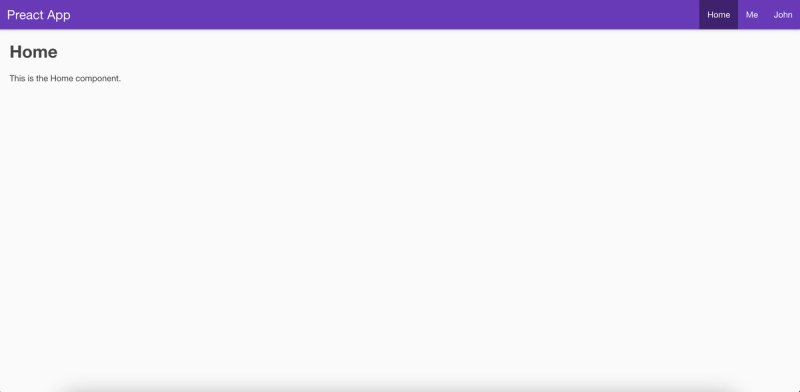
A minimal Preact boilerplate from the Vercel examples collection that deploys to Vercel with zero configuration.
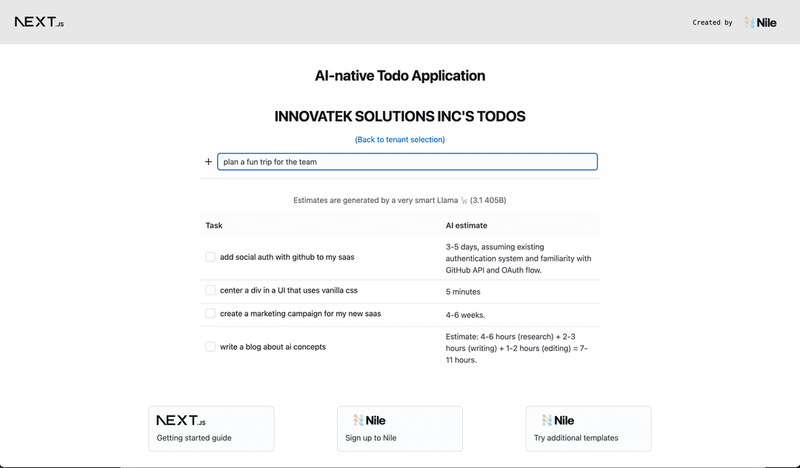
Next.js 13 starter template that builds a multi-tenant, AI-native todo list on Nile's Postgres, with AI-generated task time estimates and embeddings.
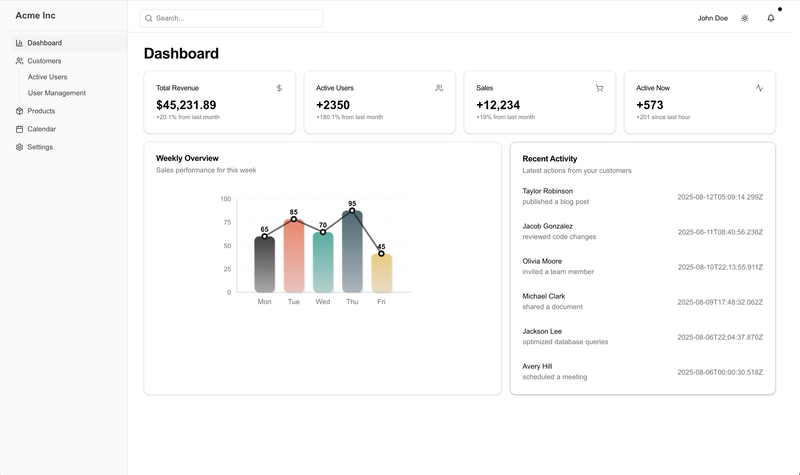
Vercel example SaaS project pairing a Next.js dashboard with an Express.js API microservice, routed under one domain via microfrontends.
Preact is a framework boilerplate from the Vercel examples collection that scaffolds a minimal Preact application preconfigured for zero-configuration deployment to Vercel, with a Preact CLI script set for development, building, serving, and testing.
The Preact example is a single-directory starter project that produces a deployable Preact app. You clone it (or follow the Deploy with Vercel link that points at the framework-boilerplates/preact folder of the vercel/examples repository), run npm install, then use the standard Preact CLI scripts to develop and ship it. It ships no custom build configuration: the toolchain is the one Preact CLI provides, and the deployment target named on the page is Vercel, reached through the hosted Deploy with Vercel flow. A live instance is published at the preact-template.vercel.app URL listed on the page.
npm run dev serves the app with hot reload at localhost:8080.npm run build generates the minified production bundle.npm run serve lets you test the built production output locally before deploying.npm run test runs the project's test suite using Jest with Enzyme.preact template parameter, so no manual project configuration is needed.npm run test.npm run dev at localhost:8080, and iterate on components with hot reload.npm run build and deploy the result through the Deploy with Vercel flow to get a public preact-template-style URL.The workflow is a short npm script sequence driven by Preact CLI. First run npm install to fetch dependencies, then npm run dev to serve the app with hot reload on localhost:8080, npm run build to produce a minified production build, npm run serve to test that production build locally, and npm run test to run the Jest and Enzyme suite. Deployment to Vercel happens through the Deploy with Vercel link, which clones the example repository and provisions the project for you.
The Preact example is free and open source: it lives in the public vercel/examples GitHub repository and is deployed through Vercel's Deploy with Vercel flow.
It provides a working Preact app scaffold taken from the Vercel examples repository, complete with npm scripts for a hot-reloading dev server, a minified production build, a local production preview, and Jest/Enzyme tests.
Yes. The example is published in the public vercel/examples repository, so you can clone, modify, and deploy it without paying for the template itself. Any costs would come from the hosting or services you attach to your own deployment.
npm run dev serves the app with hot reload at localhost:8080. The other scripts are npm run build for a minified production build, npm run serve to test that build locally, and npm run test for the Jest and Enzyme test suite.
The example ships a test setup that runs through npm run test using Jest together with Enzyme, so you can add component tests without installing or configuring a test runner yourself.
No. The page states the app can be deployed to Vercel with zero configuration, and the Deploy with Vercel link already targets the preact directory of the vercel/examples repository.