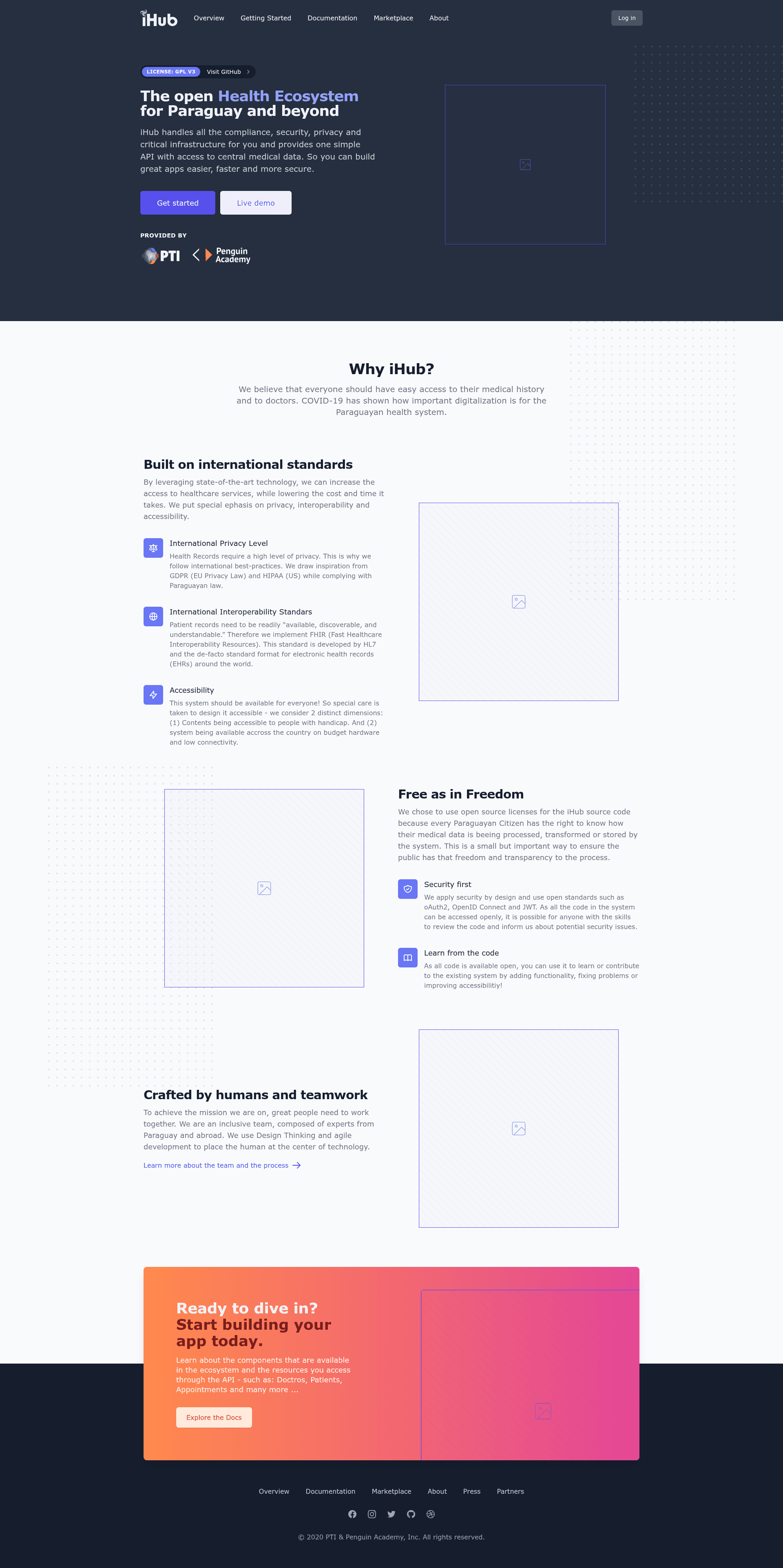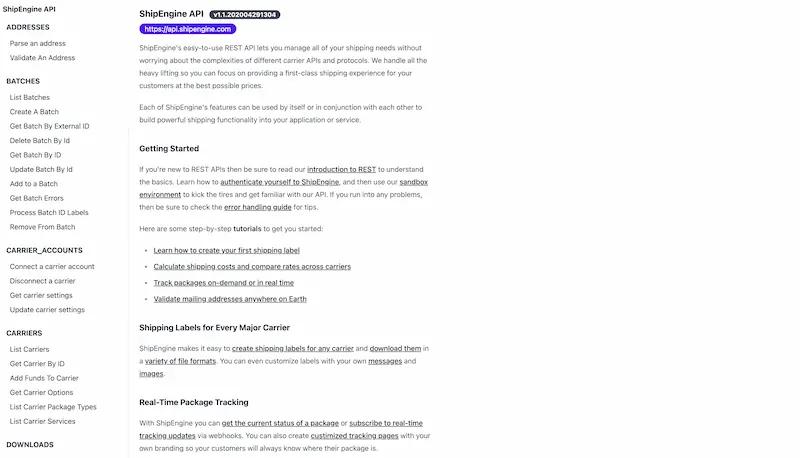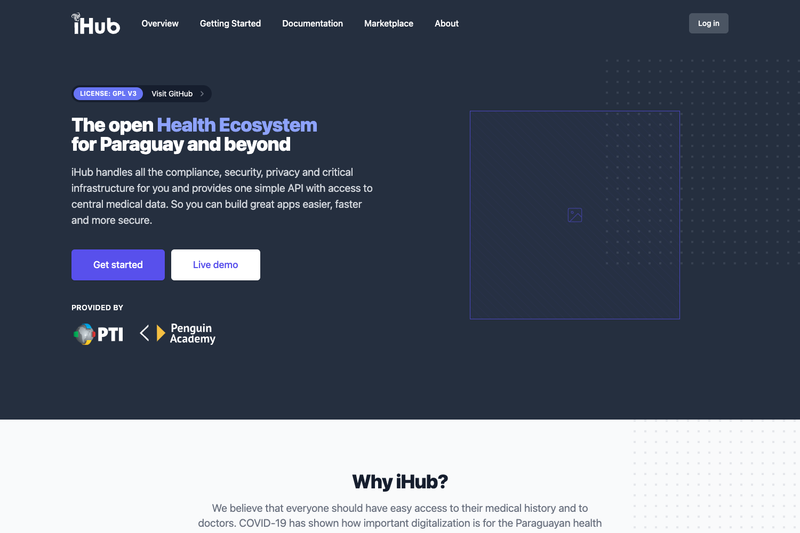
iHub Docs is an open-source documentation website for the iHub Health Ecosystem, built with Next.js and Tailwind CSS, that renders markdown content for a telemedicine-centered health platform.
What is iHub Docs?
iHub Docs is the documentation repository for the iHub Health Ecosystem, a project created during the COVID-19 response by Penguin Academy and PTI (Parque Tecnológico Itaipu Paraguay). It runs on Next.js as a static site generator (SSG) and uses Tailwind CSS with Tailwind UI for styling. The site takes markdown documentation as input and outputs a browsable documentation website; running npm run dev starts it locally on localhost:3000. The project is open-sourced under the AGPL v3 license.
Key Features
- Next.js static site generator — The site is built on Next.js (SSG), producing static docs pages that can be deployed to any static hosting service.
- Tailwind CSS and Tailwind UI styling — The interface uses Tailwind CSS utility classes and Tailwind UI components for a consistent, responsive layout.
- Markdown-driven content — Documentation is written in markdown files, enabling easy version control and text-based editing.
- Node.js v12+ requirement — The project requires Node.js version 12 or newer to install dependencies and run the development server.
- Simple local workflow —
npm iinstalls dependencies;npm run devserves the app at localhost:3000 for previewing docs. - Open contribution model — Bugs and feature requests are tracked through GitHub issues, with contribution guidelines promised soon.
- Health ecosystem focus — Repository topics include telemedicine, documentation, markdown, Next.js, Tailwind, and Paraguay, reflecting the project's purpose.
Who should use iHub Docs?
- iHub Health Ecosystem developers — Use the docs as a central reference for the telemedicine platform's architecture, APIs, and workflows.
- Open-source contributors — Report bugs, request features, or submit markdown edits; the project is under heavy development and welcomes contributors via issues.
- Health-tech project managers — Get an overview of the ecosystem components documented by the collaboration between Penguin Academy and PTI.
- Technical writers — Edit documentation in markdown and preview the generated Next.js site locally.
What can you do with iHub Docs?
- Document health platform APIs — Write and publish markdown guides that explain the iHub Health Ecosystem's telemedicine services.
- Preview docs locally — Run
npm iandnpm run devto serve the site at localhost:3000 and review changes before deploying. - Contribute to a COVID-19-related open-source project — Open an issue for bugs or feature requests; contribution guidelines are scheduled to be released.
- Deploy a static docs site — As an SSG, the build output can be hosted on any static site server without a backend.
How does iHub Docs work?
Getting started requires Node.js v12 or newer. After cloning the repository, run npm i to install dependencies, then npm run dev to launch the app at localhost:3000. Documentation content is written in markdown and rendered by Next.js; a known limitation is that the server must be redeployed after editing docs in any other iHub repositories.
FAQ
What license does iHub Docs use?
iHub Docs is licensed under the GNU Affero General Public License v3 (AGPL v3), which allows free use, modification, and distribution with source code disclosure for network services.
What are the system requirements?
The project requires Node.js version 12 or newer. After installing Node, run npm i to fetch dependencies and npm run dev to start the development server.
How can I contribute to iHub Docs?
Contributions are welcome. You can open a GitHub issue for bug reports or feature requests. The maintainers note that contribution guidelines will be available shortly.
Is there a known issue with deployment?
Yes, the project's documentation notes that the server must be redeployed after changing docs in any of the other iHub repositories. This is an acknowledged limitation during the current development phase.