Newsletter
Join the Community
Subscribe to our newsletter for the latest news and updates

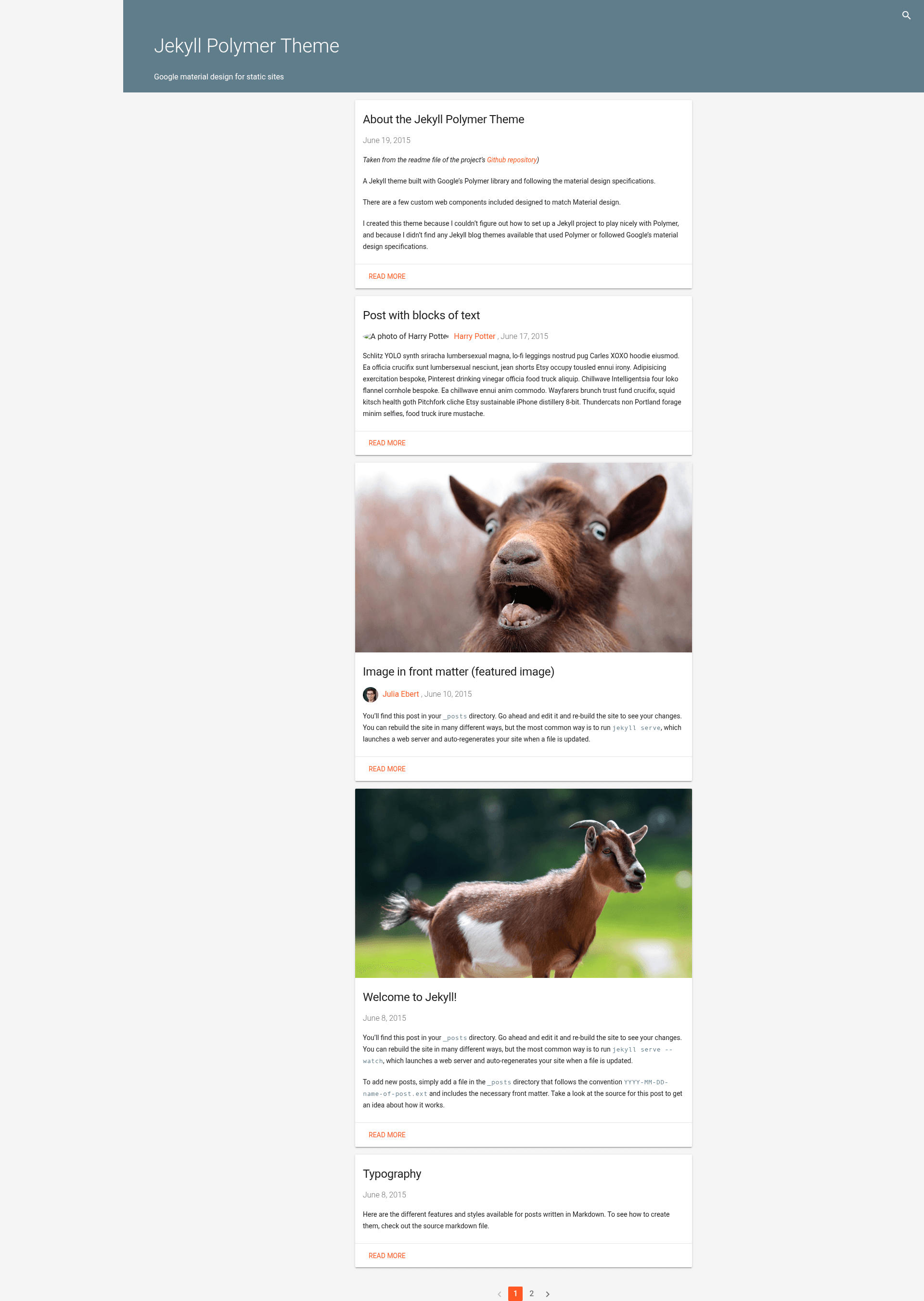
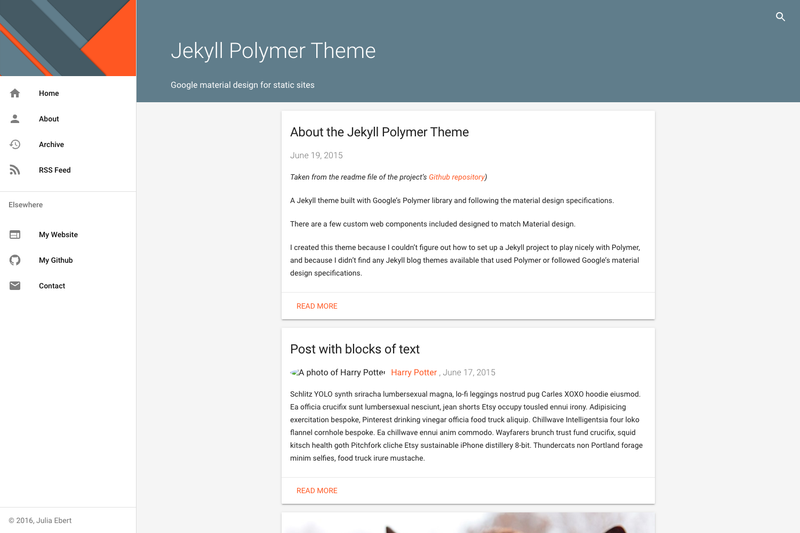
A material design theme for Jekyll built with Google's Polymer library, featuring full-text search, pagination, and Disqus.
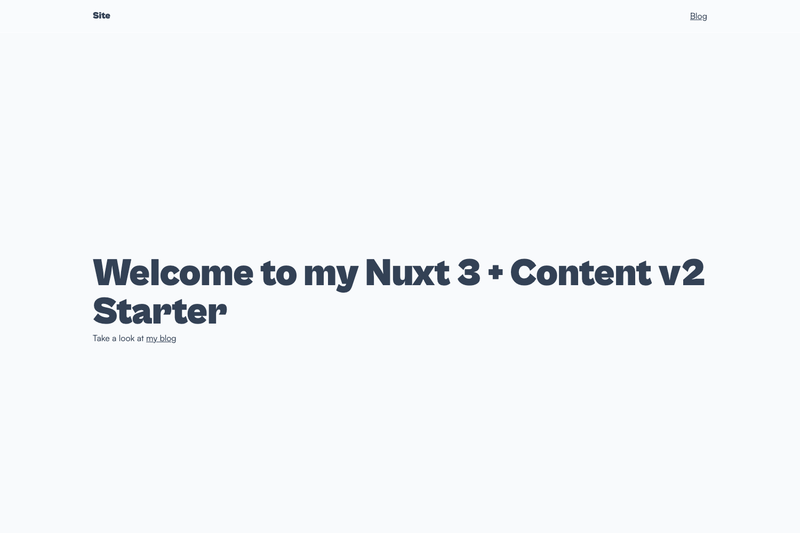
A minimal blog boilerplate powered by Nuxt Content v2 and Nuxt 3 with Tailwind CSS.

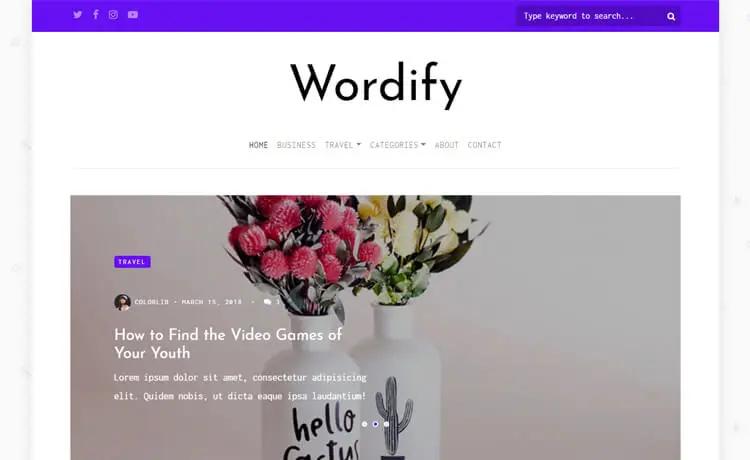
Free responsive travel blog template built with HTML5 and Bootstrap 4, including a slider, dropdown menu, and multi-page layout.

QuietPages is a calm Astro theme for independent magazines, personal journals, and long-form editorial sites.

Minimalist black-and-white Hexo theme built with Pug and SCSS, with Disqus, Gitalk, Google Analytics, and MathJax support.
Jekyll Polymer is a material design blog theme for Jekyll that builds on Google's Polymer 1.x web components and a Gulp task runner to produce a static site with a Material Design look.
Jekyll Polymer is a Jekyll theme that generates a static blog with Google Material Design styling through custom Polymer web components. It takes Jekyll content — posts, pages, authors defined in _data/authors.yml, and images under app/images/ — and outputs a built site into a dist/ directory via Gulp. The theme uses Polymer 1.x (not 2.x), with the author noting plans to update to 2.x. It was created because no Jekyll themes combining Polymer and Material Design were available at the time.
gulp deploy-gh-pages pushes the current build to the gh-pages branch; gulp build-deploy-gh-pages rebuilds first._data/authors.yml and each post can display the author's Gravatar icon.app/elements/.gh-pages branch with gulp deploy-gh-pages._data/authors.yml and display a Gravatar for each post.app/elements/ to add new Material-style components, then rebuild with gulp.First clone or download the repository and install dependencies: bundle install for Ruby gems, then npm install -g gulp bower && npm install && bower install for Node and web component dependencies. The Gulp workflow builds the Jekyll site, vulcanizes the Polymer elements, and outputs the optimized site to dist/. For local development, gulp serve starts a Jekyll server on port 4000 (or another port with gulp serve --port 6666).
app/ and dist/ folder structure separating source from built output.gulp serve:dist does not work when a Jekyll baseurl is configured; there is known extra spacing between a post excerpt and the read more button on cards.Jekyll Polymer is free and open source, released under the MIT License.
Yes. The theme is released under the MIT License, so you can use, modify, and distribute it freely, including in commercial projects.
It is a Jekyll blog theme built with Google's Polymer 1.x library that follows Material Design specifications. It combines Jekyll content with custom Polymer web components and a Gulp build pipeline to produce a static site.
No. The current version uses Polymer 1.x. The theme author has stated plans to update to Polymer 2.x in the future.
From the project root, run gulp deploy-gh-pages to push the current build in dist/ to the gh-pages branch. To rebuild first, use gulp build-deploy-gh-pages.
Run gulp serve to start a Jekyll server on port 4000. You can change the port with gulp serve --port PORT, and gulp serve:dist serves the built site from the dist/ directory.