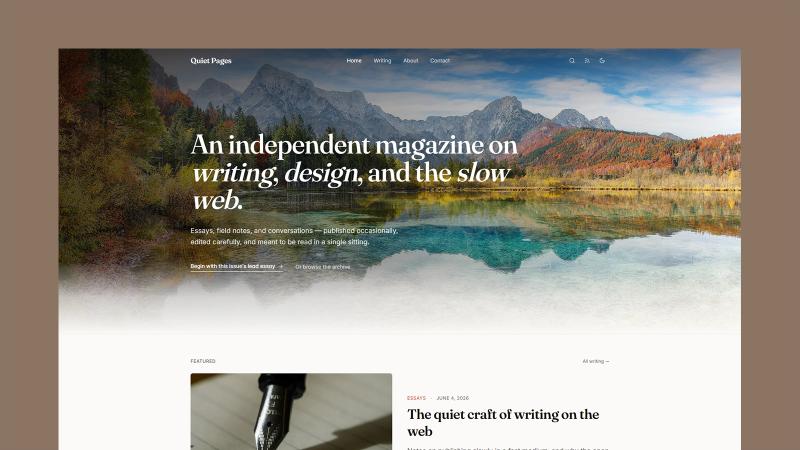
QuietPages is an Astro 7 magazine theme for independent publications, personal journals, and long-form editorial sites, delivering a production-ready reading experience with archives, taxonomy pages, author pages, RSS, sitemap, and structured metadata.
What is QuietPages?
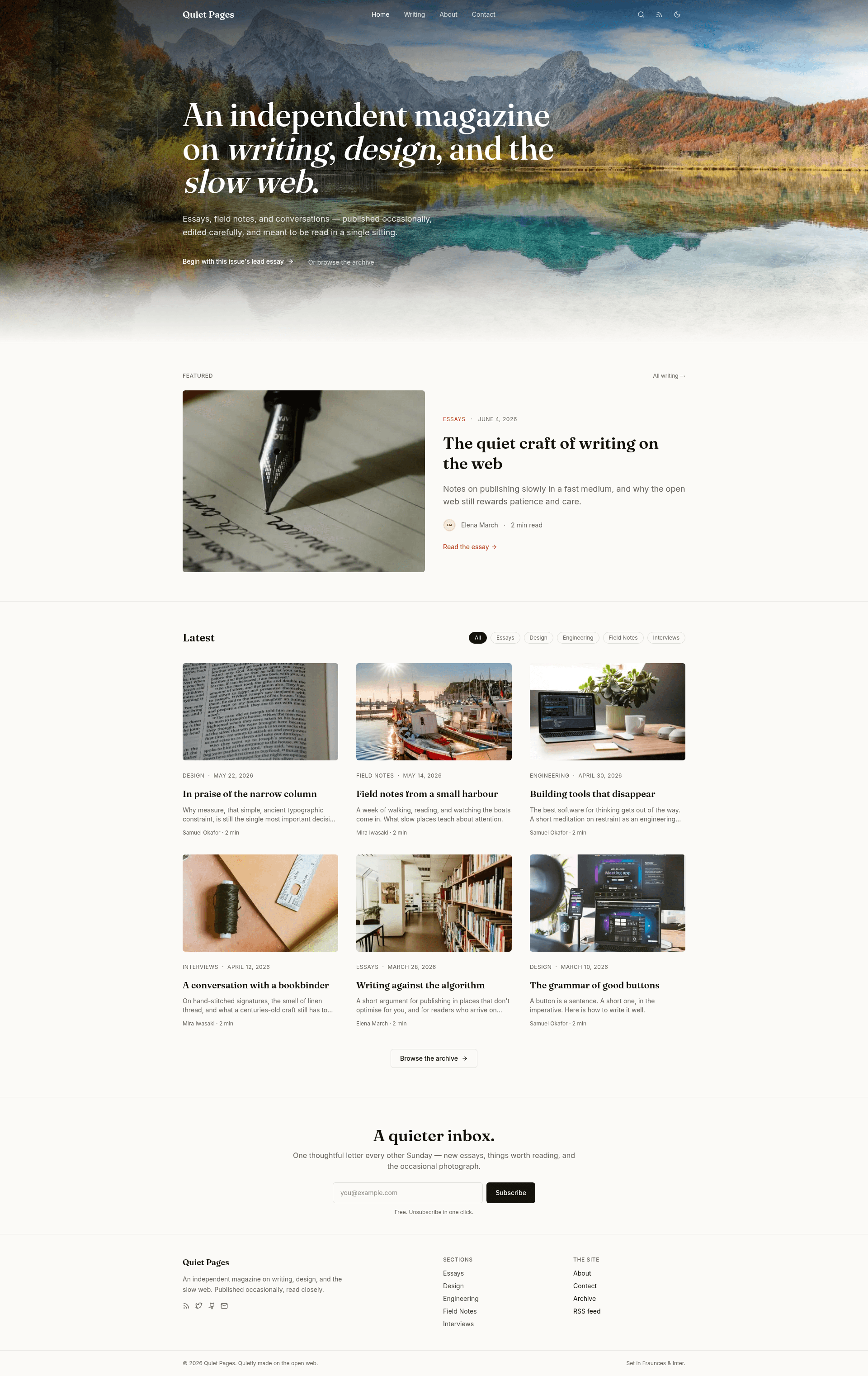
QuietPages is an open-source Astro theme (MIT licensed) built for calm, fast editorial websites. It runs on Astro 7 with Tailwind CSS 4 via the Vite plugin, MDX, and Astro content collections. As input, it takes MDX blog posts stored in src/content/blog as index.mdx files with required frontmatter (title, excerpt, date, category, tags, author, thumbnail, thumbnailAlt). As output it generates a static site with an editorial homepage featuring a full-bleed visual lead story, a blog archive with search and filters, static category/tag/author pages, article pages with breadcrumbs and related posts, an RSS feed at /rss.xml, an XML sitemap at /sitemap.xml, and a dynamic robots.txt. The theme is available on GitHub with a live preview at quietpages-eta.vercel.app.
Key Features
- Editorial homepage — Full-bleed visual lead story that anchors the front page for magazine-style publishing.
- Blog archive with search and filters — Includes search, category filters, tag filters, and load-more pagination for navigating large post collections.
- Static taxonomy pages — Category, tag, and author pages remain crawlable without JavaScript, plus dedicated index pages for each.
- MDX content collections — Blog posts are authored as MDX with schema-validated frontmatter in
src/content.config.js. - Article page enhancements — Breadcrumbs, table of contents, sharing actions, related posts, and adjacent navigation on every post.
- Built-in SEO and feeds — Canonical URLs, Open Graph tags, Twitter card metadata, article JSON-LD, RSS feed, sitemap, and robots.txt.
- Light and dark modes — System preference support with accessible contrast.
- Self-hosted fonts — Inter, Fraunces, and JetBrains Mono shipped as woff2 files in
public/fonts. - Accessibility features — Accessible landmarks, visible focus states, skip link, and reduced-motion handling.
- Configurable forms — Newsletter and contact forms with endpoints set via
src/config/theme.config.ts, plus a custom 404 page.
Who is it for?
- Independent magazine editors — Publish long-form editorial content with a home page that leads with a full-bleed story and archive pages that remain crawlable without JavaScript.
- Personal journal writers — Use MDX posts in Astro content collections with optional fields such as
featured,draft,readingTime, andupdated. - Design-conscious developers — Customize theme colors, typography tokens, radii, and prose styles in
src/styles.css, and centralize site configuration insrc/config/theme.config.ts.
What can you do with QuietPages?
- Publish a magazine — Set up category, tag, and author taxonomies in
theme.config.ts, then author MDX posts with required frontmatter to populate archives and index pages. - Build a personal journal — Write long-form entries with self-hosted fonts, light/dark modes, and estimated reading time automatically derived from the MDX body when not supplied.
- Deploy a production editorial site — Set
SITE_URL(orPUBLIC_SITE_URL) to the production domain so canonical URLs, Open Graph URLs, RSS links, robots.txt, and the sitemap use absolute URLs.
How does QuietPages work?
Install dependencies with npm install, run npm run dev for local development, and npm run build for production. The build runs Astro and then prunes unreferenced original raster files from dist/_astro via scripts/prune-unused-assets.mjs. Preview the production build locally with npm run preview. Content posts live in src/content/blog as index.mdx files with local images beside the content.
Pros and cons
- Pros: Production-ready features out of the box (RSS, sitemap, SEO metadata, accessibility); static and crawlable taxonomy pages; MIT license.
- Cons: Forms require configuring external HTTPS endpoints (default actions are empty to avoid insecure
mailto:submissions); customizing fonts requires replacing files inpublic/fontsand updating@font-facedeclarations insrc/styles.css.
Pricing
Free and open-source under the MIT License.
FAQ
Is QuietPages free?
Yes, QuietPages is open-source and released under the MIT License, so you can use and modify it freely, including for commercial publications.
What frontmatter does an MDX post require?
Required frontmatter validated in src/content.config.js includes title, excerpt, date, category, tags, author, thumbnail, and thumbnailAlt. Optional fields are seoTitle, seoDescription, canonical, updated, readingTime, featured, and draft.
How do I configure the forms?
The contact and newsletter forms use actions configured in src/config/theme.config.ts. By default those actions are empty, so the theme stays static and provider-free. Replace FORMS.contact.action and FORMS.newsletter.action with HTTPS form provider endpoints when deploying a real site.
Does QuietPages include SEO metadata?
Yes, it includes unique page titles and descriptions, canonical URLs, Open Graph and Twitter card metadata, article JSON-LD on post pages, an XML sitemap at /sitemap.xml, an RSS feed at /rss.xml, and robots.txt with a sitemap reference.
How are images handled?
Images are responsive through Astro's image pipeline. Content images are stored beside each MDX post, and shared theme assets live in src/assets. Author avatars are local SVG files in public/avatars.