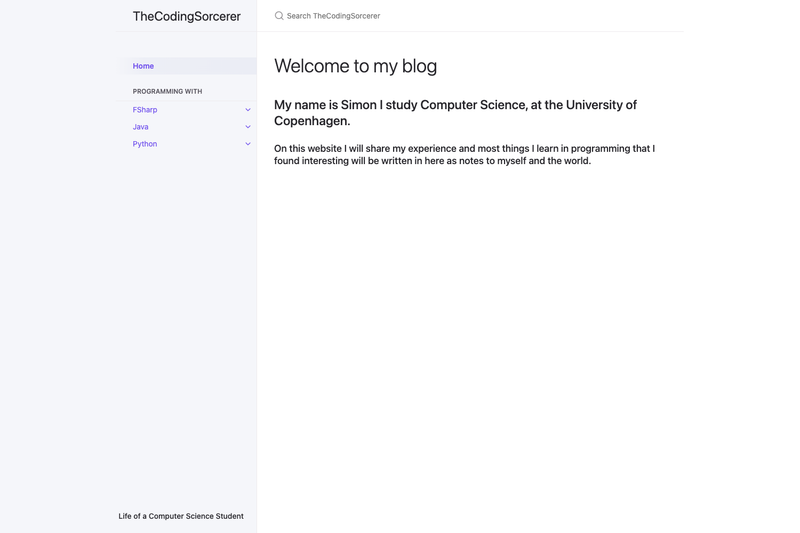
Just the Docs Template is a bare-minimum Jekyll project boilerplate that creates a documentation site powered by the Just the Docs theme, set up to build and publish automatically on GitHub Pages through the GitHub Actions workflow.
What is just-the-docs-template?
This template gives you a minimal Jekyll site structure with a Gemfile that loads the just-the-docs gem. When you click "use this template" on GitHub, you get a new repository with the theme applied, plus the GitHub Pages / Actions workflow file needed to build and deploy the site. The template's output is a static documentation site that you customize by editing index.md, README.md, and _config.yml. It is maintained by the Just the Docs project team.
Key Features
- Gem-based architecture — The site uses a
Gemfileto declare dependencies, and thejust-the-docsgem is loaded as the theme, which simplifies upgrades and version pinning. - GitHub Pages / Actions workflow — The repository includes the official GitHub Actions configuration for building and publishing the site on GitHub Pages, so deployment happens automatically on push.
- Built-in SEO plugin — The theme automatically includes
jekyll-seo-tag, giving pages SEO metadata without extra configuration. - Simple customization — Replace the default content in
index.mdandREADME.md, then set your title, description, URL, and optional auxiliary links in_config.yml. - Plugin extension — To add plugins like
jekyll-default-layout, add the gem toGemfileand register it in_config.ymlunder thepluginskey (orgemsfor Jekyll versions before 3.5.0). - Local development — With Jekyll and Bundler installed, run
bundle installandbundle exec jekyll serveto preview the site locally atlocalhost:4000, with the built site stored in_site. - Portable build output — The compiled site in
_sitecan be uploaded to any static hosting platform, not just GitHub Pages.
Who should use just-the-docs-template?
- Documentation writers — Set up a clean documentation site for a software project, library, or API without designing a layout from scratch.
- Jekyll beginners — Learn how a gem-based Jekyll project is structured and how GitHub Actions deploys a static site.
- Open-source maintainers — Create a project site or knowledge base that lives in the same repo as code and updates with each push.
- Bloggers — Run a personal blog or notes site using the Just the Docs theme (the repository metadata hints at a potential blog).
Use cases
- Project documentation: Generate a hosted docs site with navigation and search through the Just the Docs theme, and keep it in sync with the codebase via GitHub Pages.
- Personal knowledge base: Organize notes, guides, and tutorials into a static site that is easy to update with git commits.
- Team wiki: Use the theme's sidebar navigation to structure internal documentation, and deploy it to GitHub Pages for private or public access.
How does just-the-docs-template work?
- Click "use this template" on GitHub to create a new repo.
- Edit
_config.ymlwith your site's title, description, and URL. - Replace the contents of
index.mdandREADME.mdwith your own pages. - Push the changes; GitHub Actions builds the site and publishes it to GitHub Pages (it can take up to 10 minutes for changes to appear).
Pros and cons
- Pros: Free to use, minimal setup, automatic deployment via GitHub Actions, and a well-documented theme.
- Cons: The template is intentionally bare-bones, so you must write all your own content and add any extra pages beyond the home page.
FAQ
Is just-the-docs-template free?
Yes, the template is open-source and free to use. You only need a GitHub account to create a repository and use GitHub Pages, which has a free tier.
How do I deploy my site to GitHub Pages?
After creating the repo from the template, update _config.yml, push to GitHub, then in the repo's Settings go to Pages and select "GitHub Actions" as the build source. Any failed Actions runs can be re-run from the Actions tab.
Can I use this template with custom plugins?
Yes. Add the plugin gem to your Gemfile, then declare it in _config.yml under the plugins key. The README provides a worked example with jekyll-default-layout.