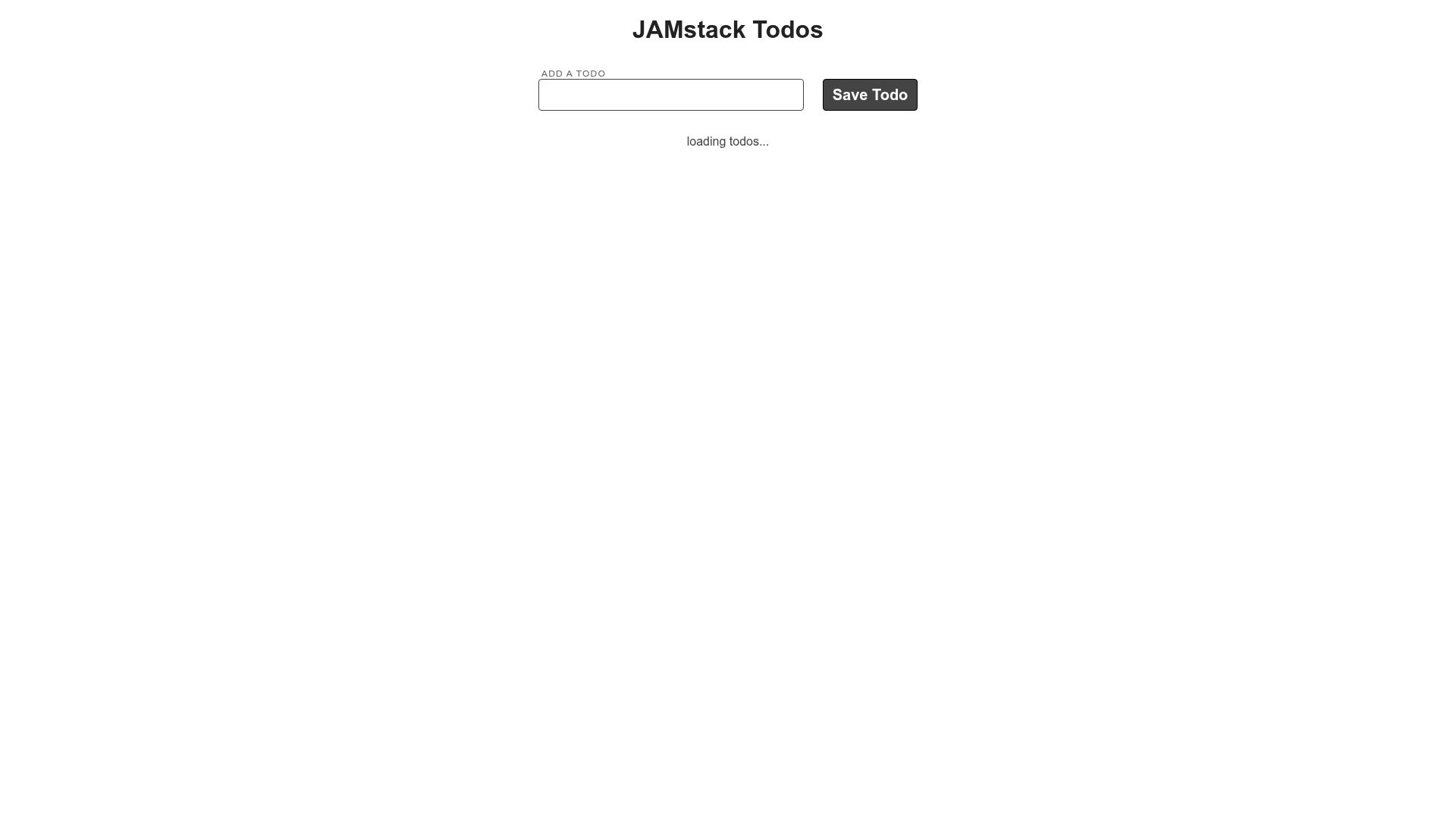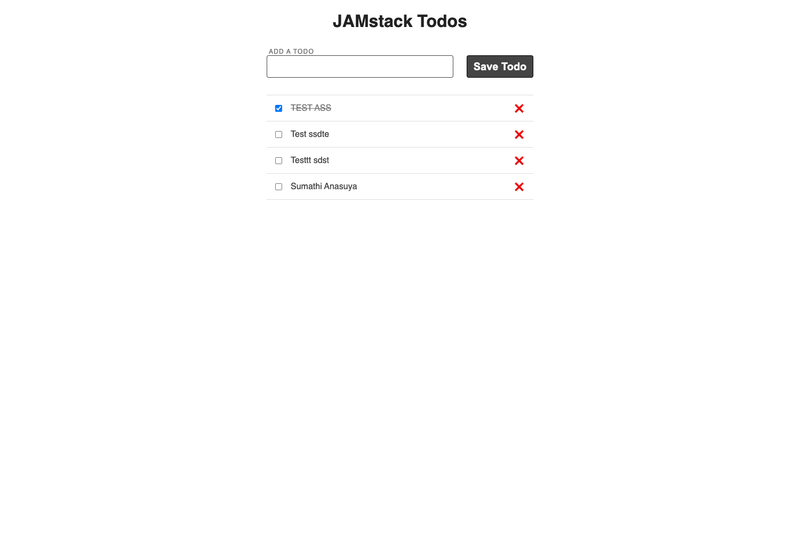
Todo Jamstack With Faunadb is a JAMstack boilerplate that demonstrates a working TODO list app — adding, checking/unchecking, and deleting items — using Gatsby for the frontend, FaunaDB as the database, and serverless functions as the API layer.
What is Todo Jamstack With Faunadb?
Todo Jamstack With Faunadb is an open-source TODO list project that serves as a reference implementation of the JAMstack architecture. It takes user actions from a React-based Gatsby frontend and persists them to a FaunaDB database through serverless functions. The output is a fully functional TODO list web app that can be deployed to static hosting platforms such as Netlify or Vercel.
The repository is maintained on GitHub and currently has 0 stars, indicating it is an early-stage project. It is tagged with faunadb, gatsby, jamstack-site, reactjs, and serverless, which precisely describe its technology stack.
What makes Todo Jamstack With Faunadb stand out?
- Gatsby frontend — The UI is built with React and Gatsby, producing a static site that loads fast and can be served from any CDN.
- FaunaDB integration — Data is stored in FaunaDB, a serverless document-relational database with GraphQL support, eliminating the need for a traditional database server.
- Serverless functions — The app uses serverless functions as its backend, enabling CRUD operations without running a dedicated API server.
- Complete TODO functionality — Supports core task management actions: adding new items, toggling items between checked and unchecked, and deleting items.
- JAMstack best practices — Demonstrates the separation of markup (Gatsby), APIs (serverless functions), and data (FaunaDB) in a single project.
- Simple codebase — As a small project, it offers a clear, minimal codebase that developers can read end-to-end to understand each layer.
Who should use Todo Jamstack With Faunadb?
- JAMstack learners who want a concrete, small example of how to wire Gatsby, serverless functions, and a database together.
- Developers prototyping task management features who need a starting point that already has working CRUD operations.
- FaunaDB newcomers who want to see real queries and data modeling for a common use case like TODO items.
- Hackathon and side-project builders who need a deployable full-stack app template without managing a backend server.
What can you do with Todo Jamstack With Faunadb?
- JAMstack learners: follow the code path from a button click in React to a serverless function and finally to a FaunaDB query, building a mental model of the full request cycle.
- Developers testing FaunaDB: use the project to experiment with FaunaDB collections, documents, indexes, and FQL queries in the context of a real application.
- Hackathon team: clone the repo, customize the UI, and have a working task tracker deployed to Netlify or Vercel within minutes.
How does Todo Jamstack With Faunadb work?
The project follows a three-tier flow: the Gatsby frontend renders the TODO list and captures user interactions; when a user adds, toggles, or deletes an item, the frontend calls a serverless function via an HTTP request; the serverless function then executes the corresponding create, update, or delete operation against the FaunaDB database and returns the updated state to the UI.
FAQ
What is FaunaDB?
FaunaDB is a serverless, globally distributed database that offers a document-relational data model and supports queries via the Fauna Query Language (FQL) or GraphQL. It is accessed through an HTTP API, which makes it a natural fit for serverless applications.
Do I need a FaunaDB account to run this project?
Yes. Since the app stores data in FaunaDB, you must create a FaunaDB database, generate an API key, and configure it in the project's environment variables before the TODO items can be persisted.
What does "JAMstack" mean in this project?
JAMstack is a web architecture that uses JavaScript, reusable APIs, and pre-built Markup. This project embodies that by generating static markup with Gatsby, handling data operations with serverless functions (JavaScript APIs), and deploying the result as static files.
Can I deploy this project to Netlify?
Yes. Because the frontend is a static Gatsby build and the backend is made of serverless functions, it can be deployed to serverless-friendly platforms such as Netlify, Vercel, or AWS Amplify with minimal configuration.