Leopard is a free, responsive Jekyll blog template created by leopardpan, designed to let anyone publish a personal blog on GitHub Pages with minimal setup.
What is Leopard?
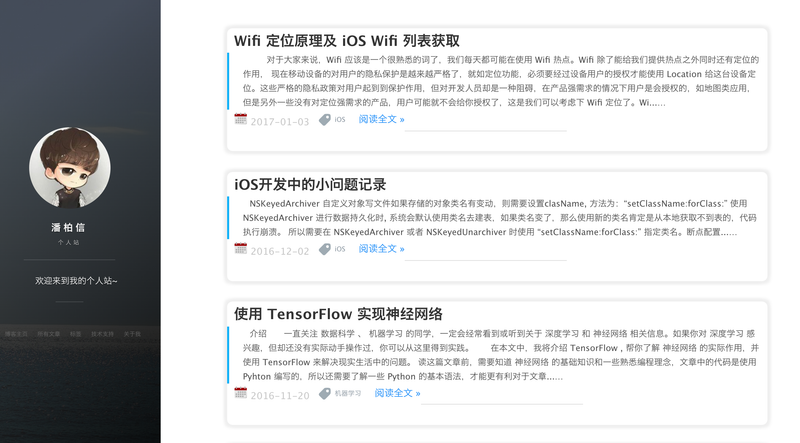
Leopard is a static blog template built with Jekyll, a Ruby-based static site generator. It takes Markdown posts from the _posts directory and outputs a complete blog with a sidebar avatar, tag and category pages, and per-article tipping buttons. The template is derived from the Vno Jekyll theme and is maintained by the developer behind leopardpan.cn. The GitHub repository currently has around 1,400 stars. It runs on any operating system with Ruby and bundler installed, including Mac, Windows, Ubuntu, and Linux.
Key Features
- Responsive design — The theme adapts to desktop, tablet, and mobile screens, with dedicated mobile preview screenshots shown in the README.
- Avatar sidebar effect — A custom hover effect on the sidebar avatar that can be lifted by copying the relevant section from
side-panel.htmlandmain.css. - Per-article tipping support — Each blog post can display WeChat or Alipay QR codes for reader donations.
- Tag and category classification — Articles support tags and categories, with pages that let visitors browse posts by classification.
- GitHub Pages ready — The template deploys to a
username.github.iorepository; a live demo is provided at leopardpan.github.io. - Local preview with Jekyll server — Running
jekyll serverserves the site at 127.0.0.1:4000 for testing before deployment.
Who is it for?
Leopard fits developers who want a lightweight, self-hosted blog with no recurring costs. It is also ideal for GitHub users who want to turn their username.github.io repository into a blog by cloning the template and removing example posts. Beginner bloggers can follow the author's Jekyll and HEXO tutorials, which are linked in the README, to set up their first site and troubleshoot common installation issues.
What can you do with Leopard?
- Independent bloggers: Publish Markdown posts and get a clean reading layout with tags, categories, and an avatar sidebar.
- Developers: Customize the HTML and CSS to match personal branding, then push to GitHub Pages for free hosting.
- Writers seeking donations: Activate the built-in tipping feature and attach WeChat or Alipay QR codes to collect support from readers.
- Jekyll learners: Use the template as a hands-on example while following the linked tutorials for Jekyll and HEXO setup.
How does Leopard work?
After installing Jekyll with gem install jekyll, clone the repository or download the ZIP archive. Navigate into the project folder, run jekyll server, and preview the blog at 127.0.0.1:4000. To make it your own, delete the examples in _posts and edit _config.yml with your personal information, then push the repository to a new username.github.io repository on GitHub.
FAQ
Is Leopard free?
Yes, the template is open source and freely available on GitHub. The README includes optional sponsorship via WeChat and Alipay QR codes to support server costs.
Does Leopard work on GitHub Pages?
Yes, it is designed for deployment to a username.github.io repository, and the README provides a live GitHub Pages demo link.
What do I need to run Leopard locally?
You need Ruby, bundler, and Jekyll installed. The README lists Mac, Windows, Ubuntu, and Linux as supported environments.
Can I reuse the avatar effect without the whole template?
Yes, the README explains that you can copy the avatar effect section from side-panel.html and main.css into your own project.
How do I get support?
The author offers a support page at leopardpan.cn/support and accepts questions via the Issues tracker on the GitHub repository.