Newsletter
Join the Community
Subscribe to our newsletter for the latest news and updates

A clean, minimal Jekyll theme for blogs with social sharing, Disqus comments, and code highlighting.
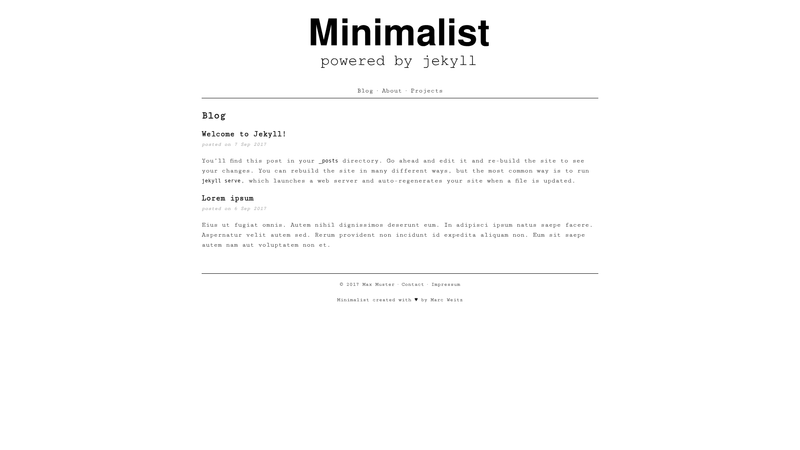
A simple and minimalistic Jekyll blogging theme with category support, MIT licensed.
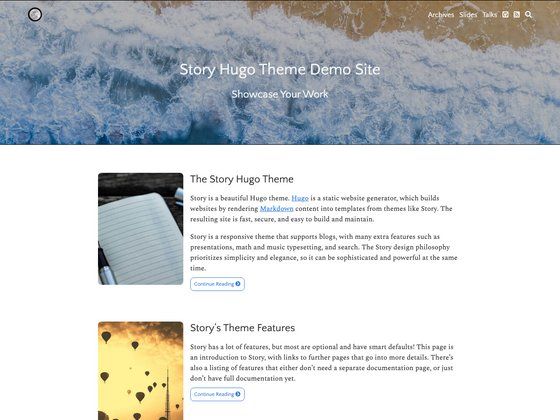
A responsive Hugo blog theme for technical writers and speakers, with presentations, math typesetting, music notation, and built-in search.

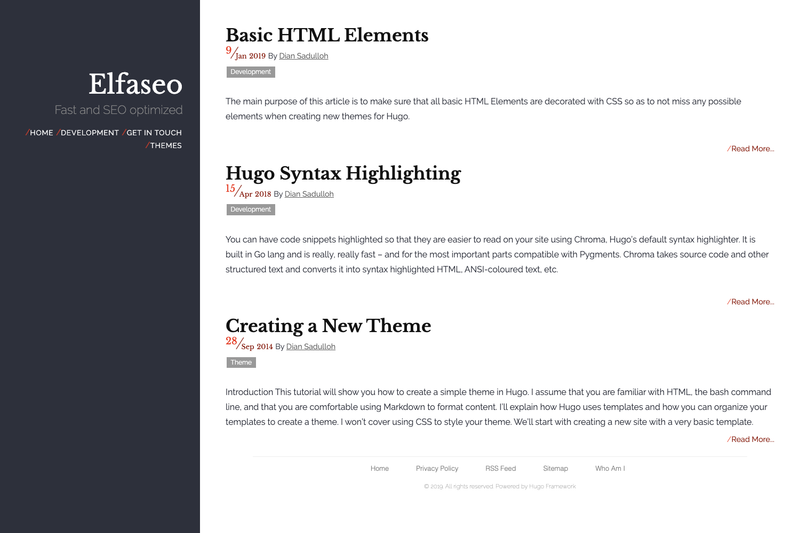
Free responsive HTML5 blog template with minimal design and a repositionable sidebar, released under Creative Commons.
Limpid is a clean, minimal Jekyll theme for blogs, built to turn Markdown posts into a static site with social sharing, Disqus comments, and code highlighting.
Limpid is a free, open-source Jekyll theme created by pranavrajs and hosted on GitHub. It is designed for blogs that want a clean, unobtrusive reading experience, and it works with the standard Jekyll workflow: write posts in Markdown with front matter, and Jekyll generates static HTML. The theme is minimal by design, with no bundled JavaScript framework and no external build step beyond Jekyll itself.
The README says to clone the repo to get started. After cloning, you configure the theme through Jekyll's _config.yml, write posts in Markdown, and serve the site with Jekyll. The theme relies on Jekyll's static generation; there is no CMS, database, or server-side code.
Yes, Limpid is free and open source, published on GitHub. The repository does not list a license, so check the repository before commercial use.
Yes, Limpid integrates Disqus, so you can add a Disqus shortname to your configuration and comments will appear on posts.
Limpid uses Google Code Prettify, a JavaScript library that highlights code in the browser. This means no separate syntax-highlighting plugin is needed in Jekyll.
As a Jekyll theme, Limpid can be used with GitHub Pages, though the README does not document specific deployment steps. You would follow the standard Jekyll-on-GitHub-Pages workflow of pushing your site to a repository.