Newsletter
Join the Community
Subscribe to our newsletter for the latest news and updates

Deprecated source for mademistakes.com. Previously built with Jekyll, Gulp, and Netlify.
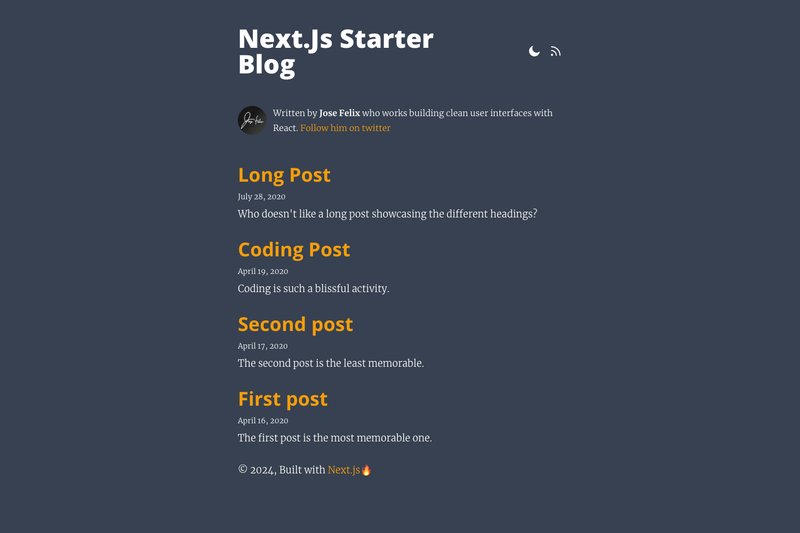
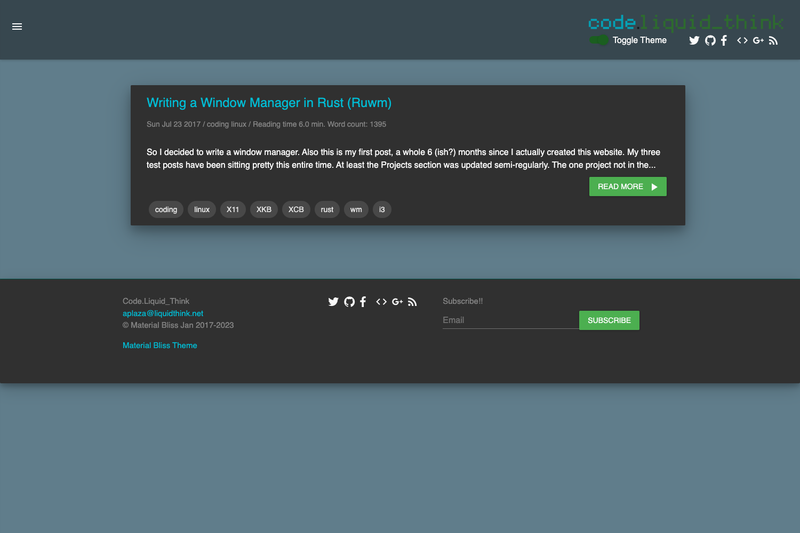
Next.js template for creating a blog with dark mode, Tailwind CSS, Markdown support, and SEO features.
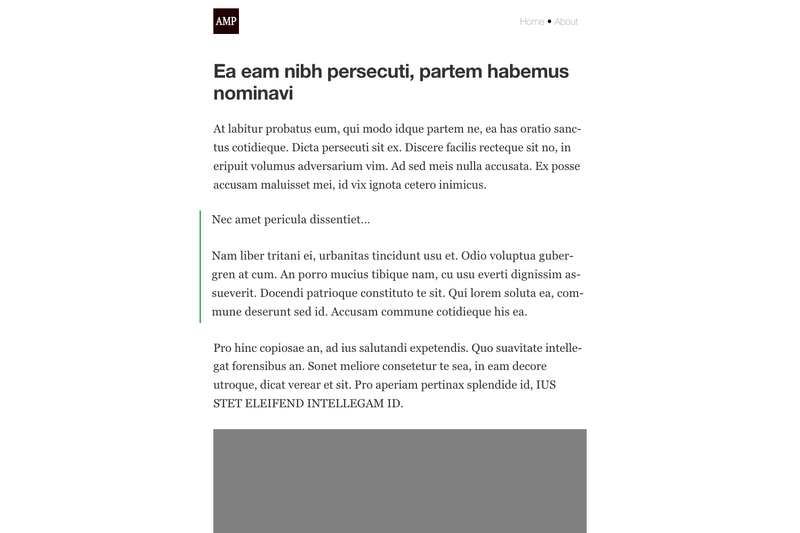
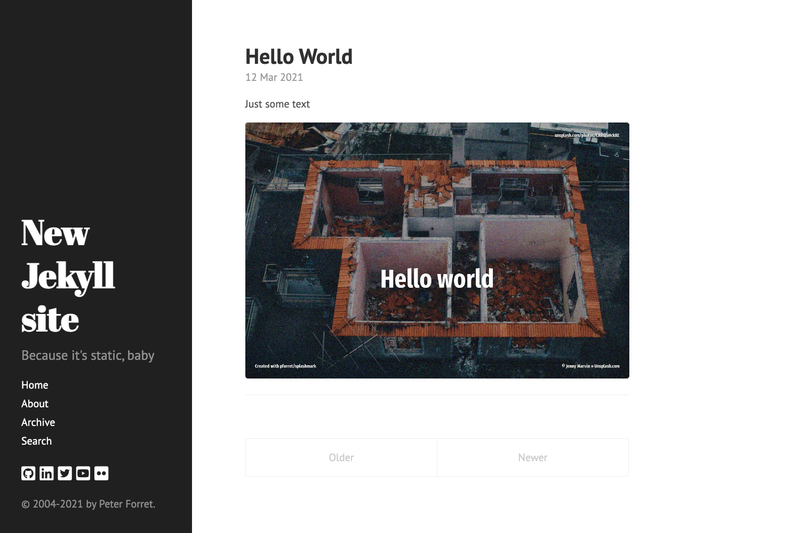
A Jekyll HTML theme in the style of Medium.com built using Google AMP
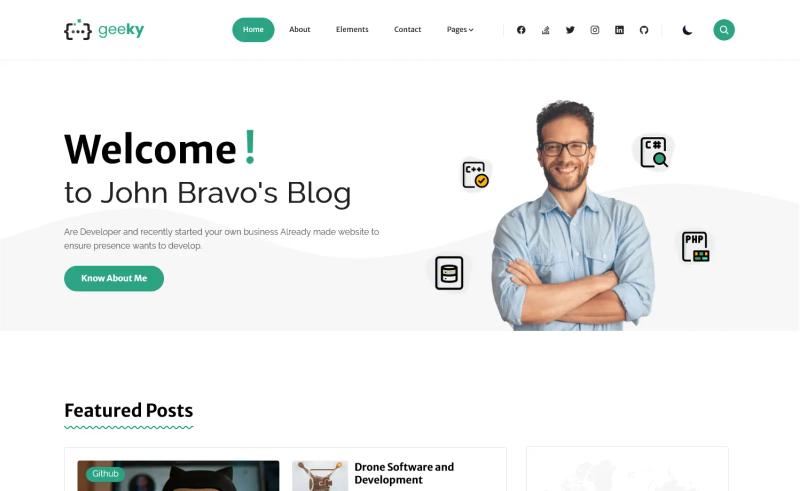
Free Next.js and Tailwind CSS blog and portfolio template with light/dark modes, search filter, and 5+ pre-built pages.
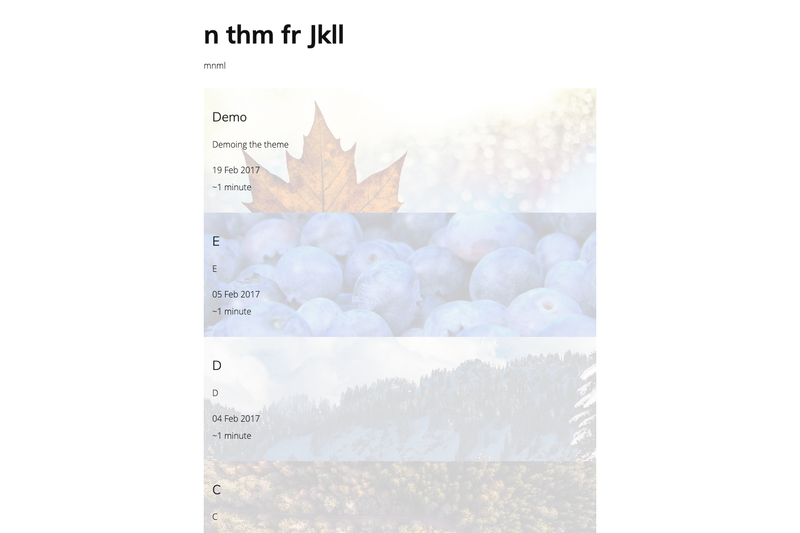
A minimal Jekyll theme with a clrs.cc-inspired palette and Muli, OpenSans, Hack, and FontAwesome fonts.
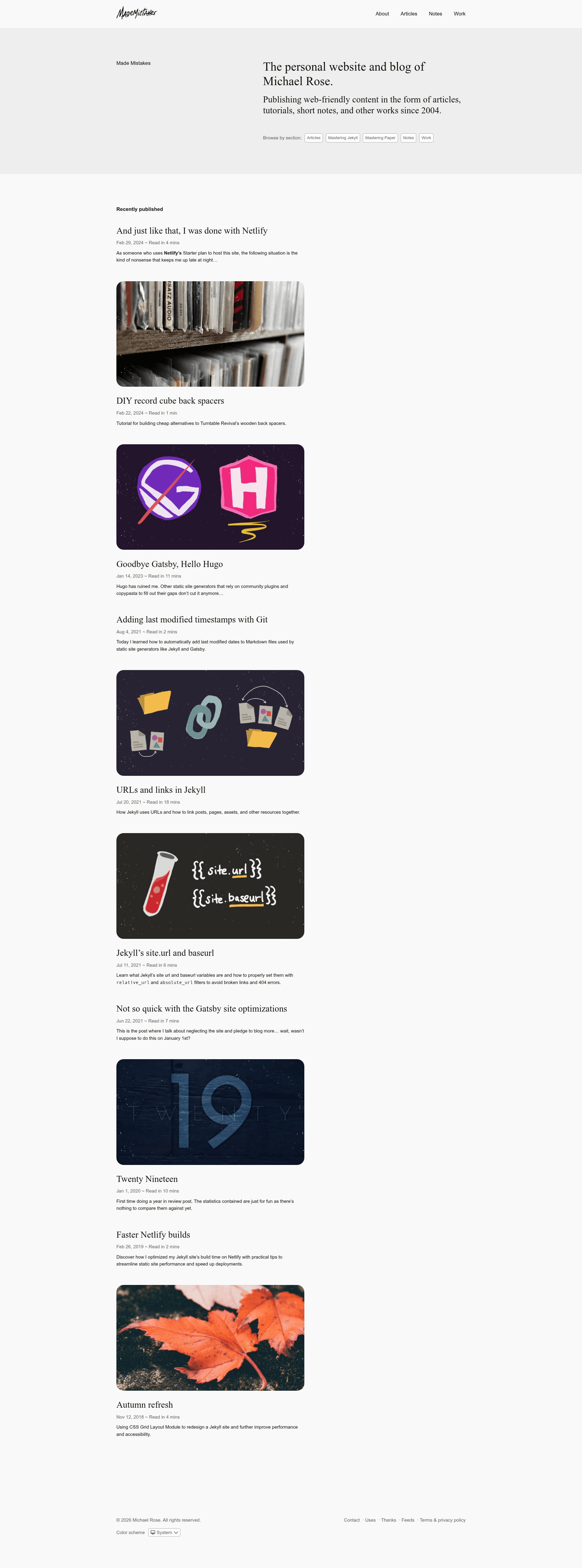
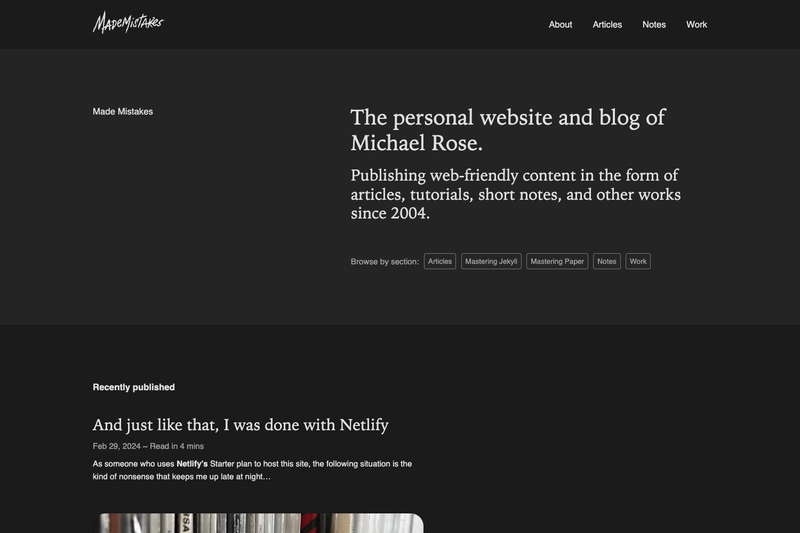
Made Mistakes is a deprecated Jekyll source code for the personal blog and portfolio at mademistakes.com, built with Jekyll, Gulp, and Netlify and maintained by Michael Rose.
This repository contains the complete source for mademistakes.com, a personal blog and portfolio authored by Michael Rose. It takes Jekyll posts and pages written in Markdown as input and produces a static HTML site, with Gulp handling asset optimization and Netlify as the deployment target. The repository is no longer actively maintained and is not compatible with the default GitHub Pages workflow without substantial alterations.
notice, figure, lazyload, youtube, and vimeo tags to add callouts, figures with captions, lazy-loaded images (via lazysizes), and responsive video embeds directly in Markdown content.jekyll-sitemap, jemoji, jekyll-paginate-v2, and jekyll-toc for XML sitemaps, emoji rendering, pagination, and table-of-contents generation.src/assets/images/feature are resized into multiple sizes and served responsively via srcset for browser that support it.mmistakes/made-mistakes-images) and included as a Git submodule.gulp builds the site, opens it at localhost:4000, and auto-injects changes on file edits.gulp deploy task syncs the built dist folder to a production server using gulp-rsync; gulp submit:sitemap sends the XML sitemap to Google and Bing.gulp check builds the production site and runs html-proofer to test HTML for broken links.jekyll-paginate-v2 for paginated archives, with TOC generation via jekyll-toc.figure block to present image galleries with captions and custom CSS classes.youtube and vimeo Liquid tags, which generate responsive iframes that fit the parent width.lazyload block to defer off-screen images.The repo requires Ruby (2.1+ with Bundler 1.10+), Node (4.2+), Yarn, and Gulp CLI. After running bundle install and yarn install, run gulp to build a development version of the site, or gulp --prod to generate an optimized production build. Production tasks minify and gzip CSS/JS/HTML, cache-bust filenames, optimize images, and compress SVG icons into a single sprite. The gulp serve task starts a watch session without an initial build.
No. This source is not compatible with the default GitHub Pages workflow without substantial alterations, according to the repository README. It depends on Gulp for asset processing and rsync for deployment, rather than the built-in Jekyll build that GitHub Pages provides.
The site uses four plugins: jekyll-sitemap (supported by GitHub Pages), jemoji, jekyll-paginate-v2, and jekyll-toc. jekyll-sitemap generates the XML sitemap, jemoji filters emoji, jekyll-paginate-v2 provides pagination, and jekyll-toc inserts table of contents.
Install Ruby, Bundler, Node.js, Yarn, and Gulp CLI. Then run bundle install and yarn install in the repo root, followed by gulp. The site will be served at http://localhost:4000 with BrowserSync live-reload. Use gulp --prod to build a production version.
The repository is distributed under the MIT License, copyright 2004-2019 Michael Rose. The site also incorporates icons from The Noun Project (CC BY 3.0 US), photographs from Unsplash, and open-source libraries (Bigfoot, Lity, Smooth Scroll, Lazysizes, SVG for Everybody) under their respective licenses.