Newsletter
Join the Community
Subscribe to our newsletter for the latest news and updates

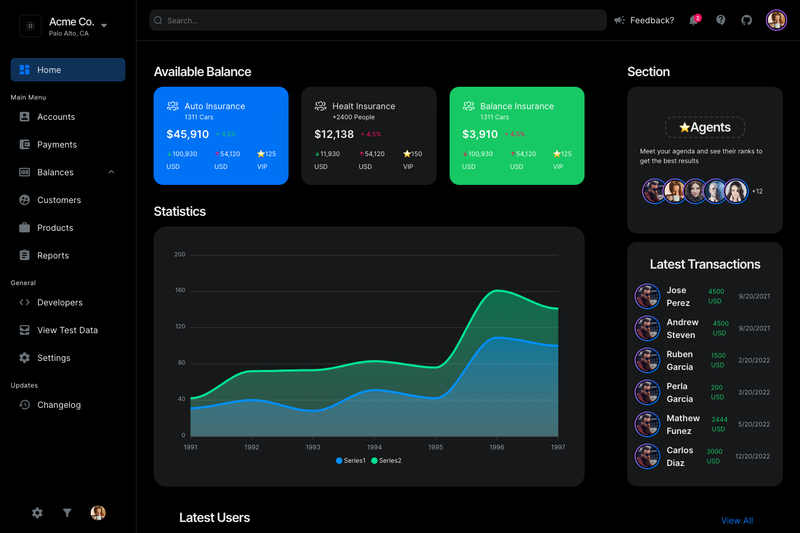
React admin dashboard with a working Node.js/Express API, MongoDB integration, and full JWT authentication.
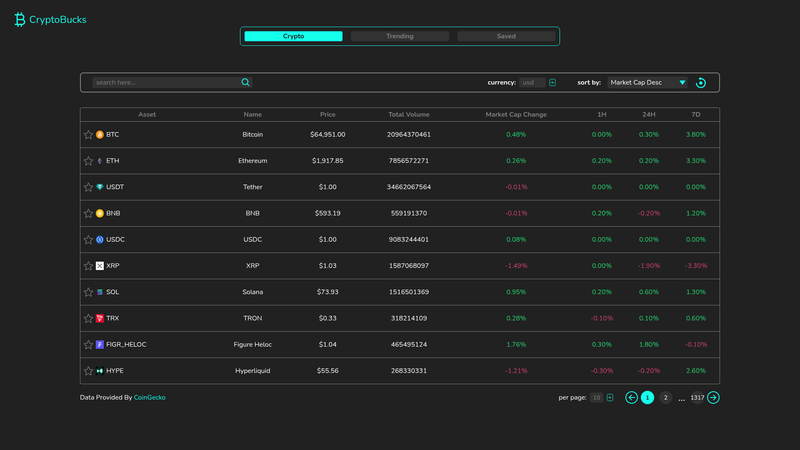
Crypto screener app built with React JS and Tailwind CSS using Context API, React Router, and CoinGecko API.
Free open-source Bootstrap 5 design system for building responsive admin dashboards and websites.
Angular 18 admin dashboard template with real-time WebSocket data engine, modular components, i18n, and RBAC.
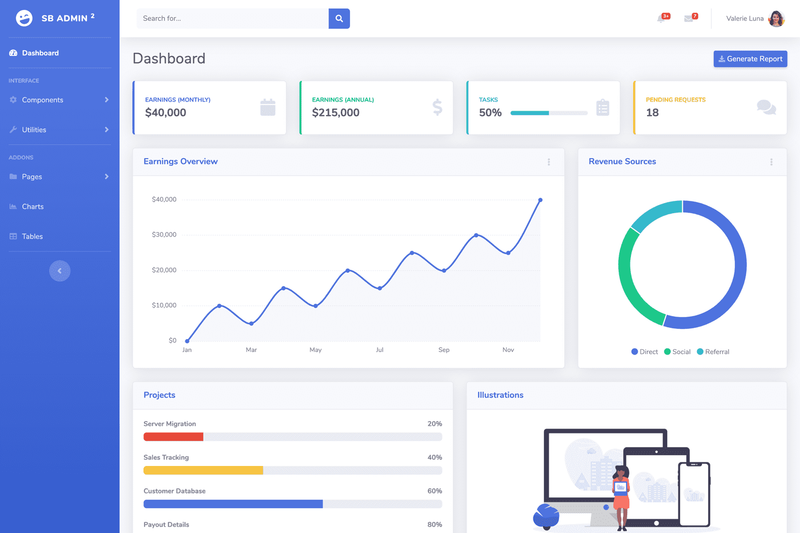
A free, open source, Bootstrap admin dashboard theme created by Start Bootstrap.
Material Dashboard 2 React NodeJS API is a free full-stack admin dashboard template that pairs a React frontend built with Material UI with a working Express.js API and MongoDB, including complete JWT authentication flows.
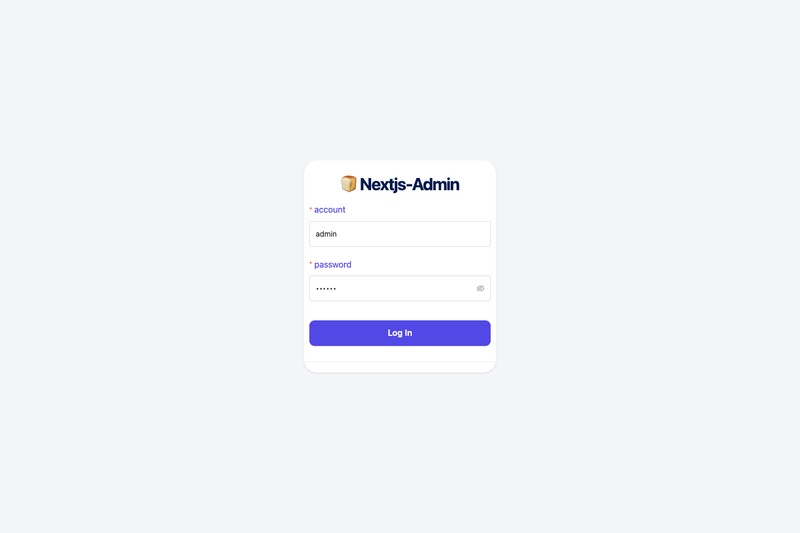
This template, created by Creative Tim with UPDIVISION, is a React dashboard that connects to a separate Node.js/Express backend. It takes a MongoDB connection string as the only database input and produces a runnable admin panel with login, registration, password reset, and user profile pages. The frontend runs on React, the backend on Express, and authentication is handled with JSON Web Tokens (JWT) using access and refresh tokens.
Installation requires Node.js 16 or above, npm 8, and a MongoDB instance. For the API, run npm install in the API folder, copy .env.example to .env, and set DB_LINK and JWT_SECRET. For the React frontend, set REACT_APP_URL, REACT_APP_API_URL, and REACT_APP_IS_DEMO in a .env file, add the API path to the proxy variable in package.json, and run npm start on both projects.
The template is free to download from Creative Tim. A paid PRO version, Material Dashboard 2 PRO React NodeJS API, is also available with additional components and pages.
The Quick Start guide requires Node.js version 16 or above and npm version 8 or later for both the frontend and the Express API.
The API connects to MongoDB. You provide the connection string in the .env file under the DB_LINK variable.
Yes. The source includes a full dark theme under /src/assets/theme-dark, in addition to the default theme and an RTL layout variant.
Yes, a live demo is available at material-dashboard-react-nodejs.creative-tim.com, where you can log in with the default credentials [email protected] and password secret.
Bugs are tracked on the GitHub Issues page for the repository. The reporting guidelines advise using the latest version and providing reproducible steps and browser specifics.