Material-Design is a free Hugo theme that converts Markdown content into a Material Design styled blog using the Materialize CSS framework.
What is Material-Design?
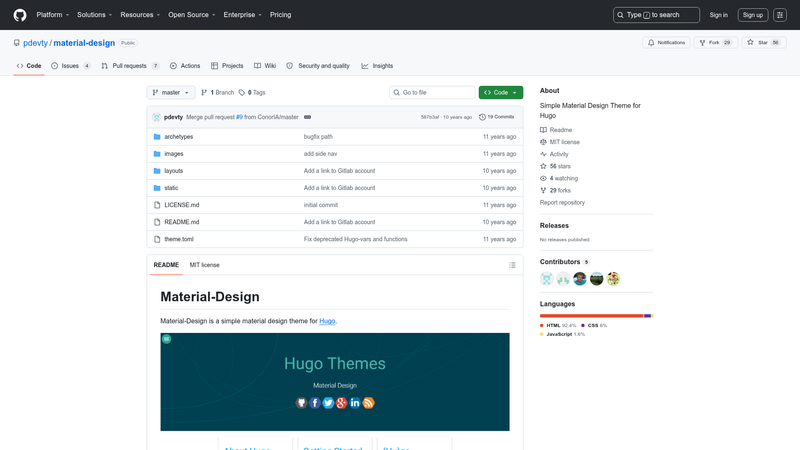
Material-Design is a simple open-source blog theme for Hugo, the static site generator, created by GitHub user pdevty. It takes content written in Markdown plus a config.toml configuration file as input and produces a fully static website with Google's Material Design visual language. The theme is distributed through its public GitHub repository and can be installed by cloning it into a Hugo project's themes directory.
Key Features
- Materialize CSS — The theme is styled with Materialize, a CSS framework that provides Material Design components such as cards, buttons, and navigation.
- Google Analytics — Optional integration by setting
googleAnalyticsUserIDinconfig.toml. - Pagination — Built-in pagination; the
paginatesetting is suggested to be a multiple of 3. - Disqus comments — Optional comment support via
disqusShortname. - Social links — Configurable links for Twitter, Facebook, Gitlab, GitHub, Google+, and LinkedIn.
- Tags and categories — Native Hugo taxonomy support for organizing posts.
- Cover images — Optional header and footer cover images via
headerCoverandfooterCover. - Syntax highlighting — Code blocks are highlighted out of the box.
Who is it for?
- Bloggers — People who write in Markdown and want a clean Material Design themed blog without building a custom Hugo layout.
- Hugo developers — Developers looking for a minimal, forkable starting point to customize a theme's templates and styling.
- Personal sites — The optional cover images, social links, and simple one-column layout make it suitable for a small personal homepage or portfolio.
What can you do with Material-Design?
- Start a blog quickly: Clone the theme, add your Markdown posts, and run
hugo server -t material-designto preview a Material styled site locally. - Customize the look: Edit
config.tomlto set the site title, description, social profile URLs, and optional cover images without touching HTML. - Add comments and analytics: Enable Disqus and Google Analytics by filling the
disqusShortnameandgoogleAnalyticsUserIDfields.
How does Material-Design work?
- Clone the repository into your Hugo project's
themesfolder. - Write content in Markdown and set
theme = "material-design"inconfig.toml. - Run
hugo server -t material-design -w -Dto serve the site locally with live reload. - Generate a static site with
hugofor deployment.
FAQ
Is Material-Design free?
Yes, the theme is open source on GitHub. You can clone it, use it for personal or commercial projects, and contribute changes by following the fork-and-pull-request workflow described in the repository.
Does Material-Design need JavaScript?
Materialize CSS includes its own JavaScript for interactive components, so the theme depends on Materialize's compiled JS for things like mobile navigation. Core blog content renders as static HTML.
Can I use Material-Design with other static site generators?
No, this theme is built specifically for Hugo and relies on Hugo's template syntax and configuration structure, including config.toml and Hugo's taxonomy system.