Newsletter
Join the Community
Subscribe to our newsletter for the latest news and updates
Responsive, modern Jekyll blog theme with animated navigation, Disqus comments, social sharing, and SCSS customization.
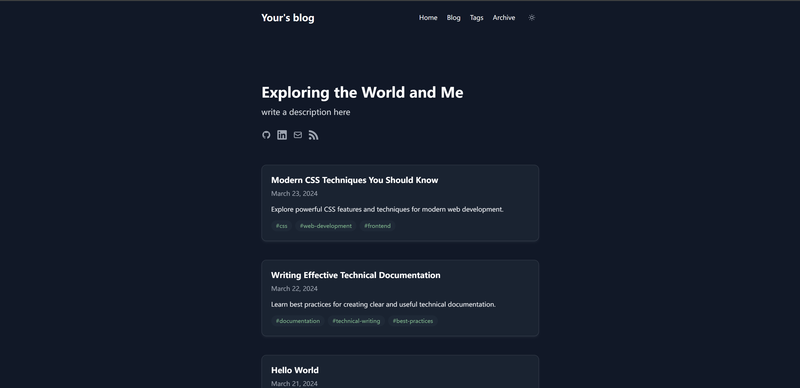
A minimal, responsive, and SEO-friendly blog template built with Astro.
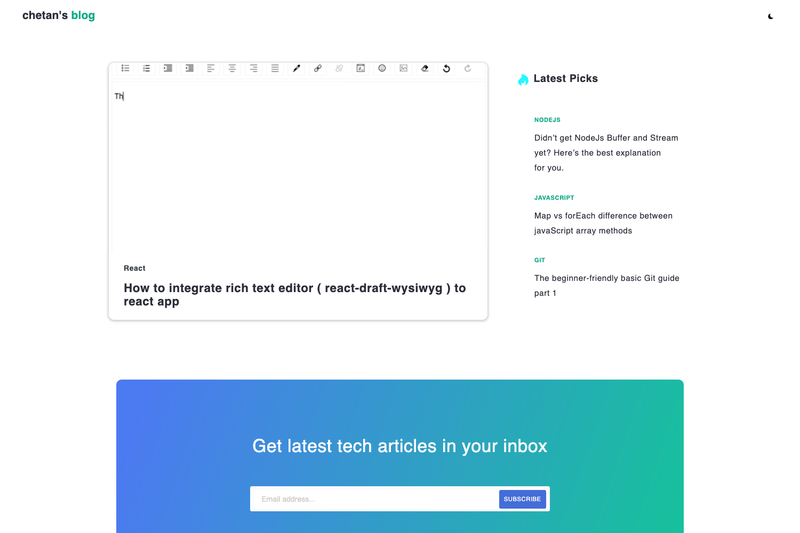
Gatsby blog starter with dark mode, Contentful CMS support, and one-click Netlify deploy.
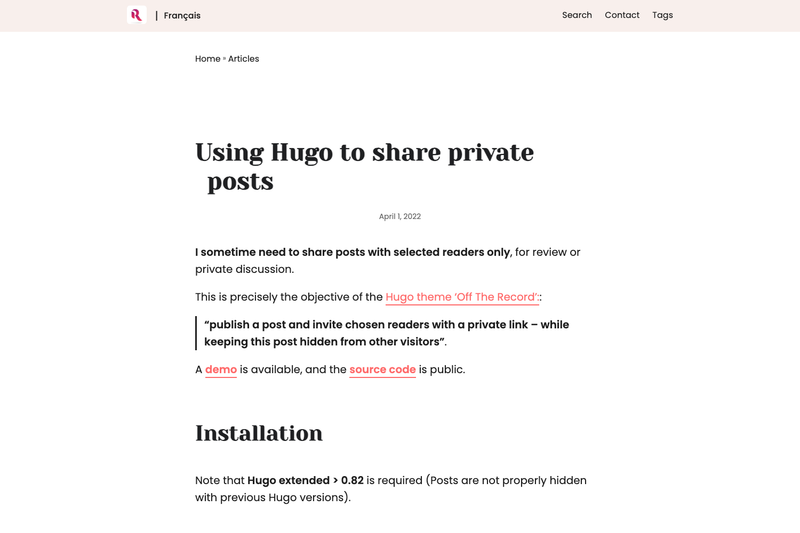
Share private posts with Hugo. Theme based on Papermod.
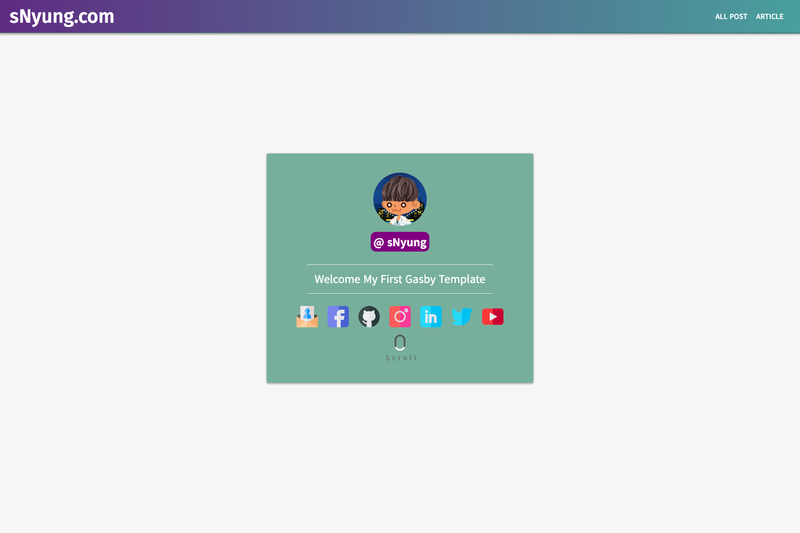
Gatsby blog starter with SCSS, Utterances comments, pagination, React Helmet SEO, automated post generation, and resume page.
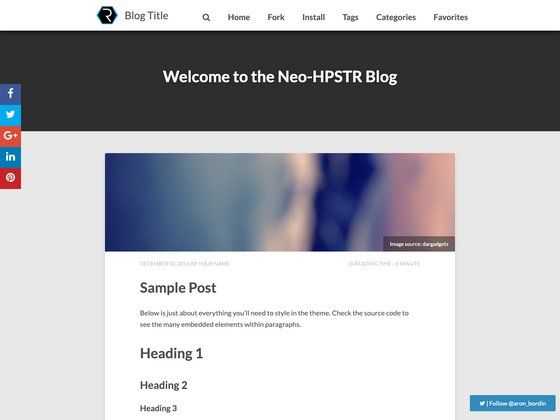
Neo-HPSTR is a responsive, modern blog theme for Jekyll that packages a complete set of blog layouts, an animated navigation menu, and optional Disqus comments into a Ruby gem or installable boilerplate.
Neo-HPSTR Jekyll Theme is an open-source blog template built for Jekyll 3.3 and newer. It provides responsive layouts for home, posts, pages, and a dark-post style, plus an animated topbar menu with drop-down support that changes color on scroll. The theme can be used as a Jekyll theme gem or by forking the repository and using it as a boilerplate. It was created by Aron Bordin and is available under the MIT License.
home, post, page, and dark-post layouts that resize for mobile, tablet, and desktop, and degrade gracefully for Internet Explorer 8 and modern browsers.$menu-height, $menu-top, and $menu-overflow.disqus_shortname in _config.yml; individual pages can disable comments with comments: false in front matter.float_share and share: false._includes/head.html enable rich link previews when posts are shared._includes/author.html.2016-12-01-code-highlighting-post.md.about.md, categories.html, search.html with a JSON search index, tags.html, a custom 404 page, and an RSS feed in feed.xml._posts._layouts, _includes, and _sass, and the result can be hosted on GitHub Pages._config.yml, then create posts using the provided sample posts or Octopress commands such as octopress new post "Post Title".theme: neo-hpstr-jekyll-theme to your _config.yml and gem "neo-hpstr-jekyll-theme" to your Gemfile to replace the default theme._sass/_variables.scss to change the navbar height, navbar colors, body background, and typography without touching the layout files.To install the theme gem, create a new Jekyll site with jekyll new, download the starter content from the demo/ folder, then run bundle install and bundle exec jekyll serve --watch. The boilerplate method involves forking the repo, deleting demo/ and screenshot.png, and running the same bundle commands. Jekyll processes the _layouts, _includes, and _sass directories to generate a static site.
Yes, it is open source under the MIT License, so you can use it for personal and commercial projects at no cost.
You can install it as a theme gem by adding gem "neo-hpstr-jekyll-theme" to your Gemfile and running bundle install, or fork the repository and use it as a boilerplate by running bundle exec jekyll serve --watch.
Create a Disqus account, then set disqus_shortname in _config.yml to your site's shortname. Comments appear on all posts and pages by default; add comments: false to front matter to disable for a single page.
Yes, if you fork the repo and use it as a boilerplate. GitHub Pages does not support Jekyll theme gems directly, so the boilerplate approach is required for GitHub Pages hosting.
Edit the menu list in _config.yml with title and url pairs. Use submenu for drop-down items, or set type: 'categories' to list post categories automatically.