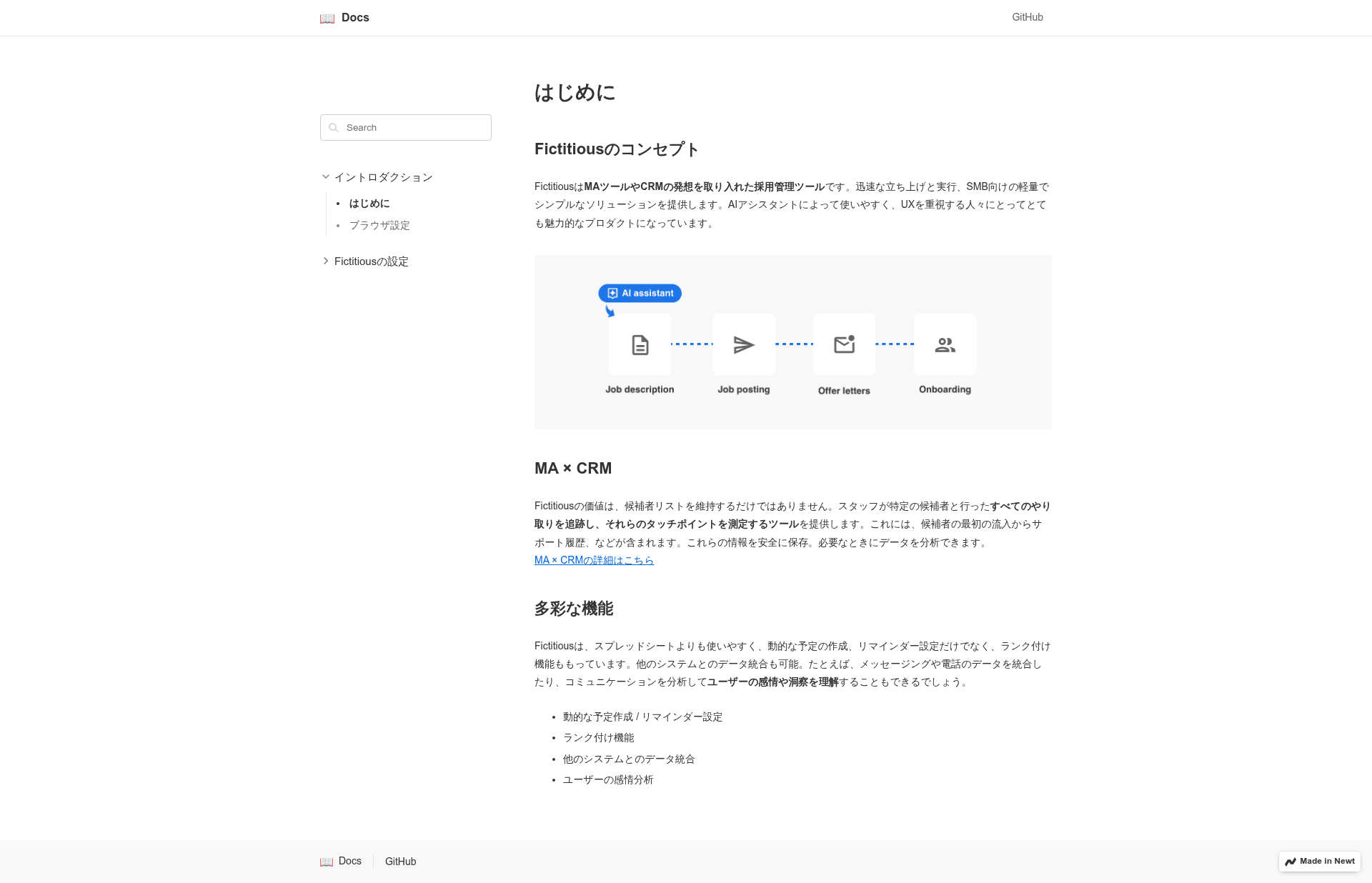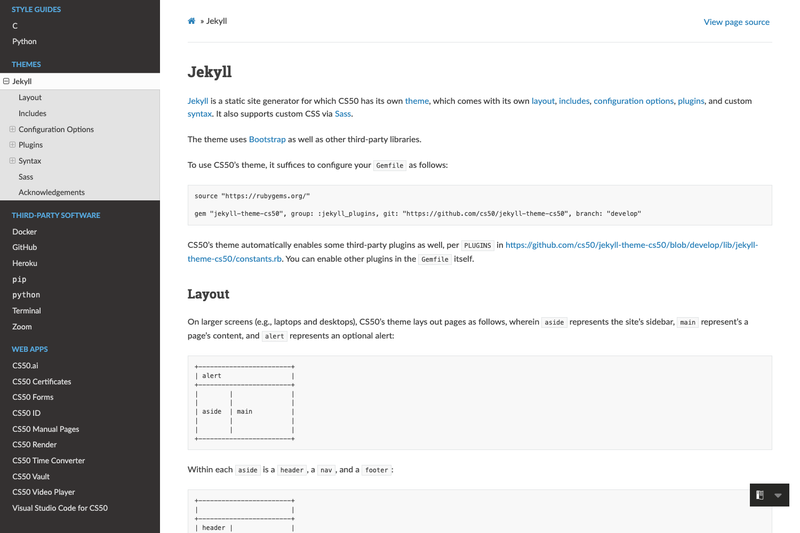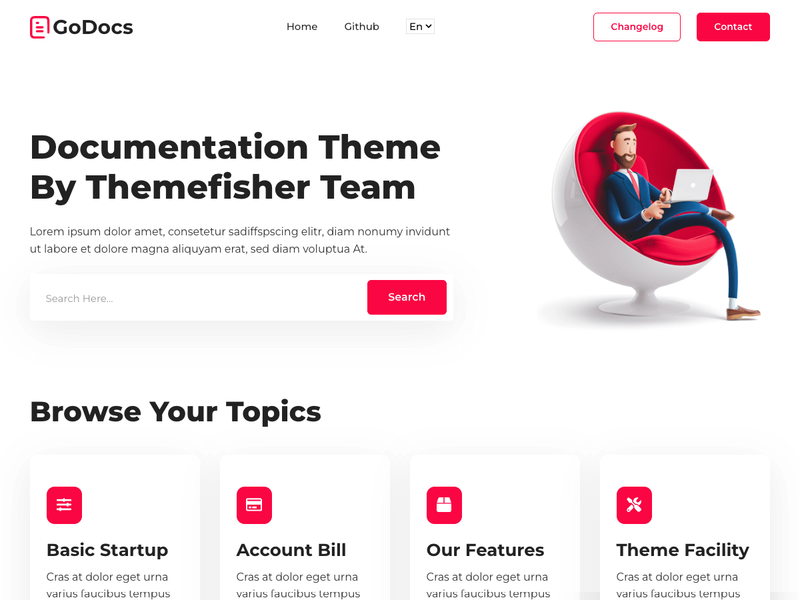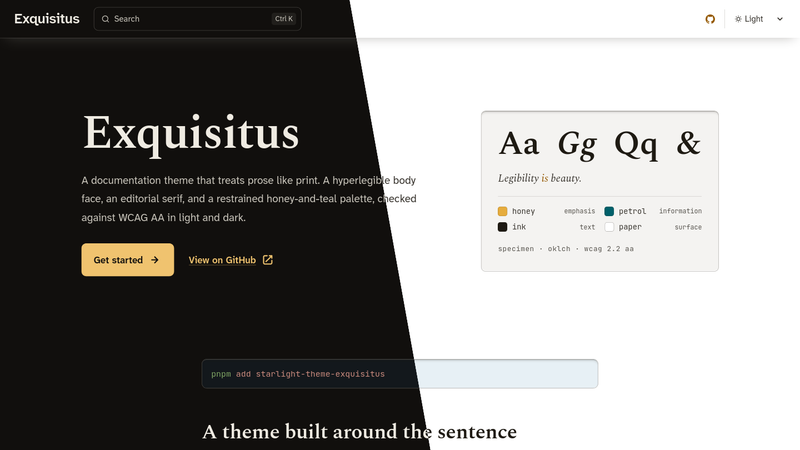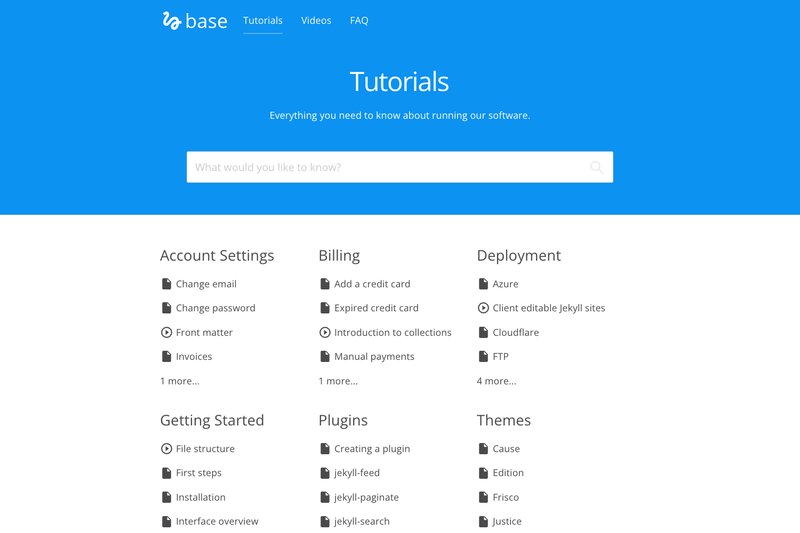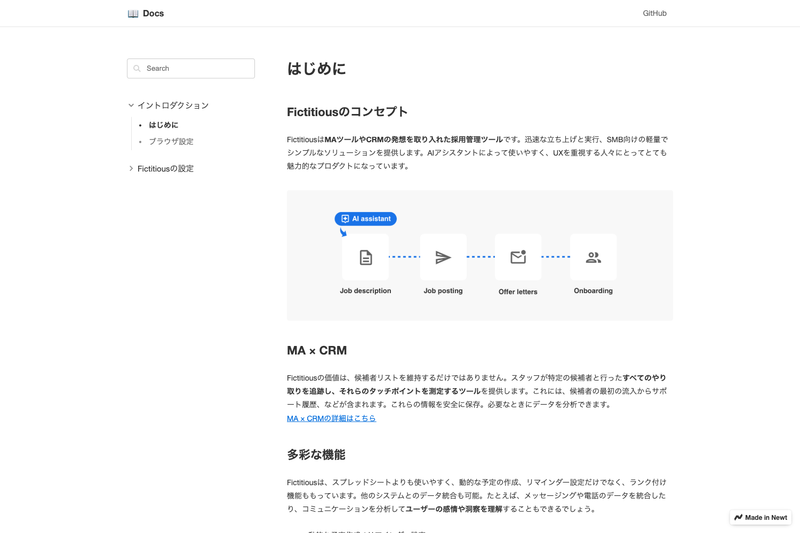
Newt Starter Nextjs Docs is a boilerplate for building a documentation website with Next.js App Router and the Newt headless CMS.
What is Newt Starter Nextjs Docs?
Newt Starter Nextjs Docs is an open-source starter template created by Newt Inc. that combines the Next.js App Router with the Newt headless CMS to produce a documentation site. The template takes a Newt space, an app with Article and Category models, and a CDN API token as input, and outputs a server-rendered docs site with a search page and article detail pages. It runs on Node.js with Next.js and can be deployed to any platform that supports Next.js, including Vercel via the included deploy button.
Key Features
- Next.js App Router — Uses the modern App Router with file-based routing for top, search, and detail pages, defined in app/page.ts, app/search/page.tsx, and app/articles/[slug]/page.tsx.
- Newt headless CMS integration — Reads content through the Newt CDN API using environment variables for space UID, app UID, API token, and model UIDs.
- Search page — A /search?q= endpoint that queries articles by keyword, with the route defined in app/search/page.tsx.
- Article and Category models — Includes model definitions for Article (title, slug, meta, body as Markdown or rich text, category reference) and Category (name), plus a META custom field for title, description, and OG image.
- TypeScript support — The repository is written in TypeScript, giving type safety for Next.js pages and Newt content.
- Vercel deploy button — One-click clone and deployment on Vercel via the button in the README, which also sets up the repository.
- MIT License — The template is freely available for commercial and personal use under the MIT License.
- Japanese and English documentation — The README includes setup instructions in Japanese with code examples for yarn and npm.
Who is it for?
Developers who want to create documentation sites for their products or open-source projects will find the starter useful because it preconfigures the content models and routing. Next.js learners can study how the App Router, dynamic route segments, and search parameters work in a real project. Teams using Newt as their CMS can get a ready-made front end that matches Newt's content structure.
What can you do with it?
- Product teams: Publish API reference or user guide docs by editing Article entries in the Newt admin, and the site updates via the CDN API.
- Knowledge base builders: Use the Category model to group articles and the search page to let readers filter content by query string.
- Next.js developers: Learn how to structure a docs app with app router, metadata, and dynamic routing by reading the included source files.
How does it work?
Set up a Newt space, create an App from the Docs template, and generate a CDN API token. Then clone the repository, copy .env.local.example to .env.local, fill in the space UID, app UID, API token, and model UIDs, install dependencies, and run yarn dev or npm run dev. The site starts on localhost:3000.
Pros and cons
- Pros: MIT-licensed, built on Next.js App Router, includes search functionality, and has a one-click Vercel deployment path.
- Cons: The Newt CMS service will be retired on 2026-11-24, so the backend will become unavailable after that date; content is tied to Newt's proprietary API.
Alternatives
- Docusaurus, a static-site generator for documentation built on React
- Nextra, a Next.js documentation theme using MDX
FAQ
Is Newt Starter Nextjs Docs free?
Yes, the template is released under the MIT License, so you can use and modify it freely for personal or commercial projects.
What happens when Newt is retired?
Newt Inc. will stop the service on 2026-11-24, and both the admin panel and API will no longer be accessible. Any site using this template will need to migrate its content and backend before that date.
How do I configure the environment variables?
Copy the .env.local.example file to .env.local and set NEXT_PUBLIC_NEWT_SPACE_UID, NEXT_PUBLIC_NEWT_APP_UID, NEXT_PUBLIC_NEWT_API_TOKEN, NEXT_PUBLIC_NEWT_API_TYPE, NEXT_PUBLIC_NEWT_ARTICLE_MODEL_UID, and NEXT_PUBLIC_NEWT_CATEGORY_MODEL_UID to the values from your Newt space settings.
Does this template support Markdown content?
Yes, the Article model's body field can be either Markdown or rich text, and the Next.js pages render it accordingly.
Can I deploy this template to platforms other than Vercel?
The template is a standard Next.js app, so it can run on any Node.js hosting environment that supports Next.js, such as Netlify, AWS, or a custom server.